

The Trump-Ishiba Summit and Its Impact on the Korean Peninsula

Yoon Suk-jung
Korea National Diplomatic Academy
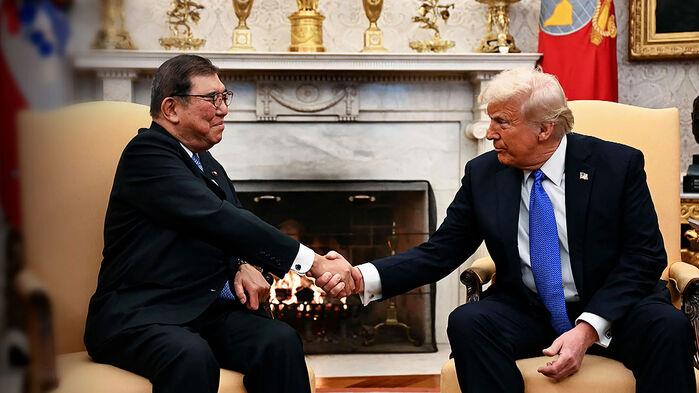
The U.S.-Japan summit held on February 7, 2025, marked the official start of the U.S.-Japan relationship under President Trump's second term.
This summit marked the first in-person meeting between President Trump and Prime Minister Shigeru Ishiba. During Trump's first term, the U.S.-Japan alliance grew strong, largely due to the close "bromance" between Trump and former Prime Minister Shinzo Abe.
There are concerns about how leadership changes in Trump’s second term might impact the alliance. The key question is whether the meticulous Prime Minister Ishiba can build trust with President Trump.
As the U.S. embraces 'America First' again under Trump’s second term, questions are arising about the challenges the U.S.-Japan alliance would face. With these uncertainties, both countries approached the summit.
However, the summit confirmed that the U.S.-Japan alliance remains strong despite the leadership change. In their joint statement, the two leaders agreed to uphold a free and strengthen the alliance for a new era of strategic partnership.
At the heart of the leaders’ emphasis on the alliance is the China factor. Under Trump’s second term, both Japan and the U.S. recognize that their alliance is crucial in countering China, their 'sole competitor.‘
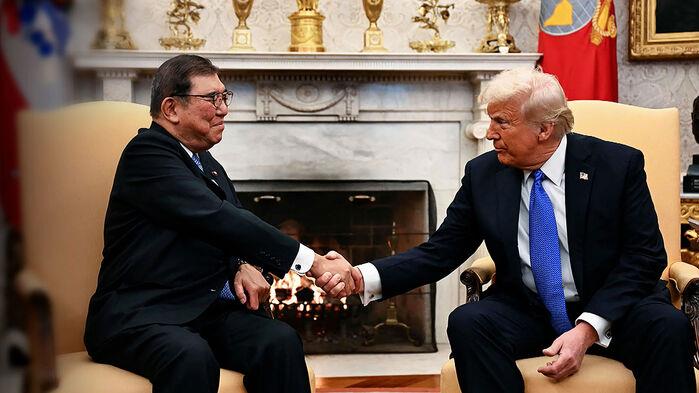
The shared understanding of the strategic value of the U.S.-Japan alliance meant that the leaders' differences didn’t pose a problem. Former Prime Minister Abe met with President Trump on February 10, 2017. Similarly, Prime Minister Ishiba had his official meeting with Trump around the same time, showing that the alliance remains strong despite leadership changes.
Another key point to note is that this summit highlighted a transactional alliance fitting for the America First 2.0 era. Looking at the details of the joint statement, it’s clear that the U.S. and Japan made a favorable deal regarding the roles and contributions of the alliance.
The U.S. reaffirmed its extended deterrence commitment to Japan, including nuclear weapons, and confirmed that Article 5 of the Security Treaty applies to the Senkaku Islands. Japan pledged to strengthen its defense and increase its defense-related spending in the U.S. to $1 trillion, maintaining its position as the top contributor for the fifth consecutive year.
The U.S. reinforced its security commitments to Japan, and in response, Japan pledged to strengthen its defense and boost its defense spending related to the U.S. Through this exchange of security assurances, defense enhancements, and financial commitments, the U.S.-Japan alliance has been further strengthened.
In Japan, the summit is largely seen as a success. The February 9 editorial of Yomiuri Shimbun described it as a positive outcome, highlighting achievements such as strengthening the alliance and reaffirming Japan's importance as a key U.S. ally both domestically and internationally.
I generally agree with this assessment. While the U.S.-Japan summit was successful, it also made it clearer that Japan’s foreign policy will likely face more challenging tasks ahead.
The "challenging tasks" I refer to here stem from the shifting international landscape, where the U.S. holds less influence. This becomes evident when comparing the joint statement from the Ishiba-Trump summit with that of the April 2024 summit between Prime Minister Fumio Kishida and President Biden.
The joint statement from the February 2025 U.S.-Japan summit omits many key issues that were previously emphasized by Prime Minister Kishida and President Biden. Notably, it lacks any mention of the rule of law and the liberal international order, both of which were central to their discussions.
The April 2024 joint statement addressed issues such as climate change, renewable energy cooperation, support for Ukraine, engagement with the Global South, infrastructure development, and G7 solidarity. However, these topics were notably absent from the Trump-Ishiba joint statement.
The issues absent from the Trump-Ishiba joint statement were key priorities for the U.S. in its efforts to uphold the liberal international order.
In other words, the absence of these issues in the Trump-Ishiba joint statement suggests that Japan will face significant challenges in a global landscape where U.S. leadership is diminishing. As Prime Minister Kishida stated in his U.S. Congress speech, Japan sees protecting freedom, democracy, and the rule of law as its national interest.
The U.S.-Japan summit occurred amid global shock over President Trump’s remarks on Gaza and his withdrawal from the Paris Climate Agreement.
As Trump focuses heavily on an America-first approach, the question is: "Can Japan still uphold a liberal international order?" Japan's foreign policy may face a difficult test ahead.
2. Implications for the Korean Peninsula Situation
The Trump-Ishiba U.S.-Japan summit carries significant implications for North Korea and the situation on the Korean Peninsula.
The U.S.-Japan joint statement and President Trump's remarks indicate both progress and lingering concerns about North Korea. The statement mentions 'the complete denuclearization of North Korea,' which may ease concerns raised when Trump referred to North Korea as a nuclear power.
On the other hand, President Trump stated in a press conference, "My good relationship with Kim Jong-un is a great asset for everyone." Despite the mention of "complete denuclearization of North Korea," this suggests that direct negotiations between the U.S. and North Korea remain a possibility.
The underlying anxiety stems from concerns that Trump’s America is indifferent to the principles of the liberal international order and failing to exercise global leadership.
President Trump has already attempted direct ceasefire negotiations with President Putin, excluding Ukraine, raising concerns in Europe over a "dirty deal." To prevent his America-first approach from extending to Asia through direct U.S.-North Korea dealings, South Korea must intensify its diplomatic efforts.
To achieve this, enhancing the strategic value of the U.S.-South Korea alliance is essential. This closely relates to how South Korea will negotiate with President Trump regarding the burdens and contributions of the alliance.
Potential U.S.-South Korea deals may include defense spending, investments in the U.S., and expanding the alliance to counter China. In the Trump 2.0 era, South Korea faces tough choices and must act wisely to protect its national interests.