

What made North Korea a starving nation? Obsession with nuclear tests while millions starve
North Korea is facing a severe food shortage and millions of North Koreans are starving to death, raising concerns in South Korea and the international community. The food shortage is expected to get worse during this spring, but the North Korean authorities have been unable to do much about it, as expected.
The news about the death by starvation in North Korea was disclosed during a National Security Council (NSC) meeting the presidential office called on February 18, shortly after North Korea test-fired Hwasong-15 intercontinental ballistic missile (ICBM). During the meeting, the presidential office criticized the North Korean regime for "ignoring the human rights and livelihood of its people while focusing only on a large-scale military parade and nuclear and missile development in the face of severe food shortages in the country."
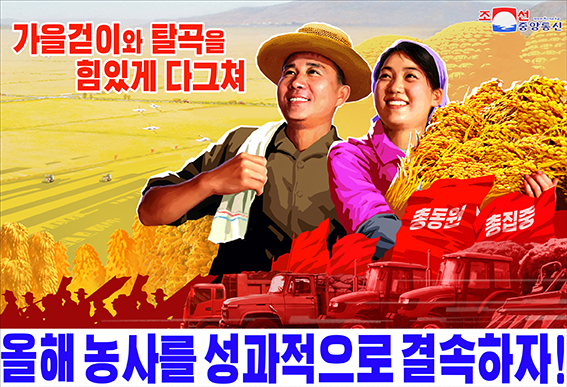
Around the same time, Rodong Sinmun and other North Korean state media ran a series of report on the desperate state of affairs in the country, insinuating that food shortages were serious. In a front-page story on February 14, Rodong Sinmun emphasized, "It is the spirit of independence and self-respect that should never be given up, even when you starve or freeze to death."
Food shortage summarizes the reality of the North Korean economy under Kim Jong-un. So does the phrase the ‘three hardships,’ which refers to the shortage of grain, dollars (foreign currency), and oil (energy).
Kim Il-sung, former North Korean president and the grandfather of Chairman Kim Jong-un, promised to “make North Koreans eat meat soup with rice, wear silk clothes, and live in a tiled house,” a promise that never materialized during the last 70 years that spanned three generations of rule by the Kim family. Tragedy struck in the mid-to-late 1990s, shortly after Kim Il-sung's death, when the food shortage caused by a massive flood reportedly left "two to three million North Koreans starving to death." (The South Korean and U.S. intelligence agencies estimate the number at 460,000) It was a tragic time North Koreans refer to as the period of “arduous march.”
On April 15, 2012, in his first public speech made at Pyongyang's Kim Il Sung Square, Kim Jong-un said, “I will never again let my people tighten their belts but enjoy the riches and honors of socialism,” raising expectations among the North Korean elites and residents alike. But it turned out to be a blank check.
UN agencies including the World Food Program (WFP) and humanitarian organizations operating in Pyongyang warn that 11 million people, or 40% of North Korea's 25 million residents, are still exposed to a perennial food shortage.
Kim Jong-un himself acknowledged the difficulties his country faces at the eighth plenary meeting of the Workers' Party of Korea (WPK) held in Pyongyang on June 15 last year, admitting, "Due to the damages caused by typhoons last year, we fell short of our grain production goals and now the food situation for people is becoming tense."
It seems virtually impossible for North Korea to achieve a breakthrough in grain production and solve its food shortage, according to a group of experts and government authorities. Poor production, outdated technologies, and chronically repeated food shortages are not the problems limited just to the agricultural sector.
They reflect the total disaster across the entire North Korean economy. Without first resolving the underlying structural problems, it would be a pipe dream that the supreme leader's rhetoric and state media propaganda and incitement alone can create the cure.
-
PREV [President’s Remark]
-
NEXT [Congratulatory message]