


NK Inside
· Kim Yo-jong Criticizes UN Secretary-General for “Speaking on Behalf of South Korea”
· Kim Jong-un Declares “Rice Is Socialism and Communism,” Stresses Ideological Education for Farmers
· North Korea’s Kim Song-nam Holds Series of Meetings with Three Senior Chinese Leaders, Strengthening Strategic Cooperation

Myongsung Kim
Kim Jong-un, Chairman of North Korea’s State Affairs Commission, met with participants in the 10th Congress of the Agricultural Workers’ Union, emphasizing the importance of increasing rice production and strengthening ideological education among farmers. The move is seen as an effort to improve agricultural productivity while reinforcing ideological discipline in rural communities. Since setting its policy priorities for the next five years at the 9th Congress of the Workers’ Party of Korea (WPK) last February, North Korea has held a series of congresses of party-affiliated organizations to promote the implementation of those priorities.
According to the Korean Central News Agency (KCNA) on November 10, Chairman Kim met with participants in the 10th Congress of the Agricultural Workers’ Union (AWU) the previous day, posed for a commemorative photograph, and praised agricultural workers for their dedication and achievements.
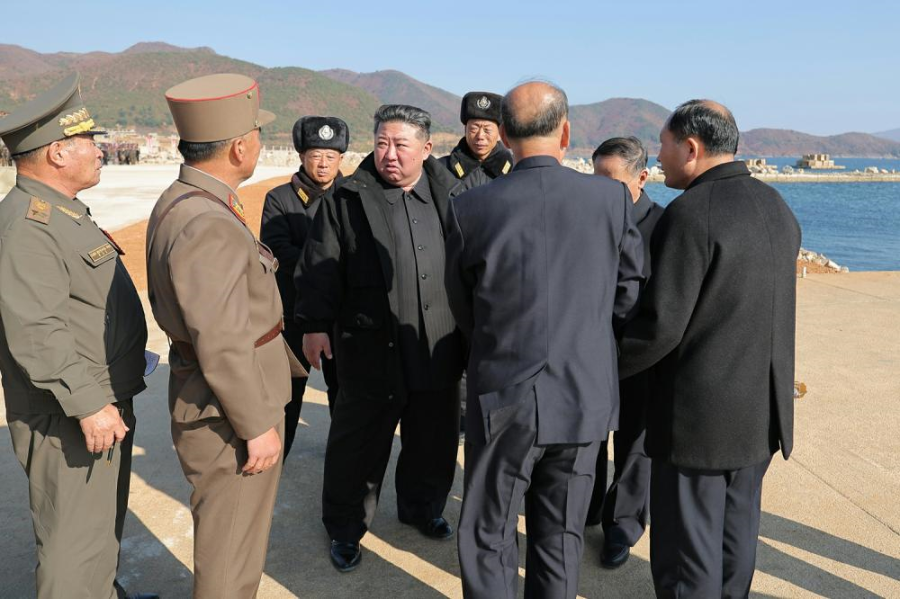
Kim commended the agricultural sector’s accomplishments, noting that farmers had increased grain production over the past five years in support of socialist construction. He also congratulated the newly elected chairperson and vice chairpersons of the AWU’s 10th Central Committee.
In particular, Kim emphasized that “rice is socialism and communism” and called on the AWU to serve as a central organization responsible not only for increasing agricultural production but also for strengthening ideological unity in rural communities.
He stressed that the AWU must fully understand its fundamental mission and fulfill its responsibilities as a key organization for ideological mobilization and leadership in rural development.
The 10th AWU Congress was held in Pyongyang on November 6–7. The organization is regarded as one of North Korea’s four major mass organizations, alongside the General Federation of Trade Unions of Korea, the Socialist Women’s Union of Korea, and the Socialist Patriotic Youth League.
Since the conclusion of the 9th WPK Congress last February, North Korea has held a series of congresses of major mass organizations to promote the implementation of the Party Congress’s decisions. These meetings are seen as efforts to disseminate the country’s economic and social policy priorities for the next five years across different sectors and segments of society, while reinforcing the Party-centered system of organizational mobilization.
North Korea’s Kim Song-nam Holds Series of Meetings with Three Senior Chinese Leaders, Strengthening Strategic Cooperation
Kim Song-nam, International Secretary of the Workers’ Party of Korea (WPK), who is leading a party delegation on an official visit to China, has held a series of meetings with senior officials of the Chinese Communist Party (CPC) to strengthen strategic cooperation between North Korea and China. The meetings brought together Kim and three key Chinese officials responsible for party affairs and diplomacy: Cai Qi, a member of the Standing Committee of the CPC Political Bureau and the fifth-ranking official in China’s leadership hierarchy; Foreign Minister Wang Yi; and Liu Haixing, head of the CPC International Liaison Department.
The meetings are viewed as part of broader efforts by Pyongyang and Beijing to strengthen party-to-party cooperation based on agreements reached by their respective leaders, while expanding strategic coordination on developments on the Korean Peninsula and across Northeast Asia.
North Korea’s Korean Central News Agency (KCNA) reported on November 7 that Kim had held talks the previous day with Liu Haixing, head of the CPC International Liaison Department, at the Diaoyutai State Guesthouse in Beijing. During the meeting, the two sides exchanged views on their respective policies regarding party building and socialist development and agreed to strengthen cooperation in implementing the understandings reached by their countries’ top leaders.
Kim explained that the Workers’ Party and the North Korean people were making concerted efforts to achieve the first-year objectives of the five-year plan unveiled at the 9th Congress of the WPK. In response, Liu said that President Xi Jinping and the CPC Central Committee attached great importance to the North Korean delegation’s visit and emphasized its significance for the further development of bilateral relations.
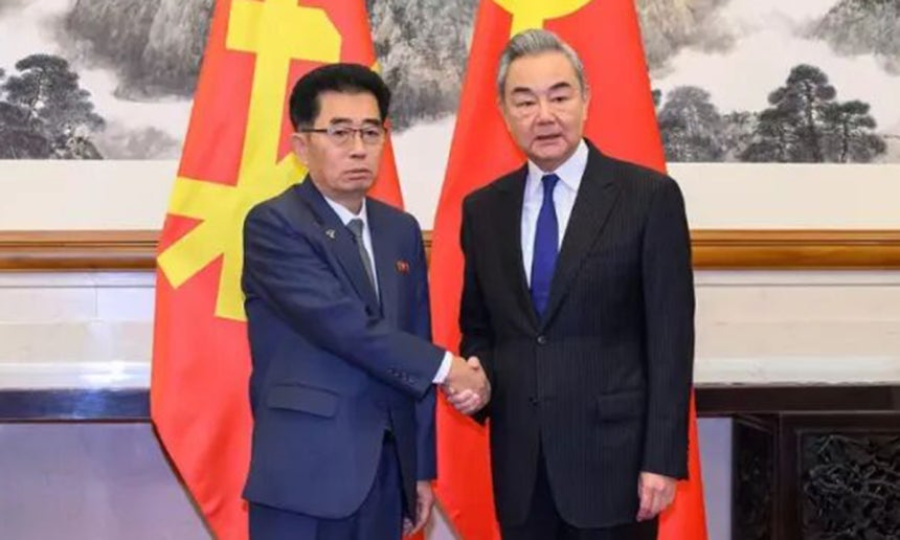
KCNA also reported on November 7 that Kim had met with Cai Qi at the Diaoyutai State Guesthouse on November 6. China’s state-run Xinhua News Agency had reported on the meeting a day earlier. Previously, on November 5, Kim met with Wang Yi, a member of the Political Bureau of the CPC Central Committee, Director of the Office of the Central Commission for Foreign Affairs, and Minister of Foreign Affairs. The two sides reaffirmed their shared commitment to deepening and further developing North Korea–China relations.
Kim’s visit forms part of a broader pattern of expanding high-level exchanges between North Korea and China. On October 24, North Korean leader Kim Jong-un visited Dandong, China, where he met with senior Chinese officials, including Wang Huning, Chairman of the National Committee of the Chinese People’s Political Consultative Conference, and Foreign Minister Wang Yi. During the visit, both sides emphasized the longstanding friendship between North Korea and China and reaffirmed their commitment to strengthening political trust and expanding bilateral cooperation.
Kim Song-nam, who oversees the WPK’s international relations, subsequently traveled to China on an official visit, where he met with senior Chinese leaders. His visit is seen as a follow-up effort to translate the understandings reached at the leadership level into concrete cooperation through party and government channels.
Diplomatic observers suggest that these successive meetings may have gone beyond conventional exchanges of goodwill to encompass strategic consultations on U.S.–North Korea relations, developments on the Korean Peninsula, and shifts in the security environment in Northeast Asia.
Analysts suggest that Pyongyang may be seeking to strengthen its diplomatic position ahead of potential negotiations with Washington by deepening ties with Beijing, while continuing to demand that the United States abandon what it calls its “hostile policy toward North Korea” as a precondition for dialogue.
The visit illustrates how North Korea and China are strengthening bilateral relations through the simultaneous activation of party and diplomatic channels, building on the personal ties between their leaders. As Beijing has repeatedly reaffirmed its support for Pyongyang and its commitment to safeguarding their shared strategic interests, attention is increasingly focused on whether North Korea–China relations will expand beyond economic cooperation to encompass closer strategic coordination in diplomatic and security affairs.
-
PREV [NK Inside]
-
NEXT 다음 글이 없습니다.