

North Korea Inside
· South Korean Government to Provide 300 Million KRW in Support for Cheering Squad for North Korean Women’s Football Team
· North Korea to Farm on Its Own, Refrains from Mobilizing Support Personnel
· North Korean Media Reports on Participation of North Korean Troops in Russia’s Victory Day Military Parade

Kim Myong-sung
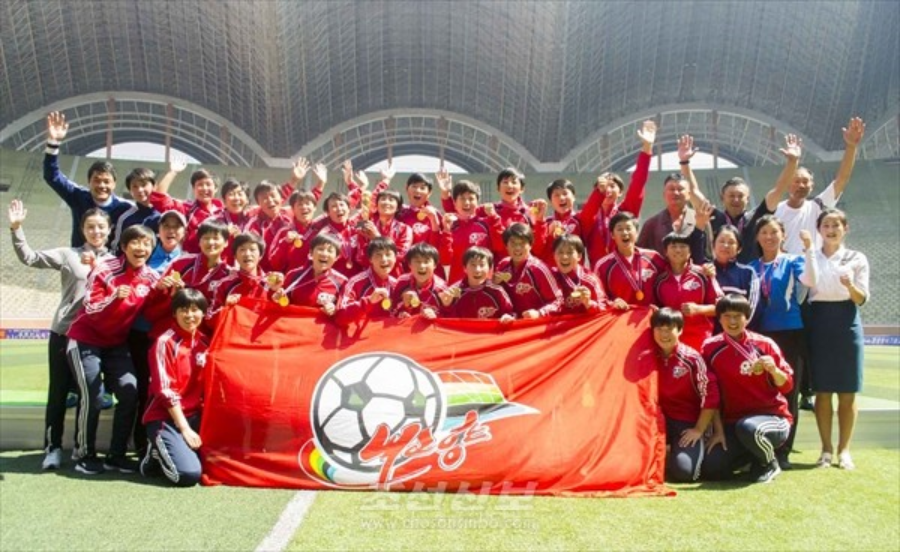
The Ministry approved the plan the previous day, following deliberation by the Inter-Korean Cooperation Fund Management Deliberation Committee, to provide a total of 300 million won to cover the costs of the civilian cheering squad. The funding will cover necessary expenses for the group’s activities, including match tickets and cheering equipment.
The government explained that, since the North Korean team’s participation in the tournament was announced, various civic organizations have requested assistance in forming cheering squads and covering related expenses. The organizations leading these efforts are primarily known to be groups related to separated families and inter-Korean exchange and cooperation. When the planned numbers from each organization are combined, the total size of the cheering squads is expected to reach around 2,500 people.
The funds will be disbursed after civic organizations submit documentation verifying related expenses to the Inter-Korean Exchange and Cooperation Support Association, which will then review the applications before providing support. Detailed guidelines regarding cheering methods and chants will also be established.
An official from the Ministry of Unification stated, “While we will generally leave this to the discretion of civil society organizations, we will provide guidelines given the unique nature of this case.” When asked specifically whether the use of the term “North Korea” would be discouraged, the official replied, “Something along those lines.”
This measure is widely interpreted as a response to North Korea’s recent designation of inter-Korean relations as a “hostile relationship between two states” and its heightened sensitivity to the use of the term “North Korea,” even in the context of international sporting events.
The Naegohyang Women’s Football Club is scheduled to arrive via Incheon International Airport on May 17 and will face Suwon FC Women in the semifinals of the AFC Women’s Champions League at Suwon World Cup Stadium on May 20.
This marks the first time in seven years and five months—since the ITTF World Tour Grand Finals in December 2018—that a North Korean delegation has visited South Korea to participate in an official tournament. Attention is focused on whether the event could serve as a modest opening for sports exchanges amid the current stalemate in inter-Korean relations.
North Korea has stepped back from its annual “total mobilization for agriculture” approach—which previously sent students, factory workers, soldiers, and even housewives to the countryside during the rice-planting season—and has instead publicly encouraged farms this year to rely on their own workforce and mechanization.
As labor shortages have worsened due to the simultaneous launch of large-scale construction projects, this shift is interpreted as an effort to reduce the deployment of auxiliary personnel to rural areas and to have each farm assume greater responsibility for its own production.

On the 12th, Minju Joson, the official newspaper of North Korea’s Cabinet, published an article titled “Let Us Wage the Movement to Farm Independently in the Agricultural Sector with Greater Vigor,” urging agricultural officials and workers to “bring about a bountiful autumn through their own efforts.” Observers note that it is unusual for North Korean media to emphasize “independent farming” over the mobilization of external support during the peak farming season.
The newspaper stated, “The masters of agricultural production are the officials and workers in the agricultural sector,” defining this year’s agricultural front as the forefront of socialist construction. It further emphasized, “All the more so, officials and workers in the agricultural sector must deeply instill the awareness that they are the masters responsible for the nation’s rice granary and bring about a bountiful autumn through their own efforts across every vast field.”
In particular, citing Cheongsan Farm in Kangseo District as an example, the newspaper reported that “without receiving any support, they are pushing forward with all farming tasks in a timely and high-quality manner to achieve high yields.” This was intended to demonstrate that farming can be carried out without external assistance. The message is interpreted as reflecting the reality that state-level rural support personnel need to be redirected to other sectors.
In fact, North Korea is simultaneously pursuing a range of large-scale projects this year, including housing construction in Pyongyang, the development of local industrial plants, rural housing construction, flood recovery efforts, and the expansion of defense-related facilities. Amid chronic labor shortages, the construction sector has absorbed large numbers of youth shock brigades, military personnel, and urban workers, making it highly likely that the capacity to support rural areas during the peak farming season has been significantly reduced.
Minju Joson also indirectly acknowledged this. The newspaper stated, “If the countryside farms on its own, another breakthrough will be opened to smoothly resolve the strained labor problem of the national economy.” This suggests that self-reliant farming in rural areas is not merely a production method but also a measure aimed at alleviating the nationwide labor shortage.
North Korea has repeatedly implemented a nationwide mobilization system during the rice-planting season. Typically, rice seeds are sown in seedbeds starting in mid-March, with transplanting beginning in early May and concluding in late May to early June.
During this period, students from third year of lower secondary school and above, officials from Party and administrative agencies, factory and enterprise workers, housewives, and even soldiers have been deployed for approximately 40 days to participate in the “rural support campaign.” In effect, it functioned as a system of total societal mobilization.
In an editorial on the front page of Rodong Sinmun on May 11, the previous day, the paper urged, “Let us all rise up in the struggle to make this year, in which the Ninth Party Congress was held, shine with achievements in grain production,” adding, “We must concentrate all our strength on rice transplanting and complete it in a timely manner.” In effect, this conveyed a dual message: while calling for general mobilization on the one hand, it also urged farms to resolve their own challenges on the other.
Minju Joson proposed mechanization and technological innovation as the solution to “self-reliant farming.” It called for expanding the research and production of agricultural machinery, stating that “significantly increasing the proportion of mechanized agricultural work is the best way to achieve a breakthrough in grain production through our own efforts.” It also claimed that last year, rural areas across the country introduced “nutrient-rich cold-bed seedlings,” reducing the labor previously required for seedling cultivation, and that some regions completed rice transplanting without external assistance.
The article also contained typical self-reliance rhetoric. Referring to the period of the anti-Japanese armed struggle, the newspaper emphasized “anti-Japanese fighters who pioneered the revolution with nothing but their bare hands” and “fought using Yanji bombs made with their bare hands,” while also invoking post-war reconstruction and the Chollima Movement. This suggests an intention to address the rural labor shortage through the mobilization of the regime’s characteristic emphasis on “spiritual strength.”
Observers suggest that North Korea is attempting to make pragmatic adjustments to its agricultural policy amid the dual pressures of food and labor shortages. As it becomes increasingly difficult to rely on external labor on a sustained basis, the state appears to be shifting a greater share of production responsibility to rural communities while prioritizing the allocation of manpower to construction and other strategic sectors.
North Korean Media Reports on Participation of North Korean Troops in Russia’s Victory Day Military Parade
North Korean state media reported in detail, just one day later, on the participation of North Korean troops in Russia’s Victory Day military parade commemorating the Allied victory in World War II.
On May 10, the Korean Central News Agency reported that a military parade marking the 81st anniversary of victory in the Great Patriotic War was held the previous day in Red Square, Moscow, and that, at Russia’s invitation, “a mixed contingent of the Korean People’s Army’s ground, naval, and air forces participated in the Victory Day parade in Moscow.” Army Colonel Choi Young-hun led the contingent in the march, and Russian President Vladimir Putin met with the commander after the parade to express his gratitude.
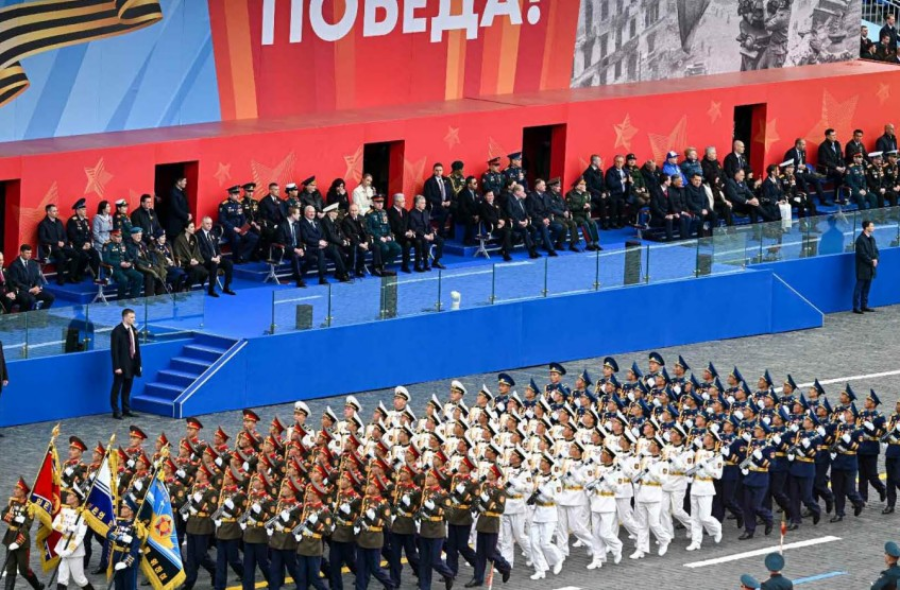
Rodong Sinmun, the official newspaper of the Workers’ Party of Korea read by North Korean citizens, also carried the news on its first and second pages, accompanied by photographs, providing a detailed account of the atmosphere at the event. The newspaper reported that “as the song ‘The Fight for Justice’ played, the Russian national flag and the Victory Banner appeared in the square,” and it also included excerpts from President Putin’s speech.
The newspaper continued, “Alongside the Russian military parade units, a contingent of soldiers from the Democratic People’s Republic of Korea, who achieved immortal feats of valor in the battles to liberate Kursk, marched across Red Square.” It also reported that President Putin met with veterans, participants in special military operations, and People’s Army commanders who took part in the parade. It further gave prominent coverage to Russia’s Victory Day-related news, including the fact that President Putin issued a congratulatory letter on May 6 to mark the occasion and published excerpts from it.
It continued, “Alongside the Russian military parade units, a contingent of soldiers from the Democratic People’s Republic of Korea, who achieved immortal feats of valor in the battles to liberate Kursk, marched across Red Square.”
It also reported that President Putin met with veterans, participants in special military operations, and People’s Army commanders who took part in the parade. The newspaper further gave prominent coverage to Russia’s Victory Day-related news, including the fact that President Putin issued a letter on May 6 to mark the occasion and included excerpts from it.
Meanwhile, on the same day in Pyongyang, members of the Russian Embassy in North Korea visited the Liberation Monument to lay wreaths and commemorate Victory Day. The Liberation Monument is a symbol honoring Soviet soldiers who died in 1945 while driving Japanese forces out of North Korea.
During the event, which was held with North Korean honor guards in attendance, participants observed a moment of silence in memory of the Soviet martyrs, followed by the playing of the national anthems of Russia and North Korea.
-
PREV [North Korea Inside]
-
NEXT [NK Focus]