

North Korea Inside
· North Korea Amends Constitution to Reflect “Two-State” Policy: New Territorial Clause Added, Unification Clause Removed
· North Korean Women’s Football Team to Visit South Korea on May 17 for AFC Women’s Champions League Semifinals
· Kim Jong-un Meets with Youth League Delegates to Offer Encouragement

Kim Myong-sung
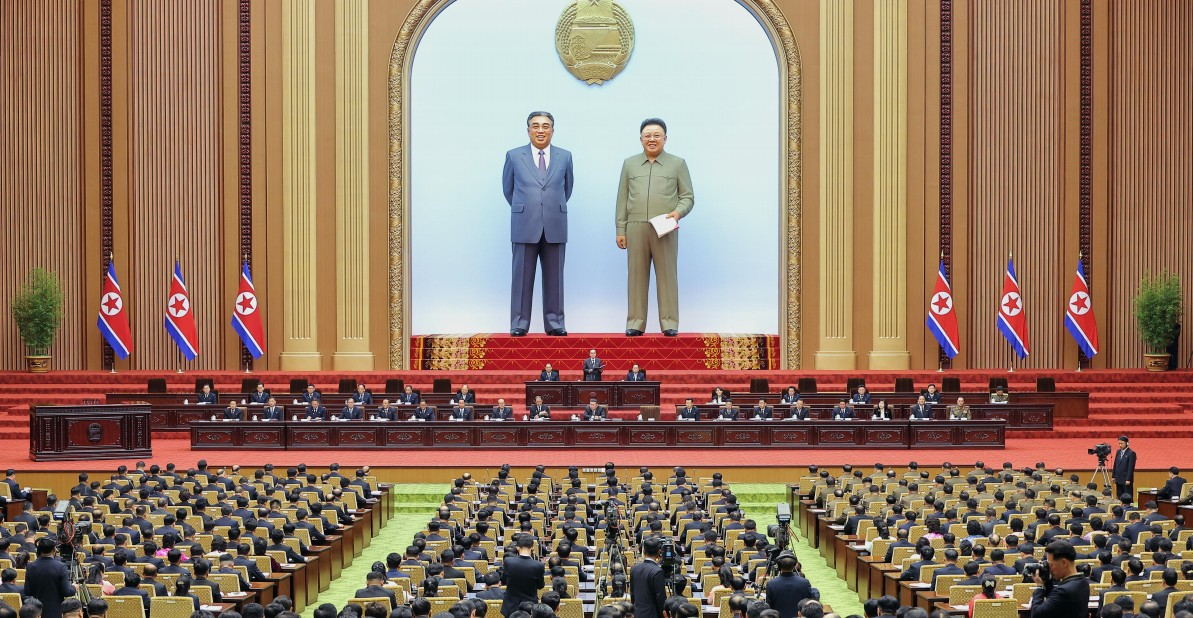
The amendment also defines the Chairman of the State Affairs Commission as the “head of state” and, for the first time, explicitly grants authority over the use of nuclear weapons, thereby further strengthening Chairman Kim’s formal status and institutional authority.
According to the preamble of North Korea’s revised constitution, released during a press briefing for the Ministry of Unification’s press corps at the Seoul Government Complex on May 6, references related to inter-Korean relations and unification—such as “the northern half,” “national reunification,” and “the complete victory of socialism”—which had appeared in the preamble and main text following the “two-state” declaration (amended in September 2023), have been entirely removed.
For example, Article 9 of the previous Socialist Constitution, which stated, “We struggle to achieve the complete victory of socialism and realize the reunification of the motherland based on the principles of independence, peaceful reunification, and great national unity,” has been deleted.
As references to the achievements of Kim Il-sung and Kim Jong-il were removed, all references to the reunification cause in the preamble have also been eliminated. As Chairman Kim had announced in January 2024, a new territorial clause has been established.
Article 2, newly introduced alongside the provision on the state name “Democratic People’s Republic of Korea” (Article 1), defines the territory as follows: “The territory includes the land bordering the People’s Republic of China and the Russian Federation to the north, and the Republic of Korea to the south, as well as the territorial waters and airspace established on that basis.”
However, the southern land and maritime boundaries were not specifically defined. Professor Jeong-cheol Lee of Seoul National University, a North Korea expert who attended the briefing, interpreted this omission by stating, “The moment the issue of maritime boundaries arises, there are aspects that make compromise difficult,” adding, “I believe the omission indicates that the North did not wish to create such a dispute.”
While the “two-state relations” policy declared by Chairman Kim in late 2023 was broadly reflected, contrary to his earlier announcement, there was no explicit designation of South Korea as a “hostile state.” In January 2024, at the Supreme People’s Assembly, Kim stated, “It is appropriate to explicitly stipulate in the relevant clause that we will strengthen educational and ideological work to ensure that the Republic of Korea is firmly regarded as the number one hostile nation and an unchanging principal enemy.”
Combative expressions found in the previous constitution—such as “imperialist aggressors,” “liberated from exploitation and oppression,” and “subversive activities of internal and external hostile elements”—have also been removed.
The authority and status of the Chairman of the State Affairs Commission have been significantly strengthened. In the order of state institutions, the Chairman of the State Affairs Commission is listed first and is defined as the “head of state.” This marks the first time in North Korea’s constitutional history that the Chairman of the State Affairs Commission has been placed before the Supreme People’s Assembly.
As references to previous leaders’ achievements in state-building and reunification were removed, “people-first ideology”—Kim Jong Un’s governing philosophy—was explicitly stated in the preamble.
The Chairman of the State Affairs Commission’s exclusive command authority over nuclear forces was specified for the first time, and a new clause establishing the legal basis for this authority was also added.
In addition, the authority of the Chairman of the State Affairs Commission to “appoint and dismiss key officials” now explicitly extends to the “Chairman of the Supreme People’s Assembly” and the “Prime Minister of the Cabinet.” Furthermore, the Supreme People’s Assembly’s power to recall the Chairman of the State Affairs Commission has been removed, effectively eliminating any formal mechanism of checks and balances.
It has been confirmed that socialist welfare provisions previously described in idealized terms—such as “free medical care,” “a tax-free country,” and “a society without unemployment”—have all been removed. Meanwhile, “martyrs of overseas military operations” have been added to the list of groups eligible for special social protection, which previously included “revolutionary fighters” and “honorary soldiers.” This addition is understood to explicitly recognize those killed in external military engagements, including the Russia–Ukraine war.
In the foreign policy provisions, “protection of national interests” has been added as an “immutable principle” alongside the fundamental ideals of “independence, peace, and friendship.” Experts have analyzed that, judging by the structure of the clauses and the level of expression, North Korea’s new constitution appears to be an attempt to project an image of a “normal state.”
The constitutional amendments confirmed this time—including deletions, new additions, and revisions—were reflected across three rounds of amendments (January 2024, January 2025, and March 2026) following Chairman Kim’s “two-state relations” declaration in late 2023. While the clause on national reunification is presumed to have been removed during the October 2024 amendment, the exact timing of revisions to each provision was not confirmed at the briefing held that day.
Professor Lee assessed the draft constitution, stating, “While a new territorial clause has been established and expressions and provisions emphasizing statehood have emerged, the absence of references to hostile relations or a state of war allows us to make a cautiously optimistic assessment that this could serve as a foundation for peaceful coexistence between the North and South.”
North Korea’s Naegohyang (“My Hometown”) Women’s Football Club will visit South Korea on May 17 to compete in the semifinals of the Asian Football Confederation (AFC) Women’s Champions League. The visit by a North Korean women’s club team is seen as a symbolic moment illustrating that international sports exchanges continue despite strained inter-Korean relations.
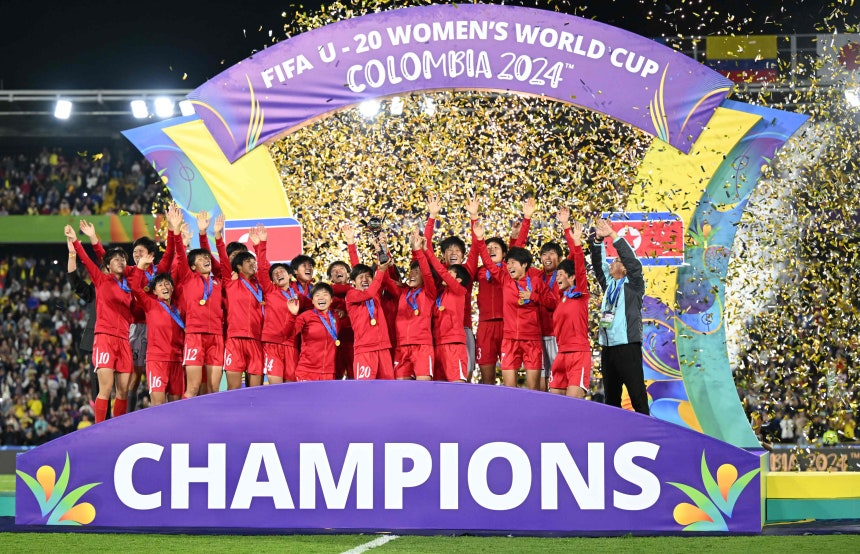
The Ministry of Unification announced on May 4 that the Pyongyang-based Naegohyang Women’s Football Club is scheduled to arrive on May 17. The team will face Suwon FC Women in the semifinals of the 2025–2026 AFC Women’s Champions League on May 20 at Suwon Sports Complex.
The Naegohyang Women’s Football Club is considered a rising force in North Korean women’s football. As a corporate-backed club sponsored by “Naegohyang,” a consumer goods company producing food, beverages, and sporting goods, it differs in character from North Korea’s traditional sports teams, such as the 4.25 Team and the Amnokgang Sports Team, which are affiliated with military or state institutions.
Founded in 2012, the club rose to prominence after winning the North Korean First Division title in the 2021–2022 season. It is also reported that a significant portion of its squad consists of national team-level players who have recently achieved success at the FIFA U-17 and U-20 Women’s World Cups.
The team has also demonstrated its competitiveness in this tournament. The Naegohyang Women’s Football Club advanced to the semifinals of the AFC Women’s Champions League with a record of three wins and one loss. In the group stage, they defeated Suwon FC Women 3–0 but lost 0–4 to Japan’s Tokyo Verdy Beleza, another semifinalist. For Suwon FC Women, who will meet them again in the semifinals, the match carries a strong sense of rivalry.
North Korea is one of the leading women’s football powers on the international stage. As of April 2026, it is ranked 11th in the world and 2nd in Asia by FIFA. In the FIFA U-20 Women’s World Cup, it has won the title three times—in 2006, 2016, and 2024—placing it alongside Germany and the United States among the most successful teams in the tournament’s history. It also holds the record for the most FIFA U-17 Women’s World Cup titles, having won four times in 2008, 2016, 2024, and 2025.
Their performance on the Asian stage is equally notable. They have won the AFC Women’s Club Championship three times—in 2001, 2003, and 2008—and have also claimed the AFC U-20 Women’s Championship title twice. At the Asian Games, they secured gold medals on three occasions—in 2002, 2006, and 2014.
North Korean State Affairs Commission Chairman Kim Jong-un’s interest in women’s football is also well known. He, who is known to take a keen interest in sports, met with the winning squad and coaching staff of the 2025 U-17 Women’s World Cup team during a ceremony marking North Korea’s Constitution Day held at the Mansudae Assembly Hall last December, offering encouragement and posing for a commemorative photograph.
The Asian football community also regards the competitiveness of North Korean women’s football highly. During the FIFA Council meeting held last month in Vancouver, Canada, AFC President Sheikh Salman bin Ibrahim Al Khalifa met with Kim Il-guk, President of the North Korean Football Association, and stated, “The North Korean Football Association is a beacon of excellence for all of Asia,” adding, “The recent success of North Korean women’s football has solidified its position as a global model for the development of women’s football.”
The visit by the North Korean team is drawing particular attention because it marks the first visit to South Korea by any North Koreans since late 2023, when North Korean State Affairs Commission Chairman Kim Jong-un redefined inter-Korean relations not as relations between fellow Koreans, but as “hostile relations between two states” and, furthermore, as “relations between two belligerent nations at war.”
The decision appears to reflect North Korea’s intention to maintain its “state-to-state” principle while continuing and even strengthening its participation in international sports, given that the event is organized by the Asian Football Confederation (AFC), an international governing body.
North Korea has recently focused on expanding its participation in international competitions, particularly in sports where it has demonstrated competitiveness, such as football, wrestling, and swimming, in an effort to project an image of a normal state. It is suggested that the decision to participate in the tournament hosted in South Korea was made within this broader context.
North Korea has also submitted a letter of intent to participate in the Asian Games to be held this September in Nagoya, Japan—a country it has designated as an adversary—and has announced plans to send a large delegation.
Although this does not constitute direct inter-Korean government-to-government exchanges, some observers express hope that the tournament could serve as a catalyst for the resumption of inter-Korean dialogue, given that sports have historically played a role in opening channels of communication at key junctures in inter-Korean relations.
A prime example is the 2018 inter-Korean summit between President Moon Jae-in and Chairman Kim Jong-un, when the North Korean delegation’s participation in the PyeongChang Winter Olympics served as a turning point amid a thaw in tensions.
Observers note that North Korea’s decision to participate this time is unusual, given that it has consistently boycotted international competitions held in South Korea in the past. Last September, North Korea’s decision not to send a delegation to the World Archery Championships in Gwangju reaffirmed the continued suspension of inter-Korean sports exchanges.
However, some analysts point out that while this visit carries significant symbolic value—given that it involves a low-stakes sporting event and is facilitated through a third-party international organization rather than direct inter-Korean exchanges—it has limitations in terms of producing tangible improvements in inter-Korean relations.
Kim Jong-un Meets with Youth League Delegates to Offer Encouragement
Kim Jong-un, Chairman of the State Affairs Commission of North Korea, met with delegates from the Socialist Patriotic Youth League and emphasized the role of young people in national development. Observers interpret this as an effort to strengthen cohesion among the younger generation on the occasion of the Youth League’s congress—the country’s largest youth organization—while also signaling potential long-term succession dynamics, given the recent increase in public appearances by his daughter, Ju-ae.
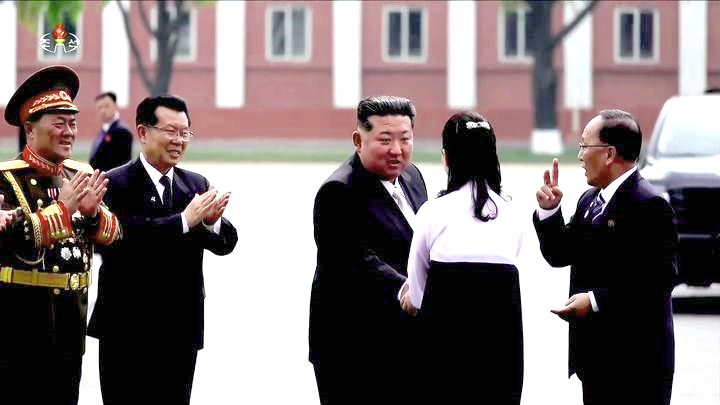
North Korea’s Korean Central News Agency reported on May 3 that Kim met with participants of the 11th Congress of the Socialist Patriotic Youth League the previous day and took a commemorative photograph with them. The event was attended by Kim Jae-ryong, Ri Il-hwan, and Ju Chang-il, secretaries of the Workers’ Party of Korea Central Committee, as well as Kim Song-gi, Director of the General Political Bureau of the Korean People’s Army.
Kim shook hands with each of the newly elected chairpersons and vice-chairpersons of the 11th Central Committee of the Youth League and offered his congratulations. He praised them, stating, “Never before has the extraordinary patriotic consciousness, surging revolutionary fervor, and fearless struggle of the youth so firmly defined the vast battlefields of socialist construction as in the present era.” He continued, “The noble character and iron-willed fighting spirit of our youth, unparalleled in any other country, constitute a proud symbol of our national strength.”
He also emphasized, “The legendary feats of our youth are a source of great pride for our Party and a powerful driving force for our overarching cause,” adding, “The strength and honor of the Youth League, the leading vanguard of patriotic youth, must continue to be elevated.” This is interpreted as a reaffirmation of his intent to mobilize young people into labor, construction, and national defense sectors as a key engine for sustaining the regime.
The 11th Congress of the Youth League was held in Pyongyang, five years after the 10th Congress in 2021. The meeting included a review of the Central Committee’s work, amendments to the charter, and elections for central leadership bodies. The Socialist Patriotic Youth League is North Korea’s largest youth organization, with mandatory membership for young people and students aged 14 to 30.
Many analysts suggest that North Korea’s recent emphasis on youth organizations reflects an effort to strengthen control over the younger generation amid economic hardship and the erosion of social discipline. This appears to be based on the assessment that younger cohorts, increasingly exposed to external information and market-oriented experiences, may be less ideologically aligned with the regime than in the past.
-
PREV [NK Focus]
-
NEXT [North Korea Inside]