

North Korea Inside
· Kim Jong Un Publicly Rebukes Senior Cabinet Officials During Factory Inspection, Signaling Intensified Discipline Ahead of Party Congress
· Differential Treatment of Russia and China in New Year’s Greetings Highlights Strain in DPRK–China Relations
· Kim Jong Un Says North Korea’s Deployment of Troops to Russia Was Not Done in Exchange for Any Payment, Raising Questions About Compensation and Regime Intent
· Military Indoctrination Materials Emphasize Defense of Baekdu Bloodline Succession
Kim Myong-sung
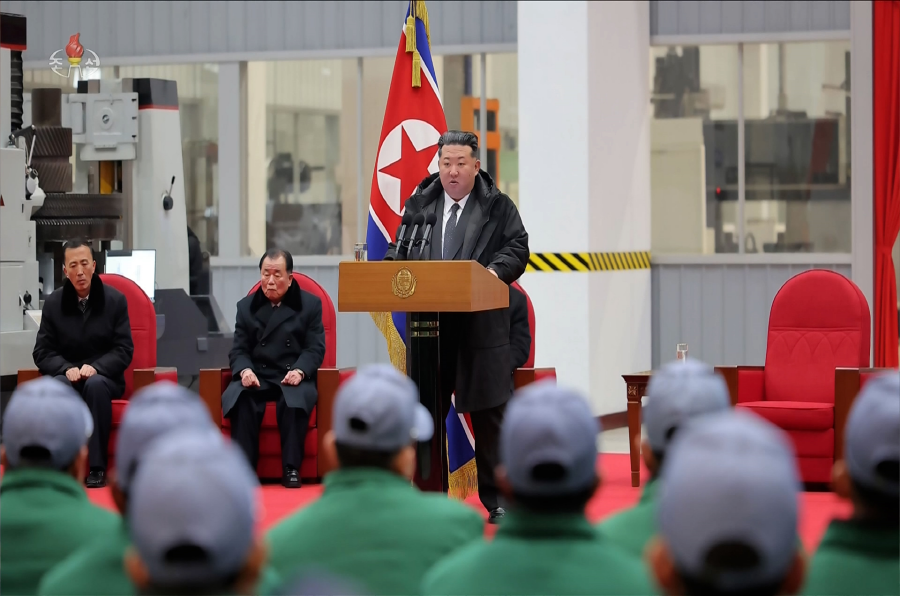
According to the Korean Central News Agency (KCNA), Kim attended the ceremony on January 19 in Hamhung, South Hamgyong Province, where he delivered a speech emphasizing that the project’s significance lay not merely in physical modernization but in what he described as a decisive correction of “chronic irresponsibility and self-preservation” within the Cabinet. Kim asserted that the project, despite its importance to the national economy, had encountered problems from its earliest stages due to deficiencies in leadership and execution.
During his remarks, Kim singled out Vice Premier Yang Sung-ho, who oversaw the machinery industry, criticizing his performance and declaring him unfit for his position. Kim ordered Yang to step down immediately, publicly announcing his dismissal during the ceremony. While Kim stated that Yang’s conduct did not constitute an “anti-Party act”—a designation that can carry the harshest penalties in North Korea—the public nature of the dismissal was widely interpreted as a severe warning to other senior officials.
Yang Sung-ho is a prominent figure who previously served as minister of machinery Industry and director of the Daean Heavy Machinery Complex and was once an alternate member of the Politburo. His removal in such a public forum is widely viewed by analysts as an exemplary disciplinary measure intended to underscore Kim’s intolerance for bureaucratic inertia and to reinforce discipline across the Cabinet.
Kim also extended his criticism to other senior officials, including former Cabinet Premier Kim Tok-hun and Party officials responsible for economic policy guidance. He argued that these officials had failed to provide effective oversight and had acted merely as bystanders during the modernization process.
Notably, Kim Tok-hun—who was reassigned last December from premier to Workers’ Party economic secretary, a move widely interpreted as a demotion—has not appeared in state media since the Party’s plenary meeting last month, fueling speculation that he may already be under investigation or facing disciplinary sanction.
Kim further stated that inspections conducted by a team of experts from the military-industrial sector had identified more than 60 deficiencies requiring corrective action. He accused Cabinet officials of attempting to evade responsibility by shifting blame onto other sectors even after these problems had been flagged, describing such behavior as emblematic of systemic failures in cadre management and administrative culture.
In remarks suggesting broader institutional implications, Kim criticized the existing cadre appointment system and warned that “deep-rooted irresponsibility, self-preservationism, and factionalism” must be eliminated. Analysts interpret these comments as signaling the possibility of a wider purge of economic and administrative officials, particularly as the Party Congress approaches.
Additional personnel changes appear to support this assessment. On January 21, North Korean state media reported that Kim Sun-myong delivered a speech as minister of chemical industry at a ceremony marking the completion of a catalyst production facility at the Namhung Youth Chemical Complex.
His appearance confirms the replacement of former minister Kim Chol-ha, who has not been seen publicly since mid-2024. Observers note that responsibility for shortcomings at major chemical facilities, including Namhung and Hungnam, may have contributed to these leadership changes.
Taken together, Kim Jong Un’s remarks suggest a broader indictment of the Cabinet’s capacity to manage economic restructuring and technological modernization. In his speech, Kim stated that the Ryongsong project had exposed systemic weaknesses in the Cabinet’s work system, as well as deficiencies in the qualifications and attitudes of senior cadres. He argued that retaining officials unable to adapt to current demands out of deference or political convenience would be detrimental to national development.
North Korea specialists widely assess these developments as part of a pre-Congress campaign to reassert discipline, consolidate control over economic governance, and prepare the ground for a significant reshuffling of both Party and Cabinet leadership at the upcoming Party Congress and the subsequent session of the Supreme People’s Assembly.
Separate reporting by Rodong Sinmun has drawn attention to apparent strains in North Korea’s relations with China. On January 18, the newspaper briefly noted that Kim Jong Un had sent New Year’s greetings to the president of the People’s Republic of China and his wife, without naming Xi Jinping or publishing the content of the message. The greeting was mentioned only in passing, alongside communications sent to leaders of several other countries.
This treatment stands in sharp contrast to the extensive coverage afforded to exchanges with Russian President Vladimir Putin. Kim’s New Year’s message to Putin, as well as Putin’s reply, were prominently featured in state media, emphasizing what North Korea described as an “unbreakable friendship” and “combat-ready camaraderie.” Subsequent exchanges surrounding Kim’s birthday were similarly highlighted.
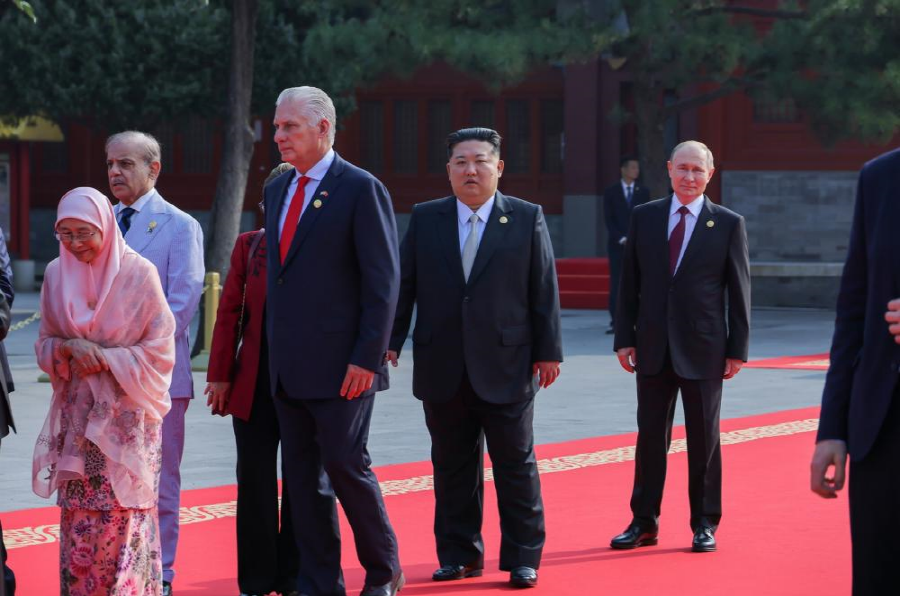
Diplomatic observers note that the muted handling of correspondence with China—North Korea’s largest economic and political partner—appears deliberate, particularly given the delay between receipt of Xi’s greeting and its eventual mention in state media. The disparity in coverage has been widely interpreted as signaling Pyongyang’s dissatisfaction with Beijing, including China’s continued enforcement of UN Security Council sanctions and its recent diplomatic engagement with South Korea.
Tensions appear to have intensified following North Korea’s deepening alignment with Russia, including reported troop deployments in support of Moscow. Despite expectations that Kim’s attendance at China’s Victory Day celebrations would help stabilize bilateral ties, North Korean media gave minimal attention to the event, while official narratives continued to emphasize relations with Russia.
Additional indicators—such as changes in the operation of North Korean restaurants in China and the repatriation of overseas staff—have further fueled speculation that DPRK–China relations are entering a period of sustained strain. Diplomatic sources suggest that the symbolic downgrading of exchanges with Beijing reflects not merely temporary discomfort but a more structural recalibration of North Korea’s external priorities.
Kim Jong Un Says North Korea’s Deployment of Troops to Russia Was Not Done in Exchange for Any Payment, Raising Questions About Compensation and Regime Intent
Kim Jong Un, chairman of the State Affairs Commission of North Korea, has publicly stated that North Korean soldiers deployed overseas are fighting “without any pay, compensation, or personal interest.” He made these remarks during a speech at the 80th anniversary celebration of the Socialist Patriotic Youth League, held on January 16 at Kim Il Sung Stadium in Pyongyang, according to reports by Rodong Sinmun and other state media on January 17.
Kim’s comments echoed nearly identical remarks delivered one month earlier at a welcoming ceremony for an engineering regiment returning from deployment in Russia. While such language has previously been interpreted as ideological rhetoric emphasizing loyalty and sacrifice, analysts increasingly assess that Kim’s repeated emphasis on the absence of compensation may reflect the actual conditions of deployment.
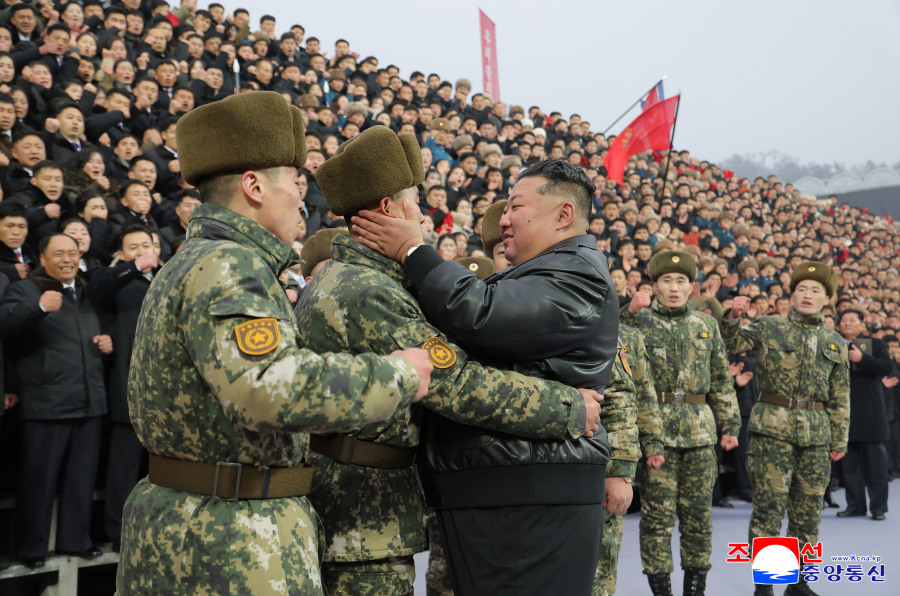
In his address, Kim stated that North Korean soldiers are “going to distant battlefields without any compensation, sacrificing their youth solely out of loyalty to the orders of the homeland.” He further asserted that no other soldiers in the world fight “without compensation or vested interests,” adding that the only desire shared by these troops is “the prosperity of the homeland.”
Specialists note that these remarks strongly suggest that deployed personnel are not receiving individual payments for overseas service. This has raised questions about whether Russia failed to deliver agreed compensation, or whether payments were received at the state level but not distributed to individual soldiers. A diplomatic source assessed that Kim’s remarks appear designed to preempt internal dissatisfaction while countering international criticism that characterizes the deployment as mercenary activity.
Soldiers who had reportedly served overseas were present at the event, where Kim praised them as exemplars of loyalty and discipline. He also remarked that “the world does not understand” such devotion—a statement observers interpret as a direct response to growing external scrutiny of North Korea’s overseas military deployments.
Another central theme of Kim’s speech was “succession.” The term was reportedly used more than a dozen times, with Kim emphasizing the role of youth as inheritors of the “revolutionary cause.” He portrayed succession as an unbroken historical process and framed the Youth League as a key institutional vehicle for sustaining regime continuity.
Kim also contrasted North Korea’s youth with what he described as social decay abroad, asserting that young people in other countries are mired in violence, decadence, and pessimism. By contrast, he claimed, North Korea’s youth, remain ideologically unified and resilient. Notably absent from the speech was any reference to the regime’s recent enactment of strict ideological control laws targeting youth culture and expression.
Senior party and state officials attended the event, though state media did not identify them by name. Kim Jong Un’s daughter, Kim Ju-ae, was neither mentioned nor identified in coverage of the event. Official photographs showed Kim Il Sung Stadium filled to capacity, underscoring the event’s political significance.
The Socialist Patriotic Youth League is one of the four major mass organizations affiliated with the Workers’ Party of Korea, with membership mandatory for most citizens aged 14 to 30. Its membership is estimated at approximately five million. The anniversary event marked the first major national political gathering ahead of the Ninth Party Congress, which is widely expected to convene in the near future.
Analysts assess that Kim’s emphasis on overseas deployments, youth unity, and uncompensated sacrifice reflects an effort to suppress potential internal discontent ahead of the Party Congress. In particular, the glorification of “unpaid devotion” appears intended to preempt public discussion of compensation or accountability related to overseas military deployments.
Military Indoctrination Materials Emphasize Defense of Baekdu Bloodline Succession
Separately, it was revealed on January 16 that the General Political Bureau of the Korean People’s Army (KPA) recently distributed political education materials titled “Crush Those Who Oppose the Revolutionary Succession of the Baekdu Bloodline with a Nuclear Club” throughout the armed forces.
According to a military source in Pyongyang, the materials were disseminated in response to growing internal skepticism and unease, particularly within the military, over the increasing public prominence of Kim Ju-ae as a potential future leader. The materials reportedly emphasize the military’s obligation to defend not only Kim Jong Un personally but also a prospective fourth-generation hereditary succession.
The indoctrination materials have been circulated to major military institutions, including the Ministry of National Defense, the General Staff Department, and the Military Security Department, and are scheduled for intensive study sessions in January and February. The source indicated that the initiative reflects the leadership’s intent to solidify ideological unity within the military ahead of the Party Congress and to formalize the armed forces’ role in succession politics.
The materials place heavy emphasis on leadership succession and include anecdotal narratives portraying Kim Jong Un as a precocious and capable leader from an early age. Analysts interpret this as an effort to counter doubts about youthful leadership and to normalize the concept of a young successor.
The language used in the materials is unusually explicit. One passage reportedly states that anyone who opposes or obstructs the succession of the Baekdu bloodline must be “crushed without mercy by a nuclear club.” Defectors and analysts suggest that this phrasing reflects heightened sensitivity within the leadership to internal skepticism, particularly concerning Kim Ju-ae’s age and gender.
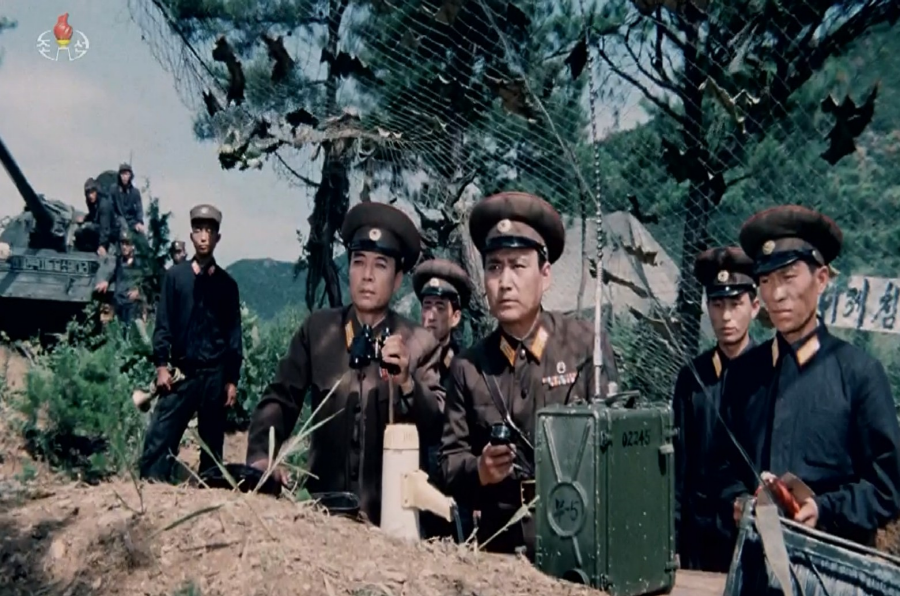
Reports indicate that reactions within the military have been mixed, with some officers expressing unease at the severity of the language. Others reportedly interpret the phrase as a warning that insufficient enthusiasm for the succession could result in severe punishment.
The materials repeatedly describe the KPA as the “army of the leader,” the “vanguard of succession,” and the “first-line guard of the Baekdu bloodline,” reinforcing the expectations that the military will serve as the regime’s most reliable pillar during a future leadership transition. A source characterized the materials as effectively constituting a written order mandating absolute loyalty to the ruling bloodline across generations.
Following the indoctrination campaign, large-scale loyalty pledge events are reportedly planned to begin in February, including ceremonies timed to coincide with Kim Jong Il’s birthday and other politically symbolic anniversaries.
Image Politics and the Normalization of Hereditary Succession
Kim Ju-ae’s frequent public appearances are widely interpreted as part of Kim Jong Un’s broader strategy of image-based governance. Analysts describe these appearances as intended to cultivate an image of familial benevolence while simultaneously normalizing the next stage of hereditary succession.
North Korea has long been described as a “theater state,” in which political authority is reinforced through carefully staged symbolism and mass spectacle. Observers note that Kim Jong Un has expanded this approach by incorporating his immediate family directly into the regime’s propaganda narrative—contrasting with the relative secrecy surrounding Kim Jong Il’s family.
According to Eun-joo Park, a researcher at the Korea Institute for National Unification, recent imagery featuring Kim Ju-ae reflects a broader shift in North Korea’s governance style from text-centered ideological messaging to image-centered power signaling. Park notes that visual positioning—such as Kim Ju-ae standing beside or centrally aligned with Kim Jong Un—conveys implicit messages about authority and succession.
Scenes depicting senior military officials bowing to Kim Ju-ae, as well as intimate father-daughter interactions, are assessed as deliberate efforts to reframe her image from that of a protected child to a recognized political figure. Repeated exposure to such imagery is intended to familialize the public with the future power configuration of the Baekdu bloodline and, ultimately, render it unquestioned.
-
PREV [North Korea Inside]
-
NEXT [North Korea Inside]