


North Korea’s Concurrent Military Strengthening and Social Control – September 2025

Lee Seung-hyun
Research Fellow at SAND Institute / Ph.D. in Public Administration
In September 2025, North Korea undertook a series of coordinated measures aimed at simultaneously enhancing military capabilities and consolidating internal political control. These actions, directed by Kim Jong-un, reflect a strategic calculus to reinforce regime stability while signaling deterrent capacity to both domestic and international audiences.
Military Activities and Strategic Signaling
Kim Jong-un prioritized military modernization, overseeing an expanded meeting of the State Defense Commission, observing a missile test at the Academy of National Defense Science, and addressing military commanders.
On September 18, North Korea test-launched a new medium-range ballistic missile. While officially framed as a technical verification of solid-fuel propulsion and re-entry vehicle resilience, the launch carried a pronounced strategic message aimed at U.S. bases in Guam and Japan. This action is widely interpreted as a countermeasure to the intensification of U.S.-ROK joint military exercises, while also signaling the potential for future ICBM deployments or military reconnaissance satellite launches.
Kim emphasized scientific and technological advancement at Kim Chaek University of Technology, directing independent progress in rocket engines, satellite communications, and artificial intelligence. This effort signals an intent to develop domestic research and defense capabilities, consistent with North Korea’s growing military-technical cooperation with Russia. Kim also reinforced regime loyalty through engagements at the Mangyongdae Revolutionary School and Youth League events, underscoring the long-term goal of sustaining elite cohesion.
Internal Social and Political Control
North Korea’s leadership concurrently strengthened social and political control mechanisms. Choe Ryong-hae highlighted compliance with laws and elimination of “anti-socialist and non-socialist acts,” addressing concerns about market proliferation and public discontent. Cabinet discussions, chaired by Premier Kim Duk-hun, nominally addressed agricultural and energy issues but focused largely on production slogans rather than substantive policy measures, reflecting structural economic constraints and the continuing impact of international sanctions.
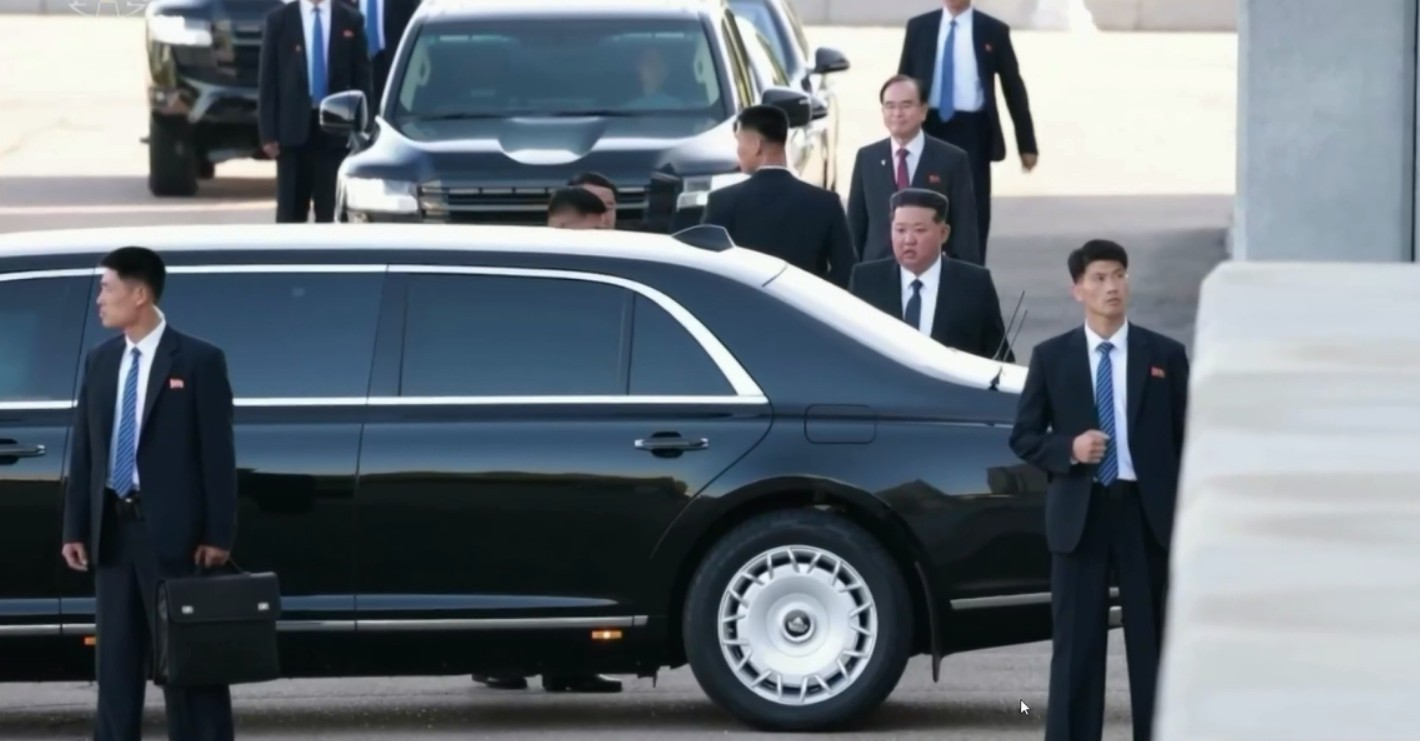
Kim Jong Un, Chairman of the State Affairs Commission of North Korea, boards a vehicle after delivering a policy speech
at the 13th session of the 14th Supreme People's Assembly at the Mansudae Assembly Hall in Pyongyang
on September 21. 2025.09.22/Photo: Korean Central Television
Externally, Pyongyang conducted a mass loyalty rally emphasizing nuclear deterrence as central to national survival. The event framed the United States as a “provoker of nuclear war,” serving both domestic propaganda and strategic signaling functions. The coordination of military and ideological measures underscores North Korea’s strategy to maximize regime security and leverage its position in potential future negotiations.
Analytical Assessment
From an international relations perspective, North Korea’s September 2025 actions exemplify realist behavior: maximizing security under external pressure and isolation. Sociologically, the regime employs a “crisis mobilization” model, reinforcing compliance and loyalty through youth engagement, propaganda, and ideological education. From a North Korea studies perspective, these measures may be effective in the short term but risk accumulating public fatigue and the eventual erosion of social control.
Future Outlook
Military Trajectory: High likelihood of a military parade, unveiling of new weapons systems, and potential ICBM or reconnaissance satellite launch around the October Party Founding Day anniversary. Such actions would serve as both a direct strategic warning to the U.S. and ROK and as a demonstration of enhanced military cooperation with Russia.
Domestic Control: Social control measures are expected to intensify in response to worsening economic conditions and growing public discontent. While such measures may preserve short-term regime stability, they could exacerbate political tensions and impose long-term governance challenges.
Conclusion
North Korea’s September 2025 activities reflect a coordinated strategy of military strengthening and social control designed to safeguard regime survival, project deterrence, and manage internal dissent. U.S. and allied policymakers should monitor both military signaling and domestic control trends to assess regime stability, potential escalation risks, and negotiation postures.