

August Analysis of North Korean Trends
-Escalating Military Tensions and Social Cohesion Linked to North Korea-China-Russia Solidarity-

Lee Seung-hyun
Research Fellow, Sand Research Institute, Ph.D. in Public Administration
Overview
In August 2025, North Korea sought simultaneously to reassert itself on the international stage and to project domestic resilience. Externally, Pyongyang moved to reinforce solidarity with China and Russia, highlighted by the confirmation of Kim Jong Un’s participation in Beijing’s September Victory Day parade.
Internally, the regime emphasized social cohesion and endurance, while militarily it showcased both defensive and offensive upgrades. Together, these moves reinforced a three-pronged strategy: diplomatic reemergence, military demonstration, and ideological consolidation.
Military Posturing
August witnessed visible efforts to strengthen North Korea’s military posture, particularly in air defense and naval capabilities:
Air Defense Enhancements. On August 23–24, Pyongyang announced test launches of two new types of anti-aircraft missiles, aimed at countering low-altitude threats such as drones and cruise missiles. This signals an effort to build layered interception capabilities against the precision-strike assets of the U.S.-ROK alliance.
Naval Modernization. Propaganda releases repeatedly highlighted the operation of a new destroyer, underscoring Kim Jong Un’s declared ambition to expand the maritime dimension of North Korea’s nuclear force.
Strategic Messaging. Together, these moves conveyed a dual message of strengthening both the “shield” (air defense) and the “spear” (naval and tactical missile forces).
Interestingly, while North Korea condemned the U.S.-ROK “Ulchi Freedom Shield” exercise, its response was relatively restrained—limited to a Defense Ministry statement—suggesting Pyongyang is calibrating rhetoric while relying on visible military displays to project resolve.
Political and Diplomatic Maneuvers
Kim Jong Un’s formalized attendance at Beijing’s parade marks his first substantive participation in a multilateral diplomatic setting since the pandemic. This appearance is highly symbolic, serving multiple objectives:
Demonstrating bloc alignment. Reinforcing trilateral solidarity with China and Russia, while signaling to the West and Seoul that Pyongyang is not isolated.
Diluting sanctions narratives. Positioning closer ties with Moscow and Beijing as an alternative to isolation, while seeking material benefits in energy, raw materials, and logistics.
Bolstering negotiation leverage. Showcasing diplomatic agency to set conditions for future engagement with the United States and South Korea.
This external activity coincides with a steady stream of policy statements by Kim Yo Jong on South Korea’s peace overtures, suggesting that Pyongyang intends to combine external negotiation postures with internal consolidation through military strength.
Domestic Narrative and Social Cohesion
Domestically, August was marked by efforts to build ideological solidarity around sacrifice.
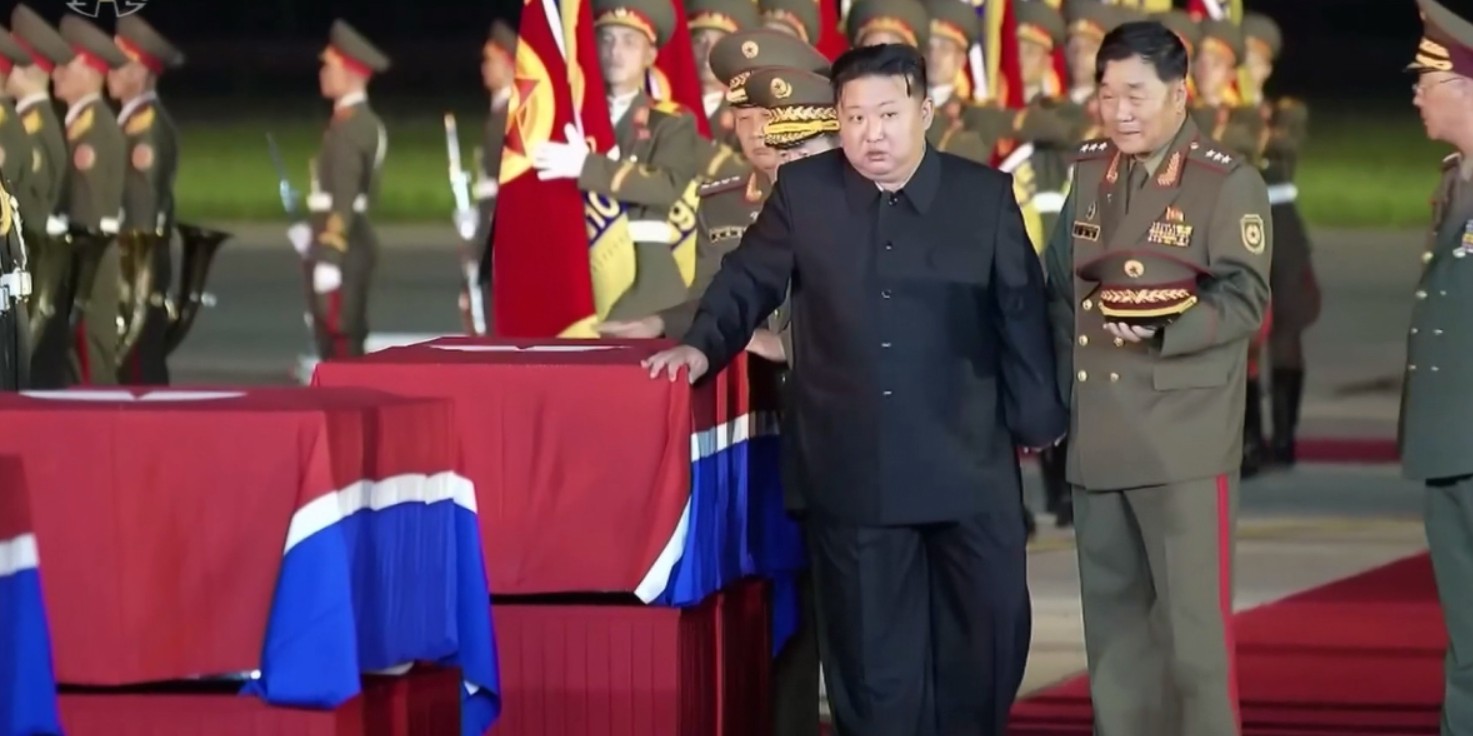
Honoring Combatants. Kim Jong Un presided over ceremonies awarding commendations to soldiers deployed abroad, meeting bereaved families and framing their sacrifices as a source of national pride.
Institutionalizing Sacrifice. By linking veterans’ welfare and social security commitments to regime legitimacy, the leadership is embedding sacrifice into the broader social and ideological fabric—potentially normalizing future mobilization and deployments.
Economic messaging, by contrast, remained largely symbolic. Aside from a single appearance acknowledging livelihood concerns, Pyongyang emphasized expectation management rather than concrete relief. While Kim’s Beijing visit may offer limited logistical and energy gains, sanctions-related hardships will persist absent structural changes in enforcement.
Outlook: September and Beyond
North Korea’s August trajectory suggests an enduring framework of military-first governance, with diplomacy and domestic management as secondary but supporting elements. Going forward, three key developments merit close attention:
High-level diplomacy. The outcomes of Kim’s bilateral meetings with Xi Jinping and Vladimir Putin—and any potential trilateral gathering—will indicate the depth of bloc alignment.
Material cooperation. Whether North Korea secures concrete transfers of military supplies, technology, energy, or logistics support from China and Russia will shape the regional security balance.
Domestic institutionalization. Expansion of veterans’ policies could normalize mobilization and reinforce the ideological foundation of the regime’s hardline stance.
If these three axes converge, the latter half of 2025 is likely to witness a hardened structure characterized by:
Deepening North Korea-China-Russia bloc formation, Persistent military demonstrations, and Sustained domestic cohesion politics.
Strategic Implications
The consolidation of North Korea’s bloc diplomacy with China and Russia, coupled with its emphasis on military modernization and internal unity, signals a trajectory toward heightened military tension and prolonged confrontation.
For policymakers, the challenge lies not only in deterring North Korea’s advancing capabilities but also in managing the structural realignment of Northeast Asia’s security architecture, where bloc politics are increasingly supplanting past patterns of crisis management.