

Kim Myongsung’s Inside North Korea
· North Korea Imposes Nationwide Lockdown During Kim Jong-un’s China Visit
· “Stop North Korean Defectors from Seeking Asylum”: Moscow–Pyongyang Agreement Raises Alarm
· North Korean Media Amplifies Kim Jong Un’s Image Alongside Xi and Putin
· North Korean diplomat who scrubbed bathhouses now shopping for luxury goods in Shenyang
Kim Myong-sung

According to a source in Yanggang Province, the Central Committee’s Organization and Guidance Department issued directives on August 30 to all national institutions, including the Ministry of State Security and the Ministry of Social Security, ordering heightened security measures through September 10.
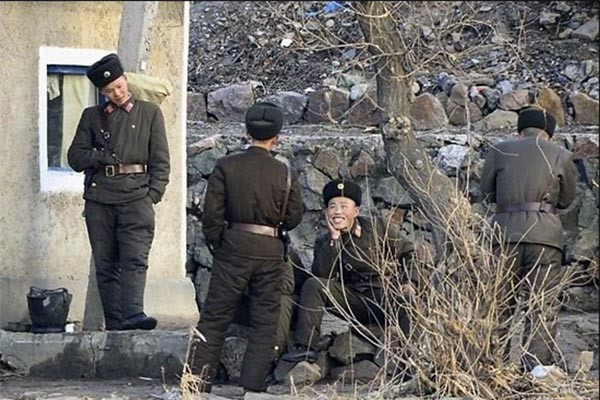
The implementation of these measures has been extensive. Major cities, including Pyongyang, instituted near-lockdown traffic controls, while rural areas were brought under emergency administrative orders. Civilian movement has been restricted almost entirely, with exceptions granted only for essential personnel. Even in cases such as family funerals, travel permits require direct authorization from central security agencies, effectively resulting in a nationwide freeze on civilian mobility.
Transportation and railway authorities were instructed to intensify inspection regimes, doubling or tripling checks of passenger documents and cargo. Militarily, troop deployments around the capital region and border areas were significantly reinforced, with guard posts elevated to quasi-war status. Special security units under each corps were ordered to establish additional defensive perimeters.
Legal and judicial enforcement has been similarly tightened. Authorities ordered immediate arrest and interrogation of unauthorized travelers, unregistered lodgers, and individuals lacking clear destinations. Local officials and People’s Units are required to report daily on resident movement patterns, while public speech has been brought under surveillance, with “unnecessary words” officially categorized as hostile acts.
The campaign has been coupled with ideological mobilization. Under the slogan, “Let us defend the Supreme Leader’s overseas activities with our lives,” Party officials and Youth League cadres have been dispatched to neighborhoods to enforce compliance and frame the restrictions as a loyalty obligation.
Despite these measures, reports indicate growing civilian frustration. Market vendors have expressed concern over blocked travel permits, noting the disruption to commercial activity. Residents stranded on business trips report heightened anxiety over prolonged separation from their families and livelihoods. Anecdotal complaints such as, “When the Supreme Leader travels, the people’s hands are tied first,” underscore the emerging discontent.
Authorities appear to be treating expressions of dissatisfaction as subversive, categorizing them as hostile acts and responding with intensified crackdowns. Nevertheless, signs of economic strain and rising prices suggest that the regime’s heavy-handed security posture is amplifying internal instability rather than suppressing it.
A high-level source has disclosed that North Korea’s Ministry of State Security and Russia’s Federal Security Service (FSB) signed a confidential Memorandum of Understanding (MOU) in Moscow in mid-August. The agreement reportedly focuses on the treatment of North Korean nationals in Russia, with particular emphasis on defectors.
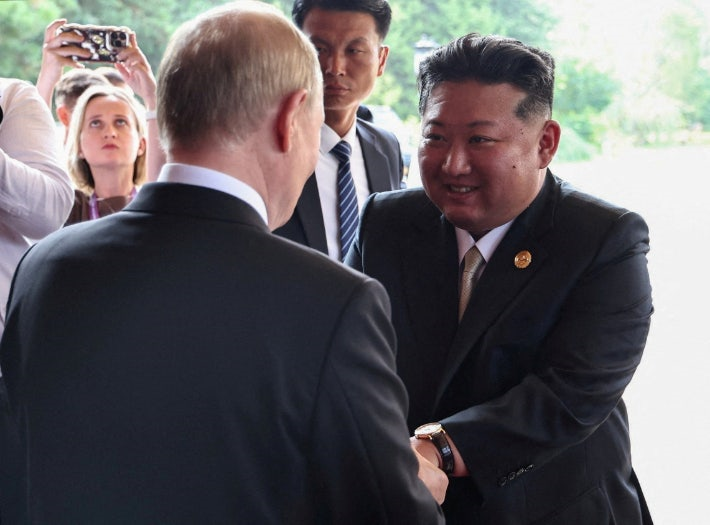
According to the source, this MOU creates a framework for “law enforcement cooperation” that effectively extends bilateral coordination into judicial and administrative areas, well beyond the already robust military and economic partnership. Analysts warn that the arrangement could significantly undermine the ability of the United Nations High Commissioner for Refugees (UNHCR) office in Russia to provide meaningful protection to North Korean asylum seekers.
The MOU is said to consist of four main provisions:
Defector Procedures and UNHCR Circumvention
Russia has agreed to tighten control over asylum applications filed by North Korean defectors, including delaying refugee recognition procedures and transmitting related information directly to Pyongyang’s State Security Department. This would severely curtail the role of the UNHCR, which, until now, had at least nominal authority in such cases.
Legal Status of North Korean Nationals
Russian authorities will treat North Korean nationals who attempt to renounce citizenship and apply for asylum as “North Koreans residing in Russia.” Their personal information will reportedly be shared with North Korean intelligence services. In effect, this categorization formalizes the path for their repatriation, rather than recognition as refugees under international law.
Judicial and Criminal Cooperation
The two sides agreed to explore an extradition framework covering not only criminal offenders but also defectors. Plans reportedly include establishing a new consultative mechanism between prosecutorial and judicial bodies, institutionalizing procedures for repatriation.
Expanded Intelligence Sharing
The FSB will assume responsibility for managing information related to North Korean nationals and defectors, coordinating directly with Pyongyang’s Ministry of State Security. This arrangement paves the way for joint surveillance of defector movements inside Russia.
Experts note that while the agreement is framed as administrative and legal cooperation, its practical effect is to eliminate asylum options for North Koreans in Russia. “This development institutionalizes human rights violations under the guise of law enforcement cooperation,” one observer said. “If implemented, it will effectively close one of the last viable pathways for North Korean defectors seeking refuge.”
The reported MOU thus raises significant concerns about Russia’s compliance with its international obligations and the broader implications for refugee protection norms.
North Korean Media Amplifies Kim Jong Un’s Image Alongside Xi and Putin
North Korean state media devoted extensive coverage on April 4 to Kim Jong Un’s participation in China’s 80th anniversary Victory Day commemoration. The intent appears to be projecting Kim as a peer to Chinese President Xi Jinping and Russian President Vladimir Putin, both to consolidate internal legitimacy and to reinforce North Korea’s international stature.
The Rodong Sinmun, the official newspaper of the Workers’ Party, dedicated half of its six-page issue—three full pages—to Kim’s visit. The paper featured 46 photographs, including images of Kim in close conversation with Xi, embracing Putin, and traveling with the Russian leader in an Aurus limousine. One prominent photo depicted Kim standing at Tiananmen Gate between Xi and Putin. By contrast, South Korea’s National Assembly Speaker Woo Won-shik was shown only in a group shot, underscoring the propaganda priority of elevating Kim’s presence.
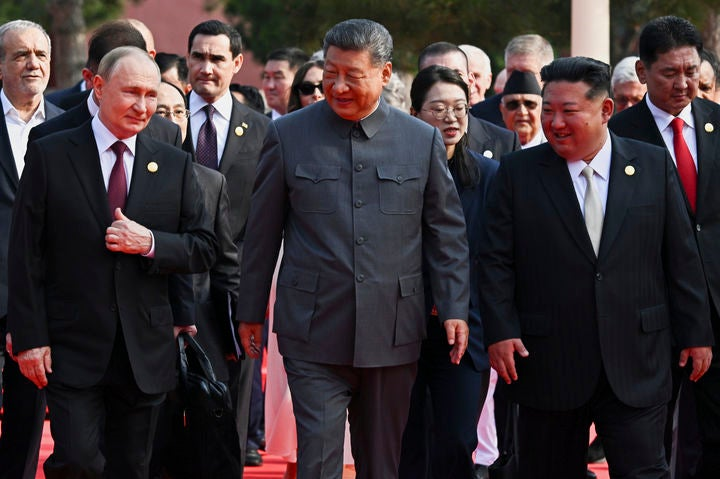
The Korean Central News Agency (KCNA) reinforced this narrative, highlighting Kim’s bilateral talks with Putin on April 3 at the Diaoyutai State Guesthouse in Beijing. According to KCNA, the two leaders discussed “prospective cooperation plans,” with Putin expressing gratitude for North Korea’s troop deployments to Russia and framing the relationship as one of “trust, friendship, and alliance.” Kim pledged continued support for Russia’s “struggle,” describing it as a “brotherly duty.”
These discussions reportedly included North Korea’s commitment to dispatch both combat engineers and construction personnel for reconstruction projects in the Russian region of Kursk. Russia previously announced that North Korea agreed to send 1,000 combat engineers and 5,000 construction workers. South Korea’s National Intelligence Service assessed on September 2 that approximately 1,000 combat engineers had already arrived on site.
Russian media indicated that Putin extended multiple invitations for Kim to visit Russia, though this was omitted in North Korean reporting—underscoring Pyongyang’s selective framing. Instead, domestic propaganda has concentrated almost exclusively on Kim’s visibility with Xi and Putin, projecting the image of a leader operating at the highest levels of international diplomacy.
Analysts note that this portrayal serves two primary functions: reinforcing Kim’s domestic authority by depicting him as a respected global actor, and signaling to both adversaries and partners that North Korea is firmly embedded within the China-Russia strategic orbit.
North Korean diplomat who scrubbed bathhouses now shopping for luxury goods in Shenyang
Shenyang’s Xita (Xitajie) district, once a hub for South Korean expatriates and tourists, is increasingly becoming a luxury shopping destination for North Korea’s elites, including diplomats, traders, and the so-called donju (emerging wealthy class). Local reporting indicates that as cross-border exchanges resume following pandemic-related closures, North Korean consumers with access to foreign currency are purchasing significant quantities of luxury goods ranging from cosmetics and electronics to high-end fashion brands.
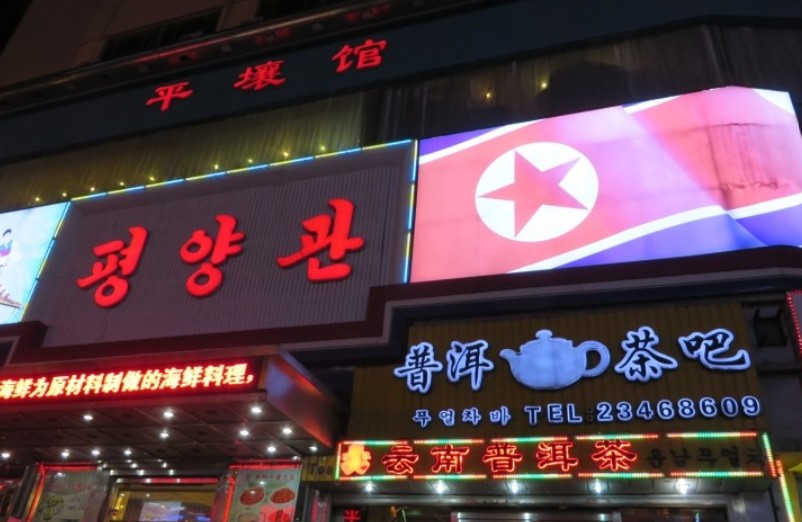
This represents a marked contrast with conditions just a few years ago. During the COVID-19 border closures, North Korean diplomats and trade personnel stranded in China reportedly faced severe financial distress, in some cases resorting to menial labor such as cleaning bathhouses. At the time, Pyongyang’s diplomatic missions abroad struggled to pay rent, and Kim Jong Un himself described the domestic economic environment as “a trial no less severe than wartime.”
The post-reopening period, however, has seen a resurgence in both official and quasi-official economic activity. North Korean diplomats and traders with access to hard currency now serve as conduits for consumer goods destined for Pyongyang’s high-end department stores. Sources suggest that while genuine imported goods in Pyongyang remain prohibitively expensive, items sourced from Shenyang—including lower-priced Chinese substitutes and counterfeit luxury brands—are sold at more accessible rates.
This shift is reshaping the social and commercial landscape of Shenyang itself. The once vibrant Korean expatriate presence, marked by restaurants and entertainment venues catering to South Koreans, has largely receded. North Korean customers have filled the void, with Pyongyang-affiliated restaurants now primarily serving Chinese and North Korean patrons. Reportedly, South Koreans are no longer admitted, reflecting Pyongyang’s ideological shift under Kim’s “two states theory.”
The broader significance lies in what analysts describe as the emergence of a dual economic landscape. While the majority of North Koreans inside the country continue to face chronic shortages and rising prices, elites abroad are increasingly able to display status through conspicuous consumption. This bifurcation underscores widening inequality within the North Korean system and highlights how access to foreign markets—even in limited form—facilitates elite privilege and regime durability.
-
PREV [NK Focus]
-
NEXT [NK Focus]