

Kim Jong-un’s Military and Political Maneuvers and Kim Yo-jong’s Messaging Toward South Korea
Kim Dong-soo
Former North Korean Diplomat
Two discernible trends are emerging at the core of North Korea’s leadership. Kim Jong-un, Chairman of the State Affairs Commission, is showcasing military solidarity by personally engaging with forces deployed abroad, while his sister, Kim Yo-jong, First Vice Department Director of the Workers’ Party of Korea, is issuing pointed statements that marginalize South Korea. At first glance, these may appear as separate developments. In reality, they reflect mutually reinforcing elements of Pyongyang’s evolving strategy.

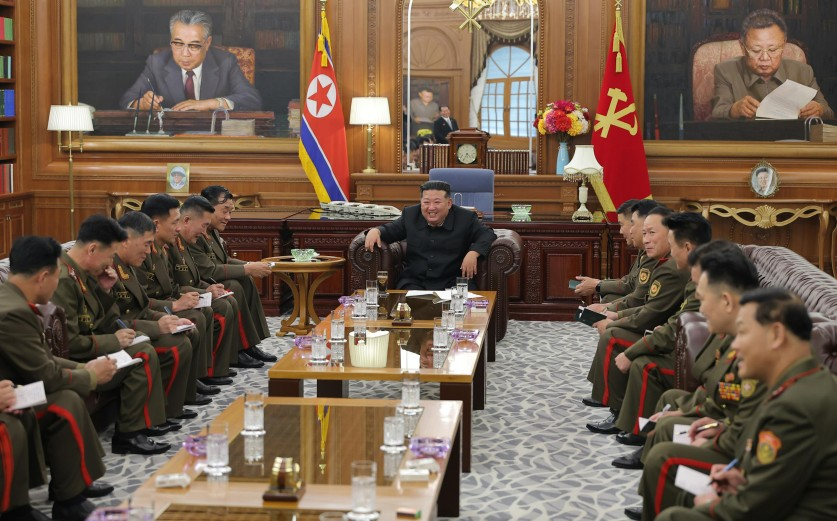
Kim Jong-un recently convened commanders returning from the Russian front at party headquarters in Pyongyang, signaling both personal endorsement and political investment in their operations. He also announced a rare national award ceremony tied specifically to battlefield activity—an exceptional move, as such events are normally reserved for major anniversaries.
This gesture is designed to reinforce military loyalty, provide symbolic legitimacy to North Korea’s support for Russia, and insulate the regime against the domestic costs of mounting casualties.
His statement that “our army is doing what is necessary and will continue to do so” can be read as signaling additional deployments. Concurrently, Pyongyang is expanding veteran support programs—an effort not only to manage grief and discontent, but also to reframe battlefield sacrifice as a national duty that binds the public more tightly to the regime.
In parallel, Kim Yo-jong has escalated rhetorical attacks against Seoul, issuing three consecutive statements by name against President Lee Jae-myung. She dismissed his policy overtures as “delusions” and “pipe dreams,” while pointedly rejecting the notion that inter-Korean ties remain an “intra-national” issue. Particularly notable was her use of Foreign Ministry channels, rather than the traditional inter-Korean apparatus, to convey these messages—underscoring that Pyongyang now regards South Korea as irrelevant to the negotiation framework and is reorienting toward a “direct deal with Washington” approach.
This reflects lessons internalized after the failed 2019 Hanoi summit. From Pyongyang’s perspective, Seoul’s attempted mediation during that period yielded no tangible results, leaving the regime unwilling to trust South Korean involvement in future negotiations. The emerging doctrine appears to be: preemptively block Seoul’s participation, pursue bilateral engagement with Washington, and address inter-Korean relations only secondarily and on Pyongyang’s terms.
3. Strategic Convergence of the Two Trends
Kim Jong-un’s militarized theatrics and Kim Yo-jong’s diplomatic messaging are not parallel lines but intersecting vectors. Externally, North Korea is leveraging its role in the Ukraine conflict to cultivate strategic space in the face of sanctions and isolation. Internally, it is cultivating a narrative of sacrifice and loyalty to manage domestic vulnerabilities. The deliberate sidelining of South Korea simplifies the negotiation landscape, placing Pyongyang in a stronger position to dictate the sequencing and substance of any future talks.
4. Outlook
This dual-track strategy—military demonstration coupled with diplomatic exclusion—is likely to harden the security environment on the Korean Peninsula. Even conciliatory initiatives from Seoul are likely to be rebuffed, with Pyongyang attributing blame for stalemate to the South. At the same time, North Korea’s repeated references to Seoul indicate that the South remains a central, if subordinate, variable in its strategic calculus.
Taken together, these maneuvers suggest not a short-term tactical adjustment but a deeper strategic recalibration. Pyongyang is seeking simultaneously to consolidate military loyalty and enhance diplomatic leverage, reflecting enduring lessons from the post-Hanoi environment. For policymakers, this signals a need to reassess both the limits of inter-Korean engagement and the implications of North Korea’s growing entanglement with Russia as part of its broader survival strategy.