

Kim Myongsung’s Inside North Korea
· North Korean Soldiers Wounded in Russia Reportedly Treated in Secrecy at Daesungsan General Hospital in Pyongyang
· North Korea Redefines August 15 as “First Liberation Day”: Implications of a “Second Liberation” Narrative
· Everyday Life in Pyongyang: Cultural Ripples from the Leader’s Family
Kim Myong-sung
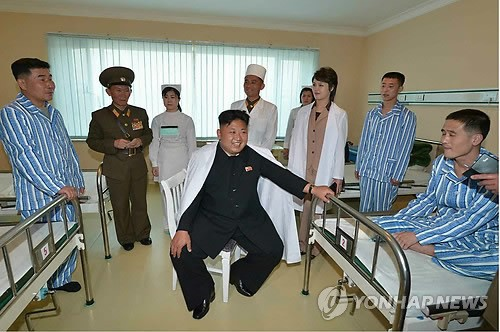
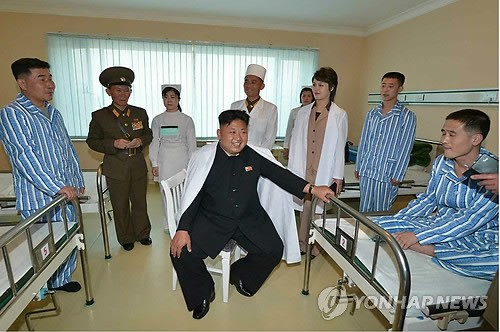
According to multiple sources familiar with North Korea, the newly established Daesungsan General Hospital in Samseok District now functions as the successor to the former Military Hospital No. 11 in Daedonggang District. It is reportedly serving as a central treatment facility for soldiers injured on the Russian front. Admissions began late last year and continue under highly restrictive conditions designed to prevent information leakage. Family visits are strictly prohibited.
One intelligence source stated that “severely injured personnel, those beyond the capacity of Russian field hospitals to treat, or whose lives are at risk, are being repatriated to Pyongyang,” estimating the number of patients in the hundreds.
Sources further report that the remains of North Korean soldiers killed in action on the Kursk front were repatriated and buried in three separate transfers between January and May 2024. It is believed that wounded soldiers returned during these same periods.
Intelligence assessments suggest that Pyongyang has deployed approximately 15,000 troops to Russia, with more than 4,700 killed or wounded. Due to the scale of casualties, some have been treated in Russian field hospitals or in Moscow’s Burdenko Central Military Clinical Hospital, according to international media reporting.
North Korea is expected at some point to publicly announce casualty figures, framing them as symbols of “revolutionary spirit and patriotism.” On July 30, state television broadcast footage of Kim Jong-un appearing visibly emotional as he stood before the remains of fallen soldiers repatriated from Russia.
A source familiar with North Korean internal affairs noted that the scale of losses—running into the thousands—constitutes a major domestic burden. Pyongyang appears to be imposing a tight gag order while preparing to use the narrative of sacrifice for regime propaganda at a time of its choosing.
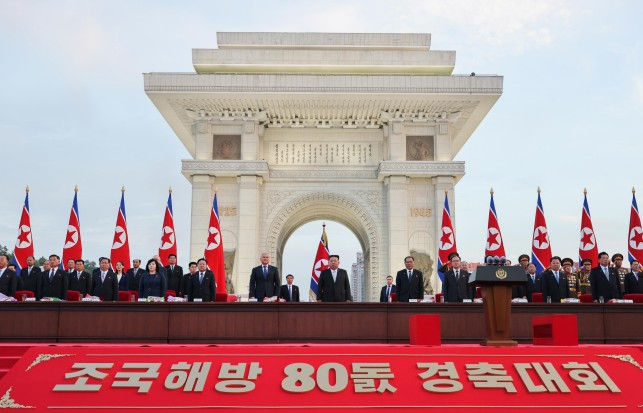
North Korea has recently rebranded Liberation Day (August 15) as the “First Liberation of the Homeland,” attributing the event to Kim Il-sung’s “self-reliant struggle.” Analysts view this as a rhetorical shift foreshadowing Pyongyang’s ambition to pursue a “second liberation”—namely, the forcible unification of the Korean Peninsula under its control.
On August 8, the Rodong Sinmun reported that a “central research discussion meeting” had been held to commemorate the 80th anniversary of liberation. The paper asserted that Kim Il-sung had achieved liberation by “annihilating Japanese imperialism through armed struggle.” This reinterpretation suggests that the “first liberation” (1945) will be followed by a “second liberation,” framed as the “restoration of territorial integrity” through unification.
Historical precedent is central to this narrative. In 1949, Kim Il-sung declared that he would expel U.S. forces and overthrow the “puppet regime” in Seoul to achieve “territorial integrity.” In December 2023, Kim Jong-un revived this theme at a Party Plenary Meeting, pledging to treat South Korea as a hostile foreign state and to employ “all means, including nuclear weapons,” to subjugate the peninsula. Unlike his grandfather’s reliance on conventional invasion, Kim Jong-un has explicitly integrated nuclear and missile capabilities into his doctrine.
Military experts assess Kim’s remarks as tantamount to a de facto “declaration of war.” Today, North Korea possesses significantly greater independent warfighting capacity than in the late 1940s, while Russia and China’s UN veto power reduces the likelihood of effective multilateral intervention.
The international environment arguably emboldens Pyongyang. With U.S. attention stretched across the Russia–Ukraine war, the Middle East, and Taiwan, Kim appears to see strategic opportunity. His military and logistical support to Russia may further deepen Moscow’s willingness to shield Pyongyang diplomatically.
Domestically, the revival of “territorial integrity” rhetoric also serves internal purposes. Amid persistent speculation about Kim Jong-un’s health, the emphasis on revolutionary struggle provides a vehicle to consolidate elite loyalty and lay the foundation for Kim Ju-ae’s future succession.
Moon Sung-mook, Director of the North Korea Strategy Center at the Korea Institute for Military Affairs, warned: “North Korea’s objective of reddening the South has not changed since the armistice. The Kim regime is openly threatening military unification while expanding its nuclear and missile arsenal and tightening its alignment with Russia.”
In short, Pyongyang’s new “First Liberation Day” discourse is best understood as a reaffirmation of its longstanding war plan, now backed by a nuclear capability. The risk of a sudden provocation from North Korea is therefore more acute than at any time in recent memory.
Everyday Life in Pyongyang: Cultural Ripples from the Leader’s Family
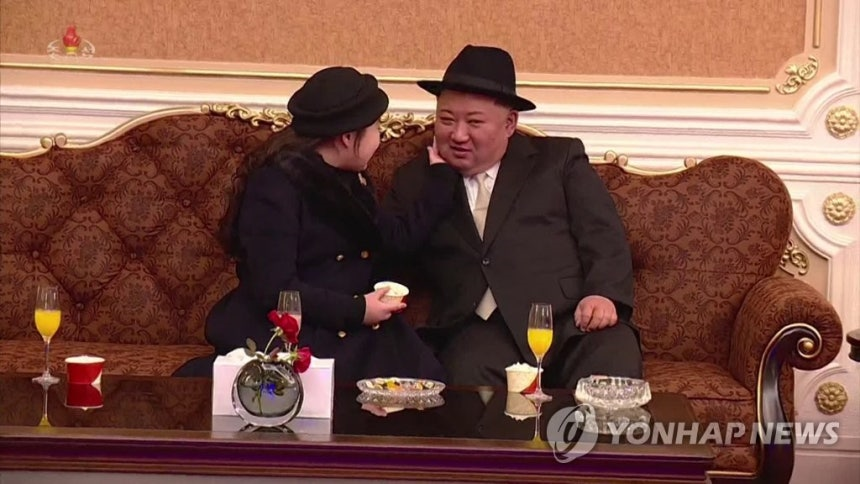
Daily life in Pyongyang is increasingly shaped by the carefully cultivated image of Kim Jong-un’s family. Practices once rare—such as parents kissing children on the cheek on their way to school—have become normalized since state media began airing affectionate scenes of Kim with his daughter, Kim Ju-ae.
According to sources in Pyongyang, the practice spread rapidly after Kim was shown kissing his daughter on state television in January 2023. Cheek-kissing is now common among younger parents, viewed as part of the cultural shift generated by the regime’s effort to project Kim as a family-oriented leader.
The “Kim Ju-ae effect” has also spilled into consumer culture. Observers note a surge in demand for nutritional supplements, particularly the South Korean-made vitamin “Tenten,” which sells for four times its South Korean price on the black market. Parents reportedly justify the expense by aspiring to raise children “as tall as Ju-ae,” who at age 12 is already nearly her father’s height. Height has direct social implications in North Korea, where military service remains a marker of family prestige and requires a minimum stature of 148 cm.
Meanwhile, Kim’s wife Ri Sol-ju, despite limited public appearances, continues to set trends in women’s fashion and beauty culture. Mini-skirts, high heels, and even “milk” and “beer” baths said to contribute to her fair skin have become status symbols among urban women. The latter trend has led to an increase in theft from state-run breweries.
A researcher at a state think tank observed: “The fact that private imagery of the leader’s family reshapes social behavior is emblematic of authoritarian states. Even seemingly trivial trends—beauty routines, children’s nutrition, or clothing—restructure family relationships, reinforce class divisions, and reshape consumer culture.”
-
PREV [Feature Article]
-
NEXT [News&Issue]