

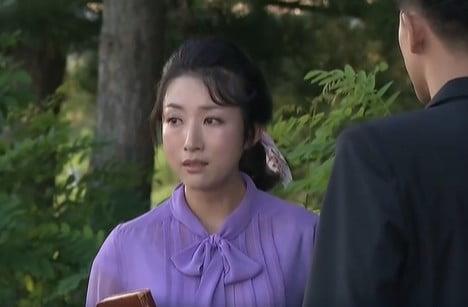
Cultural changes shown in the North Korean TV drama <Baekhakbeol's New Spring>

Lee Donghoon
Contributing editor of Tech Focus
North Korean TV dramas are filled with propaganda content from the North Korean government, so even the residents don’t watch them anymore. However, the drama <Baekhakbeol’s New Spring> released this year is a hot topic for its unique twist.
It also has a Korean cultural vibe
The main plot of the drama is about Hyongseop, the newly appointed party secretary in Baekhak-ri, which has fallen to the bottom of the list, struggling against corruption and bureaucracy and transforming the village into a socialist paradise. Up to this point, it seems to be no different from existing North Korean propaganda dramas.
However, if you look at the details, they changes. There are many scenes, lines, production, and visual effects that were not seen in existing North Korean dramas.
The most notable feature is that the drama depicts the future that the North Korean government wants. In the drama, North Korean residents freely use cell phones and computers. Students design and fly drones at school. Men also actively participate in household chores, such as cooking and feeding their families.
In addition, the depiction of the main character, the party secretary, is also significantly different from previous works. The party secretary in past North Korean works was the embodiment of the North Korean system. He was a perfect and strict being. However, in this work, such an attitude is openly criticized.
Hyung-seop, who was always scary and strict with the residents. Then, his superior tells him directly, “You need to change that razor-sharp personality. With that personality, you can be a law enforcement officer, but not a party officer.” After hearing this, Hyung-seop starts practicing smiling while holding a mirror.
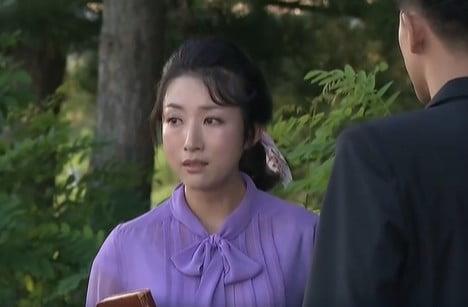
The main character is portrayed as a realistic figure, breaking away from the image of a perfect person, and it is evaluated that it gained sympathy from viewers.
The romance between a young man and woman is also portrayed more actively and realistically than before. In the drama, prosecutor Yeong-deok and agricultural researcher Gyeong-mi are in love. However, Yeong-deok’s mother appears in front of Gyeong-mi and says that she is against their relationship. It is very unusual for such a scene to appear in a North Korean drama, and there is an interpretation that it is aimed at the younger generation who are relatively familiar with South Korean content.
In North Korea, even when parents intervene in their children’s marriage, they usually talk to their children first, rather than their children’s lovers. Parents meeting their children’s lovers first was something that could only be seen in South Korean content.
In addition, the direct speech and behavior of young people are often revealed. Scenes such as a male athlete making a move to a woman he likes are something that is difficult to see in existing North Korean content. This drama even depicts the dark side of North Korean society to some extent.
A wife who was preparing to move with her husband who was assigned to a rural party secretary insists that her high school-going son will study in the big city, but they end up fighting with each other. She say that if you study at a rural school, you won’t be able to get into a good university. They also depict bribing the wife of an executive to solve a problem by asking for favors.
Also, the ending credits of this drama include the caption, “Sinchon County Baekseok Farm Filming Cooperation.” Baekseok Farm in Sinchon County is an actual farm located in South Hwanghae Province and is the filming location for this drama. This shows that the concept of sponsorship is being introduced to North Korean dramas as well.
North Korea's unique clichés still exist
Of course, it is difficult for this drama to escape the clichés of existing North Korean propaganda content in terms of its main plot.
A local source in North Korea told Radio Free Asia, “The dark reality of the rural area and the unfair nature of the ‘team management system’ are all hidden, and the propaganda of the drama is to blindly follow the orders of the party and the leader.” He asked, “Where in our country can there be anything that does not follow the orders of the party and the leader?”
Another source from Yanggang Province in North Korea pointed out, “<Baekhakbeol’s New Spring> is a drama that promotes the superiority of ‘self-reliance’ and the ‘team management system’ proposed by Kim Jong-un,” and “However, the ‘team management system’ has not been successful since it started in 2012, and it is a policy that has not gained support from farmers.”
The source said, “Because reality is distorted so much, <Baekhakbeol’s New Spring> is not being released on TV even though it is a TV series, but is being shown in theaters.”
For reference, <Baekhakbeol's New Spring> can also be viewed on YouTube. But, most North Korean residents can not have access to the Internet.
However, it is evaluated that they are trying to attract viewers through various changes. This is because they judged that the existing method filled with praise for the Kim family and propaganda for the regime would inevitably be ignored by the residents.
In particular, in a reality where many people are addicted to foreign content from Korea and China, they seem to have thought that people would watch it only if they added the characteristics and elements of foreign content.
As Korean dramas became popular among the younger generation and youth, Chairman Kim Jong-un enacted the so-called Rejection of Reactionary Ideology and Culture Act in December 2020, imposing extreme punishments such as sentencing those who simply watch them to 5 to 15 years in prison, and executing those who organize group viewings or copy and distribute them.
However, even these harsh measures seem to be difficult to prevent citizens from being captivated by Korean dramas and movies.