

Kim Myongsung’s Inside North Korea
· North Korea Hails Its Troops as "Heroes of Kursk Liberation," Officially Acknowledges Deployment to Russia
· Kim Yo-jong Purges Enemy Research Institute Deputy Director Over Passive Response to South Korean Crisis
· Kim Jong-un’s Hallucination Incident: "Potato Flour Looked Like Bone Dust"

Kim Myong-sung
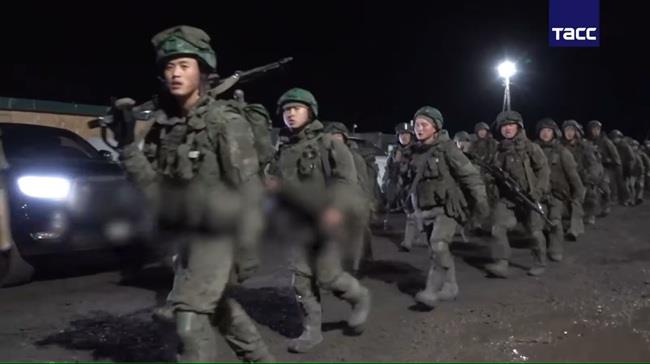
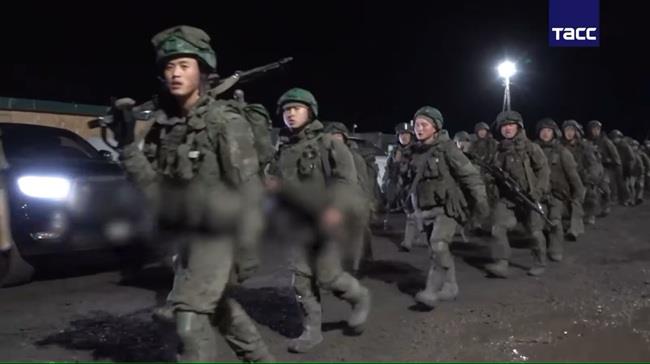
This is the first time Pyongyang has formally confirmed sending troops to aid Russia. Analysts believe the move seeks to secure tangible rewards from Russia in potential end-of-war talks and signals that the "comprehensive strategic partnership" between the two nations has evolved into a military alliance.
North Korea asserted that its military action was legitimate, citing Article 4 of the treaty establishing its comprehensive strategic partnership with Russia. Kim Jong-un personally authorized the deployment as "head of state," praising the troops as “heroes who upheld the nation's honor.”
The Rodong Sinmun elaborated, stating that Kim Jong-un determined that the current battlefield conditions invoked Article 4 of the DPRK-Russia treaty. He subsequently decided on troop deployment, informed Moscow of the decision, and instructed North Korean forces, via the Central Military Commission, to cooperate with Russian troops in eradicating "Ukrainian neo-Nazi occupiers" and liberating the Kursk area.
North Korea also announced plans to build a memorial in Pyongyang to honor the soldiers' achievements and promised special state benefits to the families of those killed. The Rodong Sinmun highlighted the unity between North Korean and Russian forces, stating, “The armies of Korea and Russia fought shoulder to shoulder in the same trenches, forging a bond of brotherhood through blood.”
Before Pyongyang's announcement, Russia had already admitted to North Korean involvement. On the 26th (local time), President Vladimir Putin and Russian Chief of the General Staff Valery Gerasimov acknowledged via video conference that North Korean soldiers played a decisive role in liberating the Kursk region — marking Russia’s first official confirmation after months of denial.
Observers interpret the mutual acknowledgment by Pyongyang and Moscow as an effort to bolster the narrative of victory ahead of Russia’s Victory Day celebrations on May 9.
Particularly, North Korea’s public recognition of its troop deployment is seen as a strategic move to secure concrete compensation from Russia. With covert contributions insufficient to guarantee reciprocal gains, Pyongyang has opted to openly advertise its role in the conflict.
In an editorial, Rodong Sinmun emphasized the legitimacy of their participation, declaring, “Our heroes who fought alongside Russia are warriors who defended world peace,” aiming to win international sympathy.
Analysts suggest that growing internal unrest pressured North Korea to abandon its secrecy, with leaked news of troop deployments and casualties prompting the regime to go public to maintain domestic stability.
One source with insight into North Korea noted, “Although the regime initially attempted a secret dispatch and gag order, reports of soldier participation and casualties spread internally, causing unease. North Korean soldiers might even join the Victory Day celebrations in Russia, with the event publicized domestically.”
Kim Yo-jong, deputy director of the Workers' Party and key figure in North Korea’s South Korea policy, has reportedly purged the deputy head of the Enemy Research Institute (formerly the Institute for National Reunification) for inaction during South Korea’s recent political turmoil, signaling a shift from passive observation to proactive aggression.
Sources in Pyongyang say the decision followed a performance review of the Enemy Research Institute’s first-quarter activities, ordered by Kim Yo-jong. The deputy director was purged for failing to capitalize on South Korea's political instability during the presidential impeachment crisis.
Sources explain that Kim Yo-jong criticized the Institute’s work harshly, saying, “Despite the puppet regime’s collapse lasting months, no strategy was formulated to exploit the situation," labeling the inaction as an "anti-Party attitude.”
The internal inspection of the Institute was reportedly swift and intense, conducted in early April under Kim Yo-jong’s orders, with the final findings submitted directly to Kim Jong-un for approval.
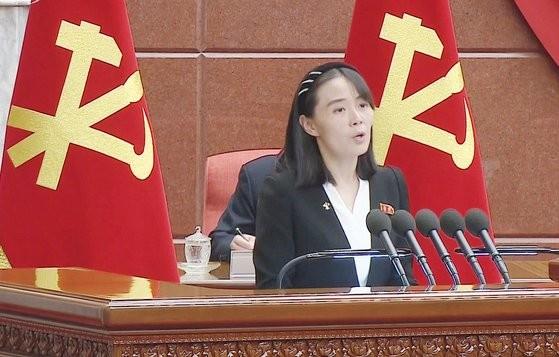
According to insiders, the report noted that "since the declaration of martial law by the South Korean president late last year, the Institute made no meaningful progress in assessing developments or offering new strategies, thereby wasting a golden opportunity.“
As a result, the deputy director in charge of strategic planning was singled out, expelled from the Party, dismissed from their post, and subjected to "revolutionization" — a harsh ideological re-education measure.
An insider explained that the deputy director’s advocacy for a "wait-and-see" approach during internal meetings was the core issue. They suggested delaying action until the outlines of the next South Korean presidential candidates became clearer — a stance Kim Yo-jong reportedly viewed as unacceptable.
Kim Yo-jong is said to have insisted that, "in moments when signs of the enemy’s collapse are evident, we must not wait but strike harder to take control." She reportedly added to the report that, "Rather than waiting for a favorable moment, we must sharpen our blade and drive it home to shape the battlefield completely.“
Under Kim Jong-un, North Korea declared inter-Korean relations "hostile" and reorganized its South Korean operations, replacing the United Front Department with the Enemy Leadership Department and revamping the Institute for National Reunification into the Enemy Research Institute. Last April, the Institute issued a harsh white paper condemning former South Korean President Yoon Suk-yeol.
A South Korean policy expert noted, “The Enemy Research Institute is likely to act as a key base for planning aggressive strategies toward South Korea — including stoking internal conflict, psychological warfare, and propaganda operations — making it essential for Seoul to prepare robust countermeasures.”
Kim Jong-un’s Hallucination Incident: "Potato Flour Looked Like Bone Dust"
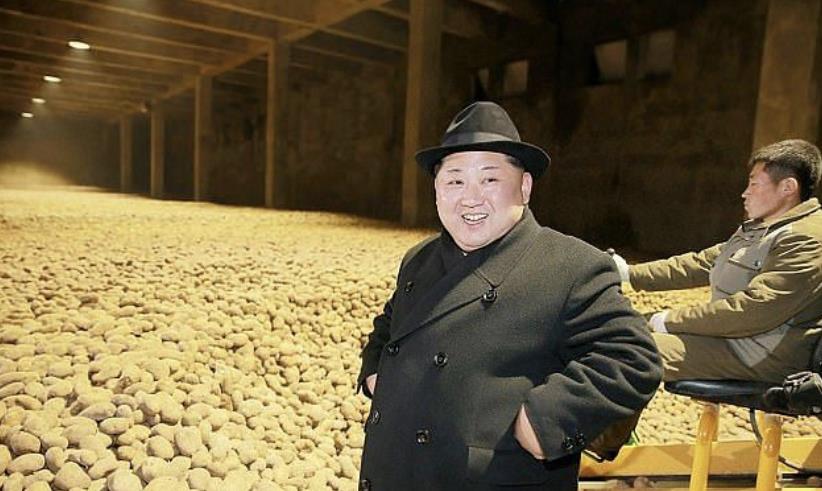
North Korean media reported an unusual confession from Kim Jong-un, who, under severe stress over potato processing issues, said, "The potato flour looked like bone dust." While intended to showcase the leader’s humanity and dedication to his people, the statement inadvertently raised concerns about his mental and emotional stability.
On April 23, the Rodong Sinmun reported that during a visit to a potato flour plant in Samjiyon City, Kim remarked, “Perhaps because of my great distress, the potato flour looked like bone dust.”
It is highly unusual for North Korean media to reveal signs of psychological strain in their leader, especially in such a personal tone.
Dr. A, a psychiatrist interviewed by SAND Times, explained, “Visual distortions like this can occur under extreme psychological stress, suggesting Kim’s mental fatigue has surpassed normal thresholds.”
Despite prolonged international sanctions and a global downturn, North Korea has launched multiple large-scale projects this year, the final year of its Five-Year Plan. These include 50,000 new apartments in Pyongyang, the "20x10" Regional Development Policy, rural housing, and defense modernization.
Kim’s "all-hands-on" leadership style — micromanaging virtually every aspect of governance — has created a feedback loop that only increases his personal burden.
The Rodong Sinmun repeatedly emphasizes Kim finding joy in the people's smiles, especially while overseeing projects like medical centers, nurseries, and resorts.
The article underscores Kim’s hands-on role in projects like the Yangdok Hot Spring Resort, Pyongyang Bag Factory, Pyongyang and Ryugyong General Hospitals, and a Jaeryong factory—highlighting his dedication and reinforcing his “superhuman leader” image, even inspecting hospital sites after a missile test.
While media frames it as Kim’s dedication, experts see it as a sign of flawed governance, where even minor issues need his oversight.
Analysts note that Kim’s hands-on control — spanning everything from school uniforms to missile launches — highlights the systemic dysfunction of the regime.
A South Korean think tank official commented, “Kim Jong-un’s isolated, heavy-handed leadership weakens decision-making and severely limits the regime’s adaptability.”
While "joy" is the article’s recurring theme, the way it is used paradoxically highlights the contradictions of the North Korean system: a society where the leader’s "joy" is manufactured at the cost of widespread isolation and oppression.
-
PREV [Current Affairs Analysis]
-
NEXT [News&Issue]