

Kim Myongsung’s Inside North Korea
· Over 20 North Korean Officers Sent to Political Camp for Questioning Russia Deployment
· Presumed Appearance of Reclusive Guitar-Playing Prince Kim Jong-chol… Contributes to North Korean Journal
· North Korea Deploys ‘Expendables’ to Russia—Including Relatives of Defectors

Kim Myong-sung
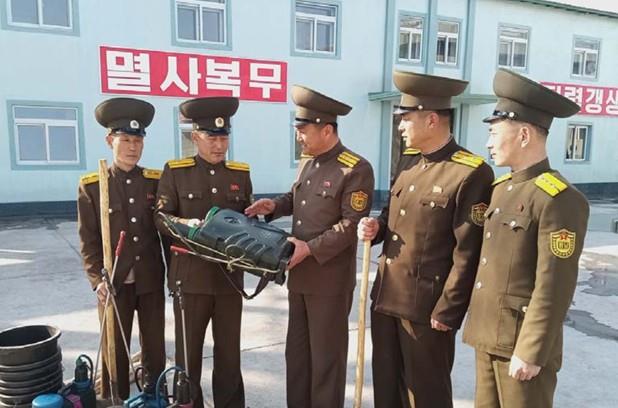
That officers from such a loyal unit expressed doubt about deployment highlights growing unease within North Korea’s military ranks.
This purge coincides with reports of North Korea sending additional troops to the Russian battlefield. On March 27, South Korea's Joint Chiefs of Staff announced that approximately 3,000 North Korean soldiers were deployed between January and February 2025.
Since October, North Korea has dispatched troops—mainly from KPASOF—under loosely defined terms like “overseas training” or “joint exercises,” even within military circles.
Sources say the detained officers had voiced unease about the lack of clear orders and suggested the training might be a cover for full deployment. While these comments seemed like reasonable concerns internally, authorities labeled them disloyal.
The Military Security Command classified their statements as “anti-Party acts,” and arrested them. After being held in various detention centers and subjected to lengthy questioning, the officers and their families were transferred to a political prison camp on the 3rd—an extreme application of North Korea’s guilt-by-association policy.
Following the incident, a saying began circulating: “Managing your expression is survival.” Fear has spread among soldiers and families, who now remain silent even when orders are unclear.
Authorities reportedly called the case an example of a “lack of warrior spirit” and are intensifying ideological indoctrination, stressing that soldiers must only reply, “Yes, understood,” to Party orders.
An anonymous source said the purge serves as a warning to enforce silent obedience across the military—demanding full acceptance of the Russia deployment without complaint. North Korea has a track record of punishing even perceived disloyalty.
A national policy researcher added that internal dissent over the Russia deployment is slowly surfacing, and if the rising casualty numbers become widely known, it could trigger greater unrest.
A February 2024 article in North Korea’s academic journal History-Science, written by someone named Kim Jong-chol, has drawn attention due to the name’s match with Kim Jong-un’s older brother.
Notably, this Kim Jong-chol was the only contributor in the issue who didn’t list an affiliation or title.

SAND Times reviewed the issue and found that all 23 other authors disclosed their positions, such as department heads at the Academy of Social Sciences or Kim Il Sung University PhDs.
Experts say the omission suggests more than a security precaution. A former high-ranking defector remarked that the author appears to be a key figure whose role cannot be publicly revealed.
Cheong Seong-chang, director at the Sejong Institute, said the anonymity and timing suggest the author is indeed Kim Jong-chol. He added this could be part of a plan to quietly reintroduce Kim’s non-rival brother as Kim Jong-un’s grip on power solidifies. The article, titled The Immortal Achievements of Supreme Leader Kim Jong-il Who Elevated Our Republic to the Status of a Nuclear State, supports this view.
The piece claims Kim Jong-il made a sovereign decision to pursue nuclear weapons under U.S. pressure in the 1990s, praising the 2006 and 2009 nuclear tests as proud milestones. Kim Jong-chol calls this a “heroic decision” and an “immortal achievement.”
As denuclearization talks remain stalled, the article appears aimed at reinforcing North Korea’s narrative of legitimate nuclear power.
Its timing is striking—it coincides with Kim Jong-un elevating his daughter, Kim Ju-ae, as the new face of the Paektu bloodline. The recent appearance of children thought to be Kim Yo-jong’s adds to the growing visibility of a fourth-generation succession.
Director Cheong suggested Kim Jong-chol’s emergence aligns with efforts to reaffirm the family’s historic legitimacy and nuclear legacy, positioning him as a kind of family chronicler.
A government source noted that while Kim Jong-chol is publicly known as a music lover, he may actually play a behind-the-scenes role in preserving the regime’s core ideological assets. For years, he’s been seen as an apolitical figure more drawn to music than power.
Kim Jong-chol is the second son of Kim Jong-il and the elder brother of both Kim Jong-un and Kim Yo-jong. It’s widely believed he was excluded from succession early on due to being perceived as effeminate and lacking ambition.
Kim Jong-il’s former chef, Kenji Fujimoto, wrote that Kim favored Jong-un, whose temperament was more similar to his own. By contrast, Kim Jong-chol was deeply immersed in music.
When Kim Jong-chol visited the U.K. in 2015 to attend an Eric Clapton concert, Thae Yong-ho—then North Korea’s deputy ambassador in London—recalled how Kim urgently requested a stop at the HMV record store right after landing. At the concert, he cheered enthusiastically, pumping his fist in the air.
He reportedly spent over 40 minutes playing guitar at a local music shop and said he had contacted every North Korean embassy to secure that particular instrument. At the time, this reinforced his image as a shy, music-loving prince with little interest in politics.
But the recent journal article sharply contrasts with that perception. The fact that Kim Jong-chol—long seen as apolitical—authored a piece justifying North Korea’s nuclear path suggests he may be taking on a new, more influential role.
Rather than a personal reflection, the article reads as a political statement aimed at legitimizing the country's nuclear status and reframing it as part of Kim Jong-un’s leadership legacy. In North Korea, revisiting the past is often a first step in signaling future shifts.
Since late 2022, North Korea has steadily promoted Kim Ju-ae, Kim Jong-un’s daughter, as the heir to the Paektu bloodline. In that context, Kim Jong-chol may be stepping into a supporting role as a symbolic guardian of the family's revolutionary legacy.
Reportedly, Kim Jong-un and Kim Jong-chol were close in childhood, even studying artillery together at a special program at Kim Il Sung National Defense University. According to defectors, Kim Jong-un preferred hands-on training, while Kim Jong-chol was more studious and often asked questions during class.
Traditionally, North Korea's power succession has been brutal, eliminating all potential rivals to the heir. The assassination of Kim Jong-nam, Kim Jong-un’s half-brother, is a well-known example. But Kim Jong-chol appears to be an exception.
Without political ambition and largely absent from public life, Kim Jong-chol poses no visible threat to the regime. Yet, his lineage as Kim Jong-il’s son gives him legitimacy. Analysts believe he may now serve as a discreet yet powerful figure, quietly managing the Kim family’s ideological and nuclear legacy behind the scenes.
North Korea Deploys ‘Expendables’ to Russia—Including Relatives of Defectors
Among the 12,000 North Korean combat troops sent to Russia last year, some reportedly came from families of defectors or had criminal backgrounds—suggesting the regime deliberately selected soldiers it deemed expendable.
According to North Korean sources on March 24, deployment selections began in October, initially focusing on elite Storm Corps members. However, the list also included soldiers with disciplinary histories or ‘impure backgrounds’—a term used for those with family members who defected to South Korea or China.
A source said the General Political Bureau of the Korean People's Army issued guidelines under the guise of “special overseas training,” instructing units to include problematic individuals in the deployment.
At the time, Russian forces were suffering heavy losses, particularly in areas like Kursk, with hundreds of casualties daily. North Korea was reportedly aware that the chances of its troops returning alive were slim.
Despite injuries sustained in combat, North Korean soldiers were not repatriated. Instead, they were treated locally and sent back to the front lines. Recently, signs of further deployments have emerged in units based in Pyongyang and the Pyongan provinces.
In late November, families began receiving death notices for soldiers killed in action. A source described how bodies were transported from Moscow by train, and funerals were held in secret as soon as the remains arrived.

One such case involved a woman named Choe in Hyesan City, Ryanggang Province. On November 30, she was notified by local authorities of her son’s death, five years after his enlistment. The local Workers’ Party arranged for her to travel—without a travel permit—to a military unit in Tokchon City, North Phyongan Province, where a quiet funeral was held and the body buried in a communal cemetery.
Families were ordered to keep silent about the deaths. Authorities reportedly warned them not to speak out or cry publicly. Some families were so overwhelmed by grief they collapsed and remained in a state of shock for days.
As more parents began to grieve openly, public sentiment soured. In response, the regime reportedly stopped issuing official death notifications. According to one source, authorities were trying to contain growing unrest.
Despite the gag order, news of the Russian deployment is spreading quickly among citizens, fueling anger. Some residents have questioned the regime, saying, “What’s the point if they come back in coffins?” In some cases, families are now offering bribes to keep their graduating children from enlisting.
North Korea previously sent pilots to fight in the Vietnam War in the 1960s but didn’t acknowledge it until 2002. Similarly, the current deployment was meant to remain secret, but rising casualties are making that impossible.
While the regime has yet to make an official statement, it continues to enforce a strict gag order. Nevertheless, parents are desperate for news and are seeking updates through unofficial channels like military contacts or the families of their children's partners.
Due to strict information control, most families remain unsure whether their sons are alive. Reports that officers’ children were excluded from deployment have only intensified public resentment.
-
PREV [Feature Article]
-
NEXT [Current Affairs Analysis]