


Kim Myongsung’s Inside North Korea
· Kim Yo-jong Warns U.S. Over Aircraft Carrier’s Arrival in Busan: “Considering Strategic Countermeasures”
· ‘North Korea Conducts Another ‘Tomahawk-Style’ Missile Test in a Month—Kim Jong-un Calls It a "Reliable Nuclear Shield“
· North Korea Sends Up to 3,000 More Troops to Russia, Refuses to Repatriate Fallen Soldiers

Kim Myong-sung

"We strongly denounce the reckless and provocative military displays by the U.S. and its allies," she stated. "America’s hostile policy, backed by military action, provides full justification for us to indefinitely enhance our nuclear deterrence.“
She warned that North Korea would not merely stand by and observe, emphasizing, "If the U.S. continues to break records in military provocations, we will be compelled to set new records in our strategic deterrence as well.“
Analysts suggest that her statement aims to gauge the new U.S. administration’s response, using criticism of former President Donald Trump’s North Korea policy to provoke a reaction.
On the 28th, North Korea announced it had tested a strategic cruise missile over the West Sea on February 26, following a similar launch on January 25. Leader Kim Jong-un oversaw the test of what Pyongyang calls its ‘Tomahawk-style’ missile. State media reported the missiles flew for approximately 7,961 and 7,973 seconds over 1,587 km before hitting their targets.

South Korean military officials believe the missile launched was likely the "Hwasal-1," while the January 25 test involved a presumed upgraded "Bulhwasal-3-31" submarine-launched missile. Analysts suggest North Korea is accelerating efforts to validate its cruise missiles for both land and submarine-based launches.
Unlike ballistic missiles, which exceed five times the speed of sound, cruise missiles are subsonic but fly at low altitudes, making them harder to detect and intercept. North Korean state media released images of the missile skimming the sea before striking its target.
Kim Jong-un declared, "Ensuring our national sovereignty and security through a reliable nuclear shield is the fundamental duty of our nuclear forces." Unlike before, he now explicitly signaled that the cruise missiles serve as nuclear delivery systems. This move counters Washington’s denuclearization stance under Trump’s second term and increased sanctions while also demonstrating force ahead of the mid-March Freedom Shield (FS) drills.
North Korea Sends Up to 3,000 More Troops to Russia, Refuses to Repatriate Fallen Soldiers
North Korea has reportedly sent 1,000 to 3,000 more troops to Russia since early this year, following an initial deployment in October last year. Observers suggest that if Russia persists in its fight for Kursk amid ceasefire talks, a third wave of North Korean reinforcements may follow.
On February 27, South Korea’s National Intelligence Service (NIS) reported that North Korean troops resumed deployment to the Kursk front in early February after a month-long pause. While intelligence confirms additional deployments, exact numbers are still being assessed. A military source noted signs of further troop preparations for Russia.
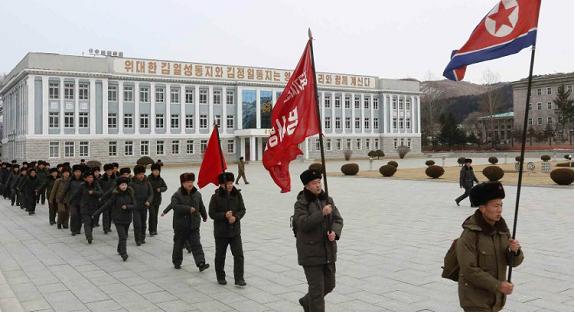
Sources indicate that between January and February, North Korea sent 1,000 to 3,000 troops. Ukrainian officials estimate the first deployment included about 10,000 soldiers, with around 4,000 killed or wounded. As those troops became combat-ineffective, North Korea seemingly sent a second wave of similar size. Analysts suggest Russia, aiming for an advantage in ceasefire talks under Trump’s administration, may have requested additional support from Pyongyang.
Reports indicate that North Korean soldiers were transported to the battlefield via Russian cargo ships and military aircraft. Intelligence agencies are closely monitoring transport activities between North Korea and Russia using satellite imagery.
North Korean troops were reportedly reintroduced to combat early this month. Ukrainian sources had noted that North Korean forces had been absent for roughly three weeks starting in mid-January before resurfacing in the Kursk region on February 7.
Some analysts doubt the second deployment's effectiveness due to its shorter preparation period. While the first wave trained for three months, the latest deployment was reportedly completed in just three weeks. This suggests Russia may be using undertrained North Korean troops as expendable frontline units.
A key change in the second deployment is the addition of mechanized infantry and electronic reconnaissance units, signaling a shift in North Korea’s tactics.
Despite sending more troops, North Korea has reportedly refused to repatriate fallen soldiers' remains, likely to prevent domestic unrest. Pyongyang has allegedly ordered overseas operatives to acquire rapid-freezing and body disposal equipment, suggesting efforts to conceal battlefield casualties.