

North Korea Demolishes the Mount Kumgang Family Reunion Center, Raising Tensions on the Peninsula

Lee Seung-hyun
Research Fellow at SAND Institute
Ph.D. in Public Administration
drharacearthur@gmail.com
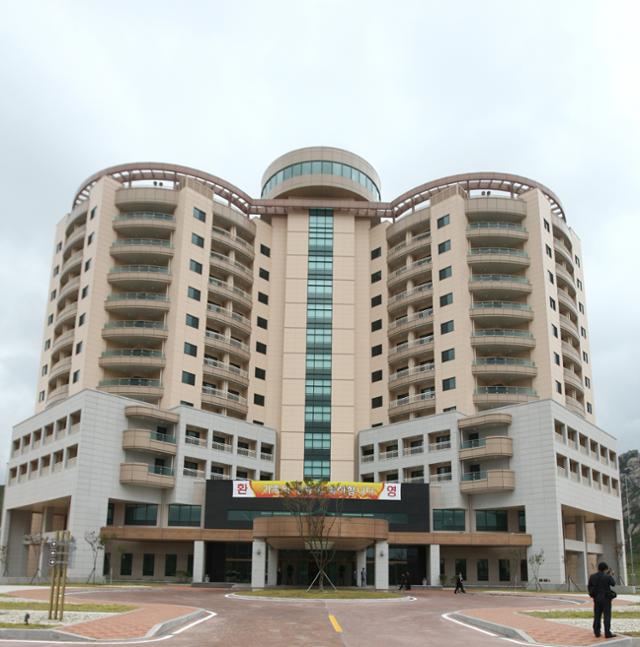
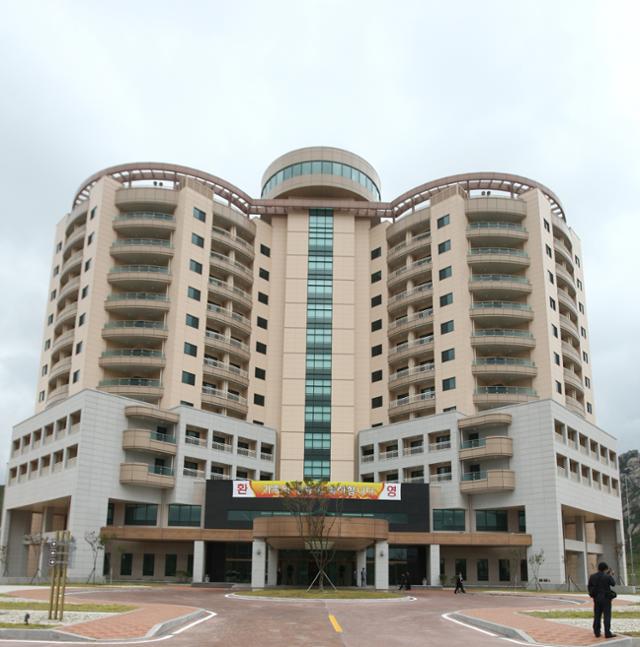
North Korea has begun the full-scale demolition of the last South Korean government facility in the Mount Kumgang tourism area, the Reunion of the Seperated Family members Reception Office.
On the 13th, Ministry of Unification spokesperson Koo Byeong-sam confirmed that North Korea had started demolishing the Mount Kumgang Family Reunion Center, which represents the hope for regular family reunions.
The Ministry of Unification said demolition at the Mount Kumgang facility was first spotted late last year, but recent reports confirm that actual work, including removing tiles from the main building, has now started.
The Family Reunion Center, built after the 5th inter-Korean Red Cross talks in November 2003, was funded with 55 billion won ($38.2 million USD) from the Inter-Korean Cooperation Fund. The main building includes a basement, 12 floors, 206 guest rooms, a banquet hall, and separate offices for both Koreas.
The center unused for over a year due to the 2008 Mount Kumgang tourist shooting incident, was first activated in September 2009 for a family reunion event during Chuseok. Subsequent reunions were held in October 2010, February 2014, October 2015, and August 2018.
This demolition effectively cuts off the final remaining link between North and South Korea.
After the "Hanoi no-deal" summit with Trump in February 2019, Kim Jong-un adopted a more hostile stance toward South Korea. That October, he visited Mount Kumgang and ordered the removal of South Korean facilities, calling them "shabby."
Following a pause during the COVID-19 pandemic, North Korea resumed demolishing or dismantling facilities in 2022, including the Hotel Haegumgang (owned by Hyundai Asan), the Kumgangsan Culture Center, and Onjeonggak.
Last April, North Korea removed the South Korean fire station in Mount Kumgang, and by October, all overland routes between the two Koreas, including the Gyeongui and Donghae liens, were cut. With the Family Reunion Center's demolition, all South Korean facilities will be gone.
Given the current state of inter-Korean relations and North Korea's recent actions, it is clear that North Korea is actively working to sever ties between the two countries.
The demolition of the Mount Kumgang Family Reunion Center, attempts to cut the air traffic control system, and a shift in policies on unification and denuclearization signal North Korea's strategy to solidify the inter-Korean relationship as one of hostility.
In particular, the demolition of the Family Reunion Center is significant, not just as the removal of a physical structure, but for further complicating the possibility of dialogue between North and South Korea.
The issue of separated families is a humanitarian matter, yet North Korea's outright rejection of it is a factor that reduces the chances of restoring inter-Korean relations.
Additionally, North Korea's shift to formalizing its "two-state policy" and its stance on denuclearization is significant. Once pushing for a "nuclear-free Korean Peninsula," North Korea now focuses on completing its own nuclear capabilities, effectively rejecting denuclearization.
This indicates that the likelihood of North Korea engaging in denuclearization talks has further diminished. As a result, tensions on the Korean Peninsula are expected to rise, further destabilizing the security environment in Northeast Asia.