

Kim Myongsung’s Inside North Korea
· 4th Generation Succession? Now Kim Yo-jong’s Children Appear in Public
· North Korea Tests New Hypersonic Missile: Aimed at Pacific Adversaries
· Pyongyang International Marathon Returns After Six Years

Kim Myong-sung
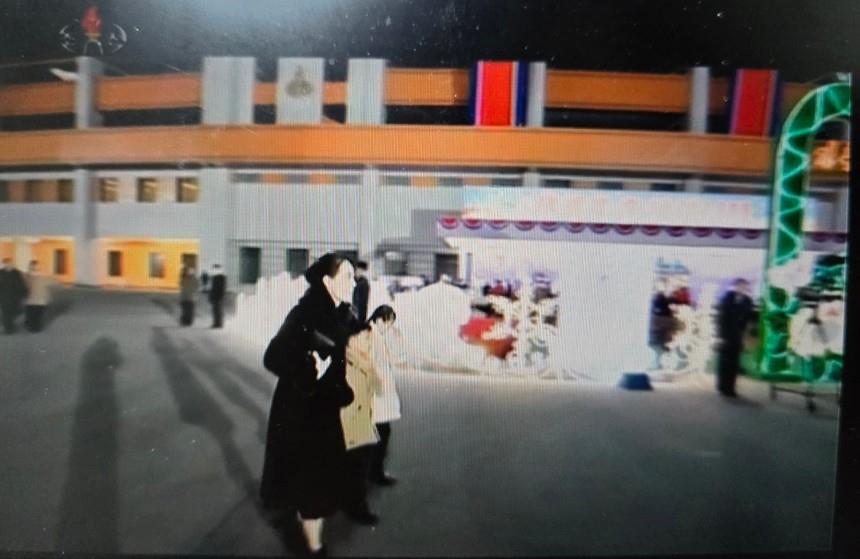
Kim Yo-jong, holding the hands of children believed to be hers, enters the New Year’s celebration venue.
/ Korean Central Television
On January 1, KCTV aired a recording of the New Year’s celebration held on the night of December 31, 2024, at Pyongyang’s May Day Stadium.
Before entering the stadium, the footage captured senior officials walking with their spouses to outdoor tables and Kim Yo-jong was also seen arriving with the two children.
Although there were no visuals of Kim Yo-jong exiting a vehicle with the children, their entry alongside her in family-group footage suggests they could indeed be her children.
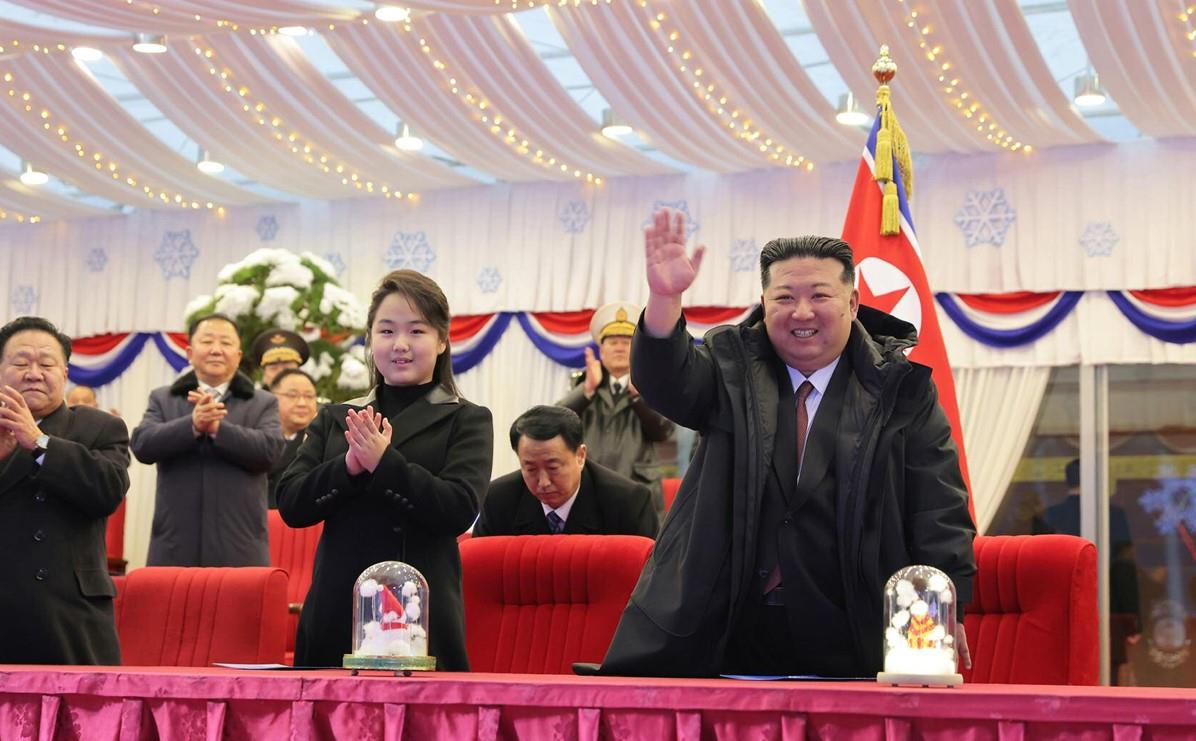
A Santa Claus ornament in a small display placed in front of Kim Ju-ae during the New Year’s celebration
/ Korean Central News Agency
In 2015, Kim Yo-jong was first photographed wearing what appeared to be a wedding ring, sparking speculation about her marital status. In April of that year, the NIS reported that she was likely to give birth in May. Additionally, during her visit to South Korea for the 2018 Winter Olympics, it was speculated that she was around eight months pregnant with her second child.
Regarding the children seen at the New Year’s event, the NIS stated, “Given the previously known age ranges of Kim Yo-jong’s children, there is a possibility, and we are conducting a detailed analysis.”
Meanwhile, at the same event, a Santa Claus ornament placed in a small display in front of Kim Jong-un’s daughter, Kim Ju-ae, attracted attention.
Throughout the celebration, Kim Jong-un was seen holding Kim Ju-ae’s hand and escorting her to their car at the event’s conclusion.
Observers suggest that North Korea’s decision to publicly show both Kim Ju-ae and Kim Yo-jong’s children is a deliberate move to highlight the Kim family’s unity and signal the preparation of successors for the regime’s fourth generation.
North Korea announced its successful test launch of a new hypersonic intermediate-range ballistic missile (IRBM). On the 7th, KCNA reported that Jang Chang-ha, Head of the General Missile Bureau, oversaw the test launch at a site in Pyongyang the previous day.
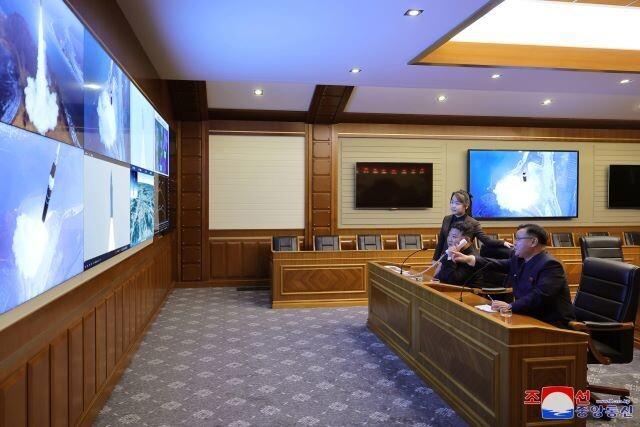
Kim Jong-un and his daughter Kim Ju-ae observe the IRBM launch through a monitor. / KCNA
KCNA revealed that Kim Jong-un observed the test remotely via a video monitoring system, with his daughter, Kim Ju-ae, by his side.
The agency reported that the missile, launched northeast from a site near Pyongyang, reached speeds 12 times the speed of sound and followed its planned trajectory. It struck its target 1,500 km away in international waters, reaching altitudes of 99.8 km and 42.5 km at its first and second peaks, respectively.
The report also stated that the propulsion system of the new IRBM was built using advanced carbon fiber composite materials. It noted that the flight and guidance control systems had incorporated innovative and effective methods based on previously accumulated technological advancements.
Kim Jong-un praised the test, describing it as definitive proof of North Korea’s ongoing efforts to upgrade powerful weapons systems like the hypersonic IRBM. He emphasized that these updates are essential to counter the diverse security threats posed by hostile forces in the current global environment.
He stated that the goal of missile development is to create an unmatched weapons system as a cornerstone of strategic deterrence, enhancing the nation’s nuclear capabilities. “Only a few countries in the world possess such advanced weaponry,” he added.
He emphasized that the missile is designed to penetrate dense defense systems and deliver significant military strikes, particularly aimed at adversaries in the Pacific region.
Analysts interpret these remarks as suggesting that the missile could strike U.S. territories like Guam while evading interception.
The Republic of Korea’s Joint Chiefs of Staff assessed that the missile launched from Pyongyang toward the East Sea had an intermediate-range engine capable of 3,000–5,500 km, but it traveled about 1,100 km during the test.
In October last year, Kim Jong-un publicly revealed a strategic missile base housing hypersonic missiles for the first time. The following month, North Korea displayed these missiles at a military equipment exhibition, highlighting advancements in the technology while showcasing its growing military power.
This is North Korea’s first ballistic missile launch of the year and the first since a short-range ballistic missile (SRBM) test on November 5 last year. After Donald Trump’s victory in the U.S. presidential election on November 6, North Korea had paused its missile provocations.
The timing of this test, two weeks before Trump’s second-term inauguration, has led to speculation that it was intended to probe the administration’s “red line.” Conducted shortly after a meeting between South Korean Foreign Minister Cho Tae-yul and U.S. Secretary of State Tony Blinken in Seoul, it may also express dissatisfaction with the U.S.’s hardline policies on North Korea.
Analysts suggest the launch could be an attempt to exploit South Korea’s political instability, which has caused frequent leadership changes, while testing the preparedness of its military during this turbulent period.
Pyongyang International Marathon Returns After Six Years
North Korea plans to resume the Pyongyang International Marathon, which has been suspended for six years due to COVID-19 restrictions.
On January 6, the DPRK’s Ministry of Physical Culture and Sports announced details for the 31st Pyongyang International Marathon, scheduled for April 6. The event will include professional and amateur races, with men’s and women’s categories for full (42.195 km), half (21.097 km), 10 km, and 5 km distances.
For the professional category, North Korea will send official invitations to one male and one female athlete per country by the 20th, covering round-trip airfare and accommodation. Amateurs from Singapore, China, and Hong Kong can register through Beijing-based Koryo Tours, while those from other East and Southeast Asian regions can apply via agencies linked to the State General Bureau of Tourist Guidance. Entry fees are $150 for the full course, $100 for the half course, and $70 for the 10 km and 5 km races.
Since 1981, North Korea has held the marathon annually in honor of Kim Il-sung’s birthday on April 15, known as the “Day of the Sun.” The event garnered global attention in 2001 by accepting Western sponsorship for the first time. However, it has not taken place since 2020 due to COVID-19.
North Korea has not officially declared the end of COVID-19 or formally announced the lifting of border closures. Instead, it has gradually eased restrictions without official announcements.
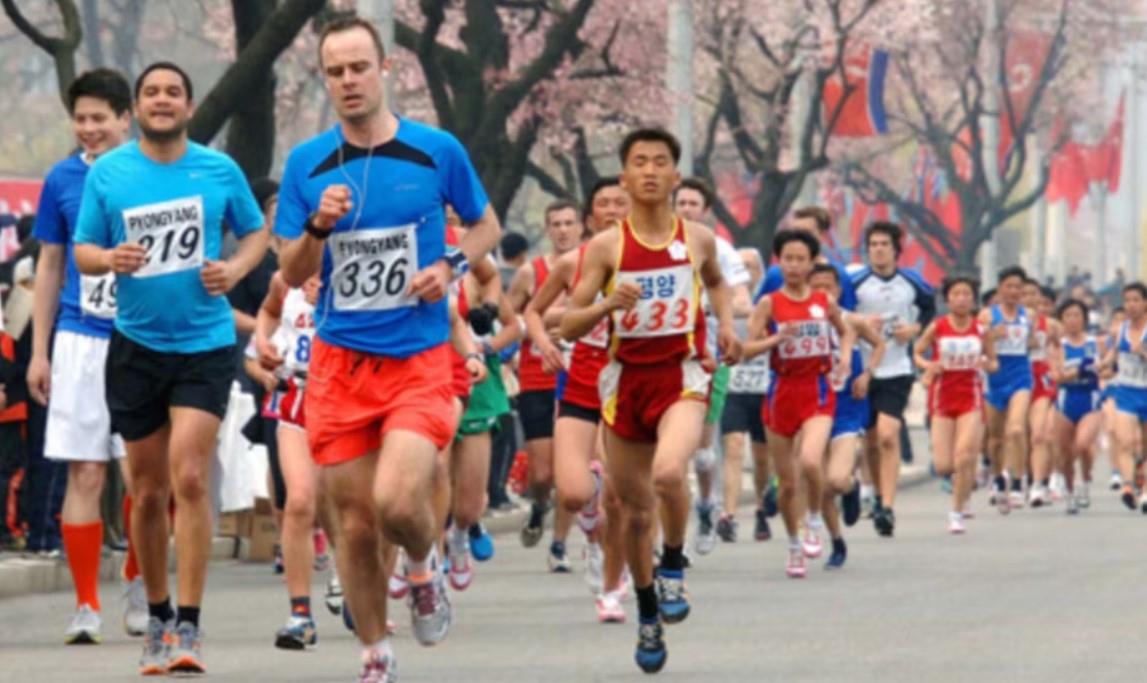
Foreign athletes participating in the Pyongyang International Marathon in April 2015 / Voice of America(VOA)
In September 2023, North Korea allowed foreign entry, leading to the return of diplomats and government delegations. It also approved limited entry for Russian tourists last year.
The upcoming marathon, three months after Donald Trump’s inauguration, is seen as a potential step toward expanding foreign tourism and earning revenue by further relaxing border controls.
-
PREV [NK Focus]
-
NEXT [NK Focus]