

People's Liberation Army (PLA) Armored Units Moving
to the China-North Korea Border: A Warning to North Korea?

SAND Newsletter Team
Recent movements of PLA armored units toward the China-North Korea border have drawn significant attention. These maneuvers occurred just three days after South Korea’s National Intelligence Service (NIS) confirmed on the 18th of last month that North Korea had dispatched special forces to Russia. Analysts suggest this may be China’s way of warning Pyongyang against its troop deployment.
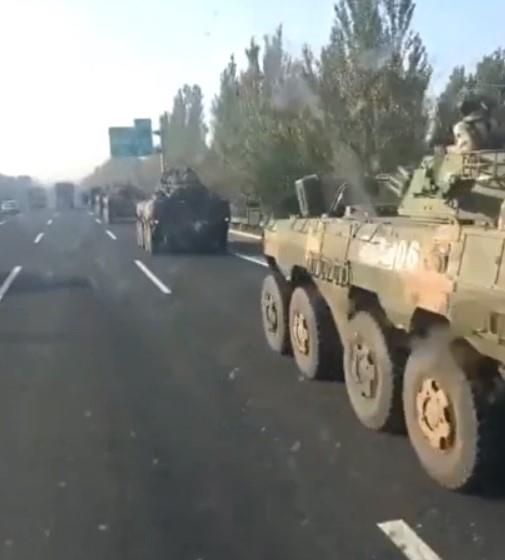
A video obtained by the SAND Newsletter Team shows dozens of PLA armored vehicles traveling in a convoy on the Shenyang-Dandong Expressway toward the border on the afternoon of the 22nd. The convoy included military trucks and Chinese Humvee-style vehicles, likely serving as command units. Reports indicate these vehicles belong to the 80th Group Army, a rapid-response force under the Northern Theater Command (NTC), which oversees northeastern China.
The source who filmed the video estimated the convoy included several dozen to potentially hundreds of vehicles. “It’s unusual to see such a large number of armored units moving toward the China-North Korea border,” the source noted.
This deployment from the Shenyang Military Region came shortly after the NIS reported that 1,500 North Korean special forces had been sent to Russia, with an additional 10,000 expected to follow. Analysts believe this reflects China’s concerns about the regional impact of North Korea’s military involvement in Russia. While Beijing has not officially commented, the PLA’s border deployment is seen as a calculated warning to Pyongyang.
The Chinese Ministry of Foreign Affairs has continued to stress dialogue and peace while urging parties to address the root causes of tensions on the Korean Peninsula. This cautious stance indicates a subtle shift in Beijing’s attitude toward Pyongyang, highlighting growing concerns about its actions.
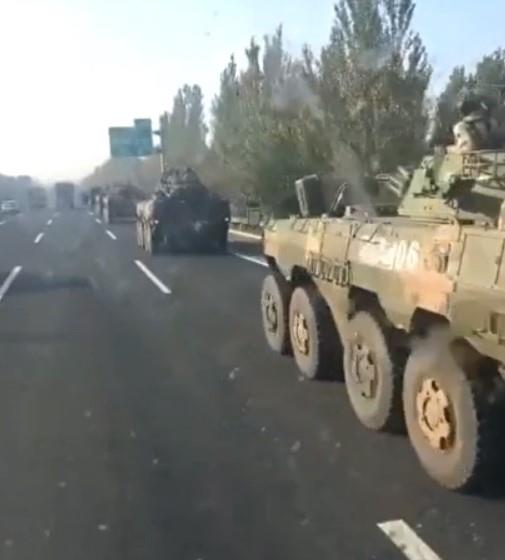
On October 22, PLA armored units under the NTC were seen advancing toward
the China-North Korea border region. / SAND Newsletter Team
China has historically responded to North Korean provocations by mobilizing troops near the border. After North Korea’s third nuclear test in February 2013, China reinforced the area with PLA troops, upgraded surveillance, and conducted drills.
For example, right after North Korea’s third nuclear test in February 2013, China sent PLA troops to the border, enhanced surveillance systems, and carried out drills in the area.
Similarly, following North Korea's sixth nuclear test in 2017 and successive intercontinental ballistic missile (ICBM) launches, China increased its military preparedness. Troops from the Shenyang Military Region (now NTC) were dispatched to the border, and facilities were built to manage potential refugee inflows. In Jilin Province, authorities even instructed residents on handling radioactive contamination, heightening the sense of tension.
China’s border military activity serves multiple strategic purposes: ensuring regional stability, discouraging North Korea from actions against Beijing’s interests, signaling involvement in regional issues to global powers, and preparing for potential refugee crises.
This response underscores China’s complex security interests with North Korea, extending beyond their alliance.
Jiang Longfan, Director of the National Area Studies Institute at Tianjin Foreign Studies University, stated, “China must prevent regional conflict stemming from North Korea’s nuclear provocations and closer ties with Russia. Managing Pyongyang’s unpredictable actions while cooperating with the U.S. and South Korea on nuclear issues will be crucial.”