

North Korea’s Economic Impact and Sanctions:
Analysis and Outlook Amid Strengthened Ties with Russia

Choi Jang-ho
Researcher at Korea Institute for International Economic Policy (KIEP)
On June 19, 2024, Russian President Vladimir Putin visited Pyongyang for a North Korea-Russia summit. This was his first visit in 24 years, following a meeting with North Korean leader Kim Jong-un at Russia’s Vostochny Cosmodrome in September 2023. The summit was symbolic for both nations as they signed a Comprehensive Strategic Partnership Agreement. This agreement elevated their ties from traditional friendship to a near-alliance, emphasizing broad, long-term cooperation, including military collaboration, on equal terms. Diplomatically, this signifies Russia’s recognition of North Korea as a strategic partner, broadening the scope of bilateral collaboration.
In October 2024, South Korea’s National Intelligence Service confirmed that North Korea had deployed troops to Russia. The motivations behind this deployment are debated, with prominent interpretations including earning foreign currency, gaining military experience, and acquiring Russian technology.
Among these interpretations, I align with the perspective that the troop deployment will help secure lasting North Korea-Russia relations even after the Russia-Ukraine war. For North Korea, lessening reliance on China is vital, and this move serves as a safeguard to uphold ties with Russia post-war.
The recent foundation of North Korea-Russia relations revolves around two consecutive summits, the Comprehensive Strategic Partnership Agreement, and troop deployments. Supporting these efforts are economic initiatives like promoting Russian tourism to North Korea, expanding trade, and sending North Korean workers (e.g., Siberian loggers, urban laborers). Socio-cultural collaborations, such as high-level exchanges and cultural or sports events, are also underway. However, compared to their military and security cooperation, economic and cultural ties remain limited.
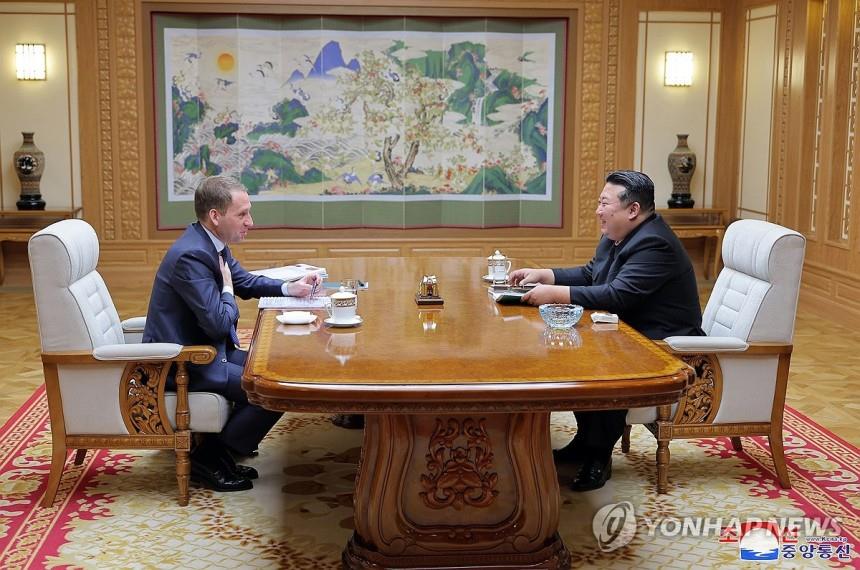
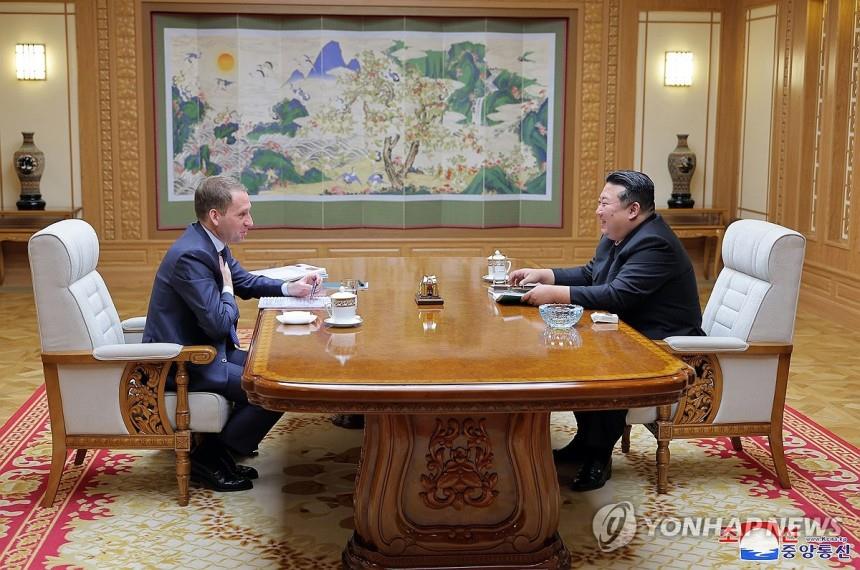
North Korean leader Kim Jong-un met with Natural Resources Minister Aleksandr Kozlov, head of the Russian government delegation, on the 18th to attend the 11th meeting of the North Korea-Russia Trade, Economy, and Science and Technology Cooperation Committee, the Korean Central News Agency reported on the 19th.
North Korea and Russia are in a position where collaboration has become unavoidable, driven by the extended sanctions on North Korea and the prolonged Ukraine war. For North Korea, which has endured over eight years of stringent UN sanctions, active international economic partnerships are crucial to achieve even partial relief. Additionally, as a regime that prioritizes stability and sovereignty, North Korea likely sees ample justification in backing Russia’s war efforts and foreign policies.
North Korea's push to shape a multipolar world order as a counterbalance to hegemonic powers opens new economic and diplomatic opportunities, helping it overcome past geopolitical constraints and boosting its global strategic importance. Meanwhile, Russia’s willingness to collaborate offers North Korea a chance to revive or initiate foreign economic projects, aligning with its need to strengthen and elevate ties with Moscow.
Russia’s ongoing war in Ukraine has increased its need for military supplies, with stronger ties to North Korea enhancing its geopolitical leverage. Key motivations include expanding logistics networks in the Far East, securing North Korea’s support for a multipolar global order, and strengthening its influence in the region. To sustain this relationship, Russia is likely to meet some of North Korea’s economic demands, at least while the war continues. However, North Korea is concerned that the partnership could weaken after the conflict ends. To ensure long-term stability, North Korea seeks to pair military cooperation with robust economic collaboration, reinforcing its ties with Russia.
The strengthening of North Korea-Russia ties has unexpectedly strained North Korea’s relationship with China, particularly in informal areas rather than official diplomatic channels. China has stepped up enforcement against smuggling activities involving North Korea and has declined to extend visas for North Korean workers.
North Korea is uneasy about this decline in relations, as China accounts for over 95% of its total trade. In 2019, nearly 300,000 Chinese tourists visited North Korea, and estimates indicate there are currently between 50,000 and 100,000 North Korean workers in China. Strengthened ties with Russia have unintentionally created subtle tensions with China, leading to economic drawbacks for North Korea rather than advantages.
North Korea and Russia lack sufficient infrastructure for significant economic cooperation, keeping their trade minimal. In 2023, North Korea-China trade reached $2.8 billion, while North Korea-Russia trade was just $34.4 million. From February to September 2024, only 600 Russian tourists visited North Korea, and estimates suggest 2,000 to 3,000 North Korean workers currently reside in Russia.
From a numerical standpoint, the economic benefits of closer North Korea-Russia ties remain modest. Their relationship is largely centered on military and security cooperation, with economic collaboration playing a secondary, supporting role. Despite several agreements to expand economic ties, substantial investments from the Russian government or private companies have yet to materialize.
North Korea-Russia economic cooperation follows a dual-structure system, with decisions made in Moscow and Pyongyang, while local governments like Primorsky Krai (Vladivostok) and Rason City handle project implementation. However, poor financial conditions in these regions have hindered smooth execution of economic projects. The most viable area for growth is the dispatch of North Korean laborers to Russia, but progress has been minimal. Currently, closer ties between the two countries have not translated into significant economic benefits for North Korea. While there is potential for future expansion, its realization remains uncertain, and historical trends suggest that, apart from labor collaboration, the chances of substantial growth are low.
North Korea’s arms exports to Russia have boosted its steel industry, significantly increasing imports of cokes (fuel for steel production). Annual imports rose from 28,887 tons in 2018–2019 to 34,078 tons in 2023, and 29,661 tons between January and September 2024, surpassing levels during peak UN sanctions. However, this growth is limited to the steel sector and has not impacted the broader economy. North Korea remains focused on construction projects like the "20x10 Regional Development" policy and rural housing, while sectors such as chemicals and light manufacturing continue to struggle.
Strengthened North Korea-Russia cooperation could pose a challenge to UN sanctions. Russia is expected to provide advanced technologies to North Korea in areas such as space systems, missiles, fighter jets, and submarines. The transfer of satellite launch stabilization technology or military reconnaissance satellite systems could violate sanctions against the development of ICBM technologies. Similarly, the sharing of submarine technology risks breaching SLBM-related restrictions.
Economically, however, the closer ties between North Korea and Russia have not yet significantly undermined the UN sanctions framework. North Korea’s conventional arms exports to Russia are estimated to generate around $250 million annually, but this is insufficient to make a substantial economic difference. Additionally, North Korea-Russia trade and tourism have seen little growth, and the economic strain caused by deteriorating North Korea-China relations in 2024 appears to outweigh the benefits of closer ties with Russia.
Despite these limitations, concerns remain about the potential long-term implications of North Korea’s deployment of troops to Russia. This move could signal a deeper phase in their relationship, possibly paving the way for future economic cooperation. While the need and justification for such collaboration are evident, current conditions make substantial progress difficult. However, if Russia’s government and businesses initiate meaningful investments following this deployment, their economic partnership could grow rapidly, potentially weakening UN sanctions. Though economic ties remain modest for now, the potential for significant growth remains, provided structural challenges are addressed.
-
PREV [NK Focus]
-
NEXT [NK Focus]