

Kim Myongsung’s Inside North Korea
· Ministry of National Defense: “Over 10,000 North Korean Troops Deployed to Russia, Many at Front Lines” … Bodies Discovered with North Korean Flags
· North Korean Authorities Silent on Troop Deployment to Russia, but Rumors Spread … Soldiers and Civilians Stirred
· North Korea Fires Several SRBMs After Launching ‘Hwasong-19’ ICBM Ahead of U.S. Presidential Election

Kim Myong-sung
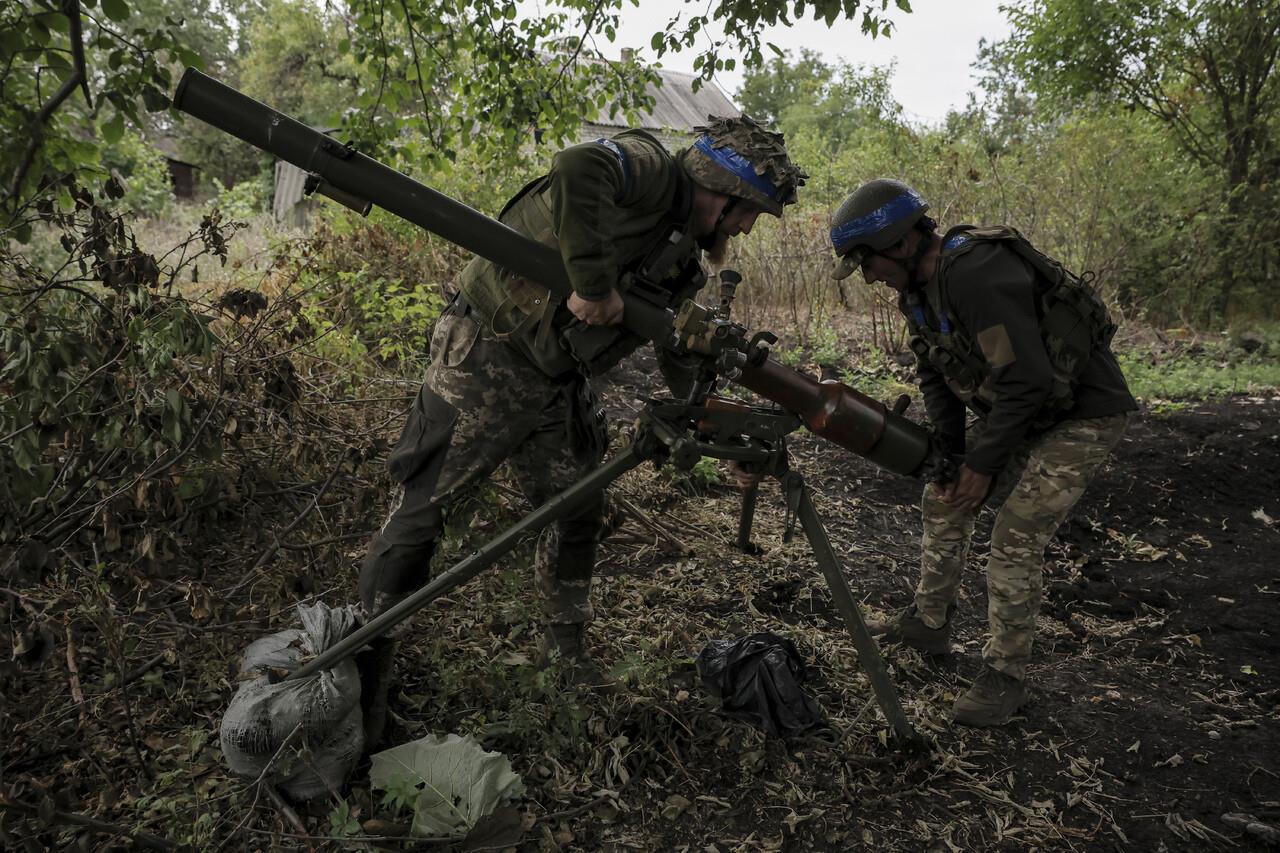
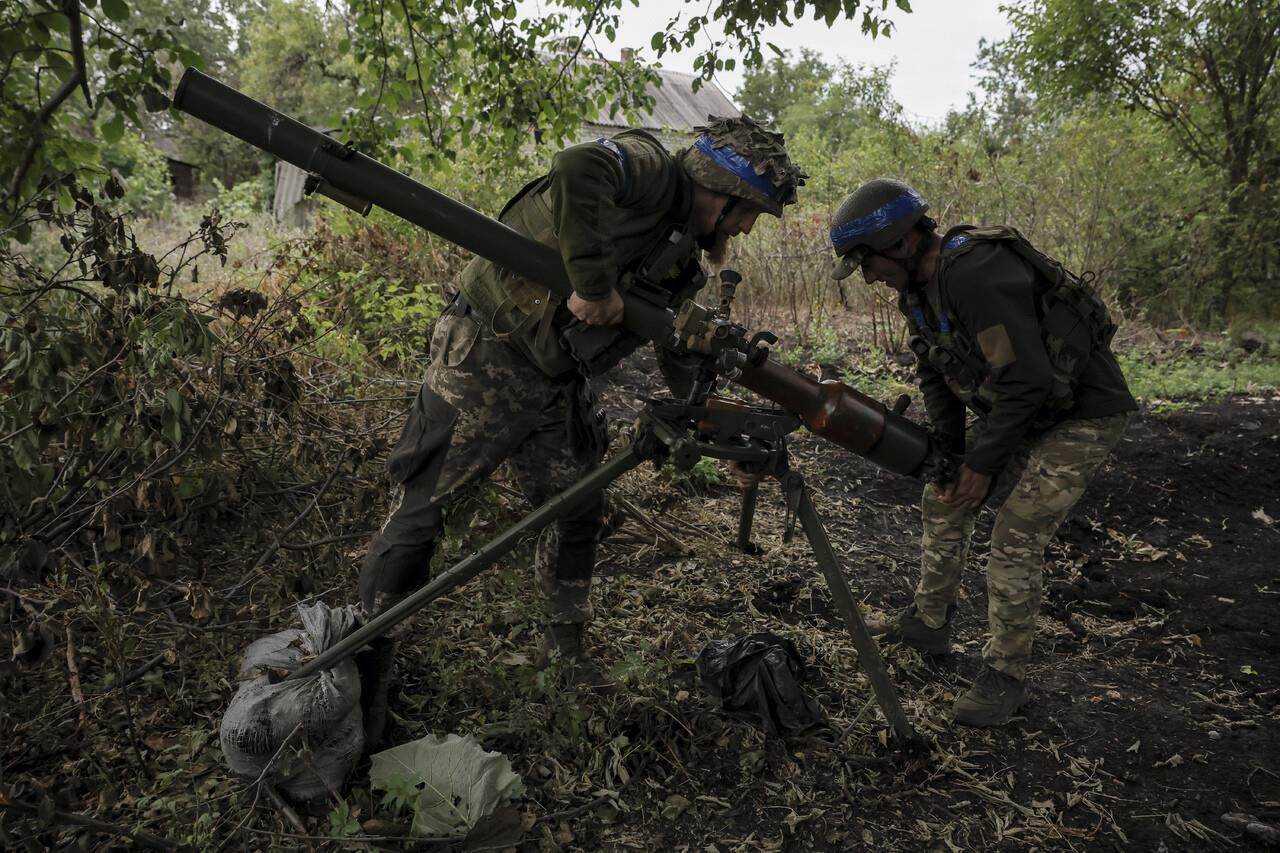
During a routine briefing, spokesperson Jeon Ha-kyu from the Ministry of National Defense confirmed that “over 10,000 North Korean troops are currently in Russia, with a significant number having moved to front-line areas, including Kursk, as reported by military intelligence agencies from South Korea and the United States.”
On the 4th, Mathew Miller, a spokesperson for the U.S. State Department, mentioned in a briefing that “last week, Secretary of State Tony Blinken reported that 8,000 North Korean troops had been sent to Kursk, and our current assessment indicates that this number has risen to approximately 10,000.”
Concerns have been raised regarding the high likelihood of significant casualties among North Korean troops, who lack experience and understanding of modern warfare if they are deployed to the front lines. Given that nearly 700,000 Russian casualties have been reported, these troops may face even harsher conditions than the Russian forces.
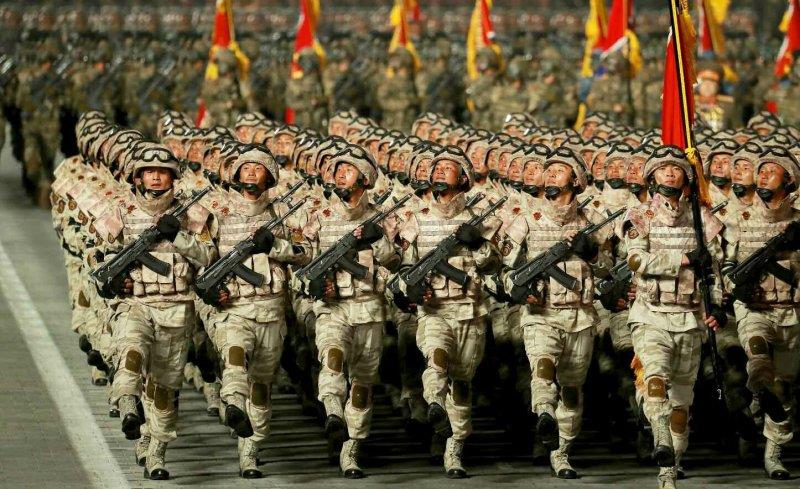
Last month, the National Intelligence Service (NIS) told the Intelligence Committee that Russian trainers recognized the physical capability and morale of North Korean soldiers but noted their lack of modern warfare knowledge, predicting significant casualties if deployed to the front.
In this context, reports have surfaced regarding a body found in the conflict zone of Kursk, wearing a military cap that bore the North Korean flag. On the 4th, Radio Free Asia (RFA) reported confirming a photograph from the Lithuanian NGO Blue/Yellow that has been providing military assistance to Ukraine since 2014. This photograph allegedly depicts a body with a North Korean flag-adorned cap lying among debris from a battle that occurred on October 25.
Jonas Ohman, the head of Blue/Yellow, previously stated that during the battle between Ukrainian and Russian forces on October 25 in Kursk, soldiers presumed to be North Korean lost their lives. He subsequently shared a photograph taken at the scene with RFA, showing a body.
Ohman informed RFA that “drone footage provided by the Ukrainian military captured multiple soldiers wearing caps featuring the North Korean flag.” He further mentioned, “Ukrainian forces attacked Russian positions, and Russian troops mistakenly shelled their own positions, resulting in some casualties believed to include North Korean soldiers, with military caps showing the North Korean flag visible in the footage.”
He remarked that the deceased soldier was armed with an old Russian-made Kalashnikov rifle and estimated that around 10 North Korean soldiers may have died, though the chaotic nature of the battle makes it hard to determine an exact number. Although there is no way to verify if they were indeed North Korean soldiers, he found the circumstances highly plausible, according to RFA.
However, RFA chose not to release the photograph. They reported that “Jonas Ohman shared one drone-captured image on the condition that it would not be made public.” They added that while the body of a soldier wearing a military cap with the North Korean flag was identifiable, the face could not be discerned.
Amidst the impending harsh winter, there are growing fears that inadequate supplies and Russia's aggressive 'push-through' tactics may lead the deployed North Korean troops into a perilous situation.
Reports suggest that North Korea has sent a large number of special forces to Russia. As news of this deployment circulates within the country, it has sparked unrest among both the civilian population and military personnel.
During a recent national audit on the 29th of last month, South Korea’s National Intelligence Service (NIS) reported that North Korean authorities are taking steps to prevent news of the deployment from reaching civilians. The NIS indicated that the government is relocating and isolating the families of deployed soldiers to manage information and maintain secrecy.
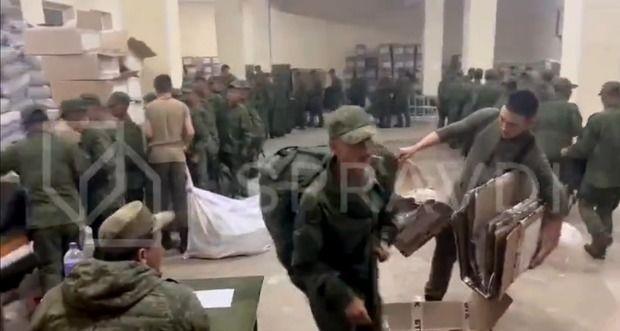
Analysts believe that North Korea's focus on internal control is driven by fears that significant casualties or cases of desertion among deployed troops could threaten the stability of the regime.
To quell any potential unrest, the North Korean government has reportedly misled the families of deployed soldiers, telling them their loved ones are simply undergoing training. They are also continuing relocation and isolation measures. Officials have banned officers from using mobile phones and instructed soldiers in the dispatched units to remain silent. However, many soldiers are expressing anxiety, questioning why they should sacrifice themselves for a foreign conflict.
In particular, rumors about the deployment have proliferated in the North Korea-China border regions, where information control is less stringent, resulting in heightened public anxiety. Residents are worried that their children may be among those sent to Russia.
On the 30th of last month, Daily NK, a media outlet specializing in North Korean news, cited a source in Ryanggang Province, stating that “news of the Russian deployment has circulated widely among residents of Hyesan City.” Parents who have sent their children into the military are feeling particularly anxious, uncertain if their kids are included in the deployment.
Currently, reports indicate that the North Korean military has suspended leave and outside contact for soldiers, citing increased tensions as the reason, effectively cutting off their communication with the outside world.
A resident in his 50s from Hyesan City, whose child is serving in the military, shared, “I felt my mind go blank when I heard about the deployment. I've wanted to visit my son's unit countless times, but since visits are not allowed, I feel utterly distressed.” Another resident in his 40s from Hyesan expressed frustration, saying, “It’s already unfair that they have to serve in the military for 10 years, and now they’re being sent to war? How many will actually come back alive, and who can guarantee they’ll return in good health?”
A source from North Hamgyong Province reported, “Parents are desperately trying to find out about their children's situations, with some even visiting fortune tellers or going directly to their sons’ units.”
Another insider revealed that “some officials are spending money to ensure their children don’t get deployed, while ordinary citizens feel powerless and resign themselves to their fate, sighing in despair.”
North Korea Fires Several SRBMs After Launching ‘Hwasong-19’ ICBM Ahead of U.S. Presidential Election
North Korea tested its new-type ICBM ‘Hwasong-19’ on October 31 and subsequently launched several SRBMs into the East Sea on November 5. Observers believe these actions aim to enhance North Korea’s visibility ahead of the U.S. presidential election and to retaliate against recent joint air drills conducted by South Korea, the U.S., and Japan.
The Republic of Korea Joint Chiefs of Staff reported on the 5th that “Our military detected multiple SRBMs launched toward the East Sea around 7:30 a.m.” According to the South Korean military and Japan’s NHK, the missiles were fired from near Sariwon City in North Hwanghae Province, flying about 400 km before landing outside Japan’s Exclusive Economic Zone (EEZ). Japanese Defense Minister Nakatani Gen stated, “At least seven missiles were observed, reaching a maximum altitude of approximately 100 km and covering about 400 km.”
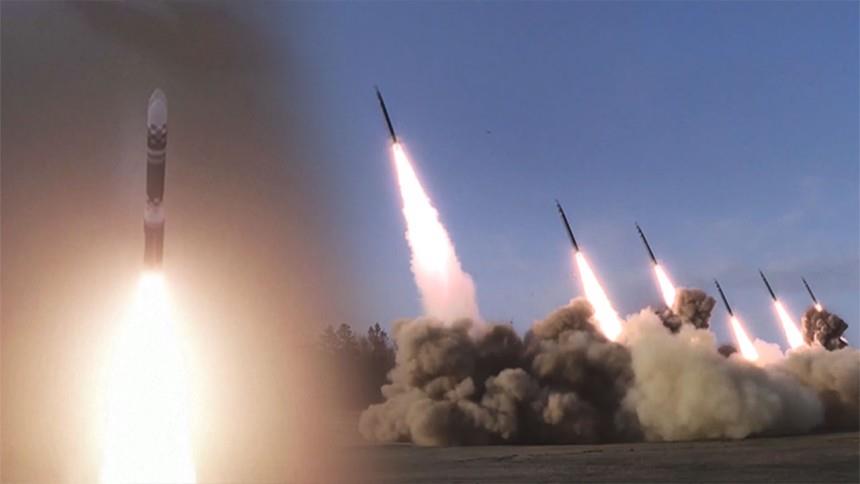
This missile provocation occurred just five days after North Korea's test launch of the ICBM ‘Hwasong-19’ on October 31. Given that the launch coincided with the presidential election day at 2 p.m., some analysts interpret it as a show of force directed at the incoming U.S. administration. It may also serve as a response to the South Korea-U.S.-Japan joint drill on November 3, which involved the U.S. strategic bomber B-1B. Kim Yo-jong, Deputy Director of the Workers' Party of Korea, condemned the drills in a statement, describing them as “a clear demonstration of the enemies’ most hostile and aggressive nature against our republic” and asserting the “urgency and legitimacy of our chosen path to strengthen nuclear capabilities.”
Analysts have noted that the specifications of these missiles closely resemble North Korea's large-caliber multiple rocket launcher, the KN-25. This similarity suggests that North Korea may be testing modified missiles intended for export to Russia.
On October 31, North Korea launched the new-type ICBM ‘Hwasong-19.’ According to the Korean Central News Agency (KCNA), the Hwasong-19 reached a maximum altitude of 7,687.5 km, traveled a distance of 1,001.2 km, and flew for 5,156 seconds (85.9 minutes) before landing in the targeted open waters of the East Sea.
Analysts have suggested that the Hwasong-19 ICBM is being developed as a multiple-warhead missile with Russian technical assistance.
On November 2, the Ukrainian military-focused media Defense Express reported, “The Hwasong-19 resembles Russia’s Yars missile in appearance. It appears to have adopted Russian advanced technology,” and speculated that North Korea might have replicated or modified the design to increase range and payload. The report added that images suggest Multiple Independently-targetable Reentry Vehicle (MIRV) technology, supporting suspicions of Russian involvement. Yars is a well-known multiple-warhead ICBM operated by Russia, along with the Sarmat.
Yoo Yong-weon, a former military journalist and member of the People Power Party, analyzed the Hwasong-19 on November 3, noting that this solid-fuel ICBM is an upgraded version of the Hwasong-18, featuring increased length and diameter. He suggested that these enhancements aim to develop a multiple-warhead system, as the expanded warhead space and payload capacity indicate. Yoo also observed that the blunt shape of the Hwasong-19's warhead resembles Russia's Sarmat missile, and its first-stage booster is similar to the Yars missile.
Multiple-warhead technology enables warheads to split during descent and hit multiple targets independently, complicating interception and potentially bypassing even advanced U.S. defense systems. However, it relies on miniaturized nuclear warheads and dependable re-entry technology, which experts highlight as substantial technical challenges. Notably, North Korea has yet to conduct standard-angle (30-45 degrees) re-entry tests, making independent development of this technology difficult.
Amid these developments, Russia declared its “full support for the measures taken by the leadership of the Democratic People’s Republic of Korea to curb the aggression policy of the United States and its allies” in a joint statement following strategic talks during North Korean Foreign Minister Choe Son-hui’s visit to Russia. This statement has been viewed as an explicit endorsement of North Korea’s nuclear force buildup by Russia.
-
PREV [NK Focus]
-
NEXT [News&Issue]