

The U.S. Presidential Election and Inter-Korean Relations
Jung Jun-hee
Auditor, Korea Institute for National Unification
▢ Potential Changes in U.S. Policy Toward North Korea After the Presidential Election
Many anticipate that regardless of the outcome of the U.S. presidential election, we will either see a continuation of Joe Biden’s policies or a return to Donald Trump’s approach. In terms of foreign policy, both candidates are expected to prioritize maintaining the status quo over implementing significant changes, with only minor adjustments anticipated.
Both the Democratic and Republican parties are focused on the U.S.-China rivalry, albeit with different strategies—Democrats tend to favor leveraging alliances, while Republicans might prefer unilateral actions. Meanwhile, the North Korea issue remains a secondary priority, overshadowed by more pressing concerns like the Russia-Ukraine War and the Israeli-Palestinian Conflict, which will also influence how the U.S. approaches its issues with China. The Democrats are likely to advocate for unconditional dialogue with North Korea, aiming to bring them to the negotiating table through a combination of pressure and sanctions.
The Republicans, on the other hand, prioritize personal diplomacy between leaders in line with their "America First" philosophy, although it remains unclear how this aligns with broader U.S. interests. Should Trump be re-elected, there is speculation about whether he would renew talks with North Korea, and if so, what the scope and impact of such discussions might be on inter-Korean relations.
▢ The Next U.S. Administration’s Approach to North Korea
If the Democratic Party, led by Kamala Harris and Tim Walz, wins, they are expected to uphold the Biden administration’s focus on democratic values in foreign policy and on restoring U.S. leadership. However, there may still be some room for policy adjustments.
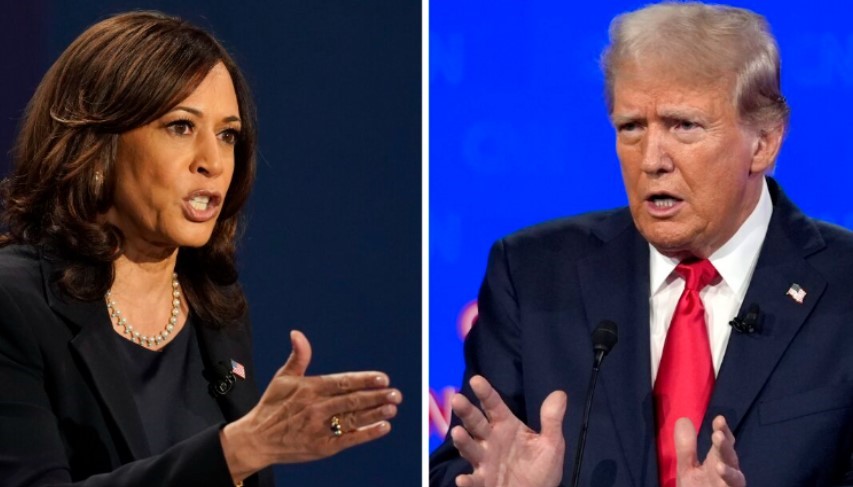
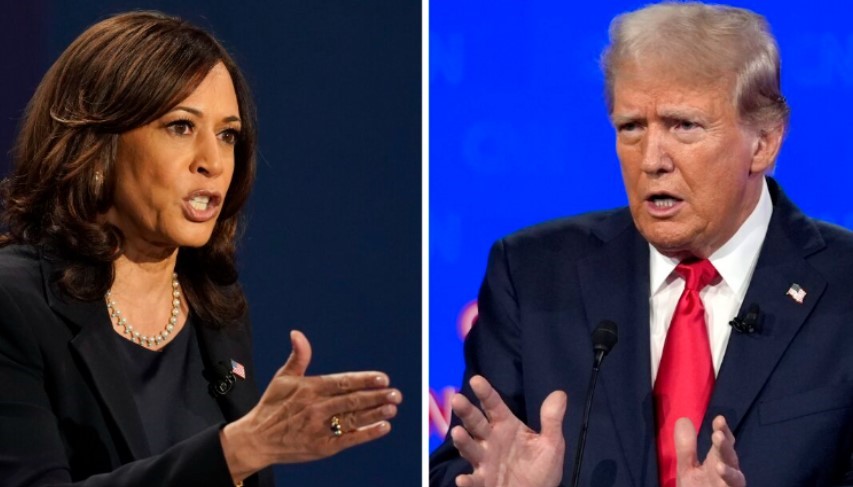
Democratic U.S. presidential candidate Kamara Harris(left)
Donald Trump, Republican presidential candidate of the United States(right)
The administration would likely focus on countering China’s influence in the international order through multilateral partnerships like the Quad, AUKUS, and Chip4, targeting trade, technology, and supply chains. Their goal would be to weaken authoritarian regimes globally and address the two ongoing conflicts. During her vice presidency, Kamala Harris emphasized the need to limit China’s influence in the region, particularly during her visits to the Korean Demilitarized Zone.
Within the Democratic Party, there are voices calling for a shift in foreign policy. For example, Ben Rhodes, a former Deputy National Security Advisor under Obama, recently suggested that the next Democratic president should move beyond the post-9/11 security mindset and adopt a more globally resonant agenda. This indicates potential discussions about foreign policy changes if the Democrats maintain power. Concerning North Korea, unless there is a significant shift in North Korea’s stance, the U.S. would likely continue its strategy of maintaining extended deterrence through the U.S.-ROK Nuclear Consultative Group (NCG) and close security cooperation with Japan, focusing on managing U.S.-North Korea relations under the principle of unconditional dialogue for denuclearization. Comparing this to the shift in North Korea policy during George W. Bush's second term in 2007, the motivation at that time was to maintain the Six-Party Talks, prevent any connection with Iran's nuclear situation, and address a decline in North Korea hardliners following the midterm election results, all in an effort to mitigate domestic and international crises. However, the current situation appears to be somewhat different.
If Donald Trump were to return to office, it is expected to focus on further maintaining and strengthening U.S. interests by reactivating an "America First Foreign Policy," rather than introducing new policy directions, drawing on the experiences from the first term.
The administration would likely aim to avoid unnecessary international conflicts in diplomacy and security, constrain rival powers in key strategic regions such as Asia, Europe, and the Middle East, and prioritize ending automatic defense budget cuts, rebuilding the military, and promoting peace through strength. This would be under a policy that revises alliances based on a "transactional" approach. The goal would be to conclude the ongoing Ukraine war in its current state, improve relations with Russia, reduce the alignment between Russia and China, and concentrate efforts on exerting pressure on China.
Regarding North Korea, the administration would aim to revive leader-to-leader diplomacy to ease the current deadlock and attempt to restart discussions on "denuclearization and normalization of relations" that took place during Trump's first term. Donald Trump has frequently hinted at the possibility of renewed dialogue with North Korea if he returns to power, often highlighting his relationship with Kim Jong-un by saying, "We got along well" (Republican nomination acceptance speech, July 18) and "Countries with nuclear weapons are the biggest threat. There was no nuclear crisis when I was in office" (August 12, conversation with Elon Musk on X-Space).
▢ North Korea’s Demand for Preemptive Actions from the U.S.
After the breakdown of the 2019 North Korea–United States Hanoi Summit, North Korea seems to have shifted its national strategy. It now appears to be focused on strengthening ties with Russia and "courting China," while sidelining its relationship with the United States for the foreseeable future.
Following North Korea’s declaration of the "completion of nuclear forces" in November 2017, Kim Jong-un recognized that the economic hardships caused by sanctions, particularly those imposed since 2016, would only worsen. His primary goal became lifting these sanctions.
In his 2018 New Year’s speech, Kim aimed to use South Korea as a bridge to engage the United States and push for sanctions relief. This strategy included a charm offensive, such as proposing summits with the U.S. and South Korea, which effectively caught both countries off guard and also provoked China. Sensing China's unease about a potential U.S.-North Korea rapprochement, Kim Jong-un proactively proposed a summit with China, to which China promptly agreed.
The strained bilateral relationship quickly turned into a close alliance, effectively opening a significant loophole in the sanctions regime against North Korea, with sanctions nearly collapsing in 2018. However, after the failure of the Hanoi Summit, which aimed to fully lift sanctions, North Korea shifted tactics, announcing a new path of direct confrontation. This move suggests a desire not only to lift sanctions but also to assert its status as a "self-reliant nuclear state with an independent economy," free from interference by neighboring powers like China or Russia.
Today, North Korea is benefiting from its status as a "de facto nuclear power" and is enjoying "de facto sanctions relief" in the wake of the Ukraine invasion. The regime is currently focused on taking advantage of wartime economic opportunities and consolidating internal stability.
Regarding dialogue with the U.S., North Korea has maintained the tough conditions set in 2019, insisting that the U.S. must take preemptive actions before any negotiations can resume. Statements from North Korean officials have consistently underscored this stance:
“The U.S. should not even dream of denuclearization negotiations until it withdraws its hostile policy toward North Korea” (Kim Yong Chol, Chairman of the Korea Asia-Pacific Peace Committee, November 19, 2019) and “The framework of U.S.-North Korea negotiations, once centered on ‘denuclearization for sanctions relief,’ must now be shifted to ‘withdrawal of hostility for the resumption of talks’” (Kim Yo-jong, First Deputy Director of the Central Committee of the Workers' Party of Korea, July 10, 2020).
Reacting to Donald Trump’s references to his personal rapport with Kim Jong-un, North Korea has expressed disappointment, stating that "personal relationships between leaders did not bring any meaningful changes" and emphasizing that "it does not matter which U.S. administration is in power" (Central Committee commentary, July 23, 2024, "Whether the clock of U.S.-North Korea confrontation stops depends on U.S. actions"). They demand that the U.S. must make the first friendly gesture if it wants dialogue to resume.
Additionally, there is speculation about a potential "October Surprise" from North Korea, possibly coinciding with the U.S. presidential election. While high-intensity provocations like ICBM launches would depend on political factors such as the positions of Russia and China and the impact on the U.S.-South Korea alliance, it currently appears that military considerations will take precedence over political ones, leading to potentially limited provocations.
North Korea is currently focused on achieving the "five major tasks for defense science development and weapons system development" outlined at the 8th Party Congress in 2021. These tasks include developing super-large nuclear warheads, hypersonic glide vehicles, solid-fuel engines for land-based and underwater ICBMs, nuclear submarines, and military reconnaissance satellites, all aimed at establishing itself as a "self-reliant nuclear state with an independent economy." While North Korea may consider political factors like the U.S. presidential election to some extent, it will likely proceed with its military experiments whenever it deems necessary, regardless of external political events.
▢ Considerations in Resuming U.S.-North Korea Dialogue
The timing for the resumption of U.S.-North Korea talks largely hinges on shifts in the global landscape, such as the outcomes of ongoing conflicts in Europe and the Middle East. Equally crucial are North Korea’s own goals and current situation. Given these considerations, it is likely that a considerable amount of time will be needed before dialogue can resume.
Should the U.S. take an active role in ending the war in Ukraine, removing North Korea's "war-related benefits," and if North Korea finds itself lacking momentum for building a self-sufficient economy due to strained relations with China after aligning closely with Russia, the chances for dialogue with the U.S. might increase.
According to the General Administration of Customs of the People's Republic of China (GACC), North Korea's imports of rice and flour from China fell sharply in the first half of 2024 compared to the same period last year, dropping by 10.7% and 23% respectively. Imports of corn for animal feed and nitrogen fertilizer have also nearly ceased, at 1.3% and 0.3%, respectively. This suggests that trade between China and North Korea is practically dormant. If the benefits North Korea receives from Russia diminish, it may seek to improve relations with China or find a new outlet, potentially through the U.S. If the wars conclude, leading to improved U.S.-Russia relations and a more relaxed China-Russia alliance, North Korea might be more inclined to use dialogue with the U.S. as leverage to gain support from China. Similarly, if Donald Trump were to see the two conflicts end and enter a lame-duck period following the 2026 U.S. midterm elections, he might have a stronger incentive to use a U.S.-North Korea summit as a means to secure new momentum in governance and solidify his legacy.
However, even if U.S.-North Korea dialogue does resume, the significant differences between the two sides' goals and expectations mean that tensions and potential breakdowns in the implementation phase remain a real possibility, even if an agreement is reached.
To restart talks, the U.S. might need to make significant concessions, such as halting joint military exercises with South Korea, to meet North Korea's demand for the end of what it calls the "hostile policy" toward the DPRK. This "hostile policy," according to North Korea, includes a wide range of actions, such as U.S.-South Korea military drills, the deployment of advanced strategic weapons that pose a threat to North Korea, and designations related to terrorism, human rights, and religious freedom. Similar to the previous decision to remove North Korea from the list of state sponsors of terrorism, Donald Trump might be willing to meet some of North Korea's demands if they are considered low-cost concessions.
If a summit does occur, the U.S. is likely to insist on discussions starting from where they left off at the Hanoi Summit, while North Korea would push for negotiations to follow the sequence agreed upon during the Singapore Summit. This difference in approach suggests a bumpy road ahead, with both sides possibly needing to compromise on a smaller-scale deal.
The U.S. may prefer to focus on easing sanctions starting with the Nyongbyon Nuclear Scientific Research Center, but North Korea will likely argue that discussions on the complete denuclearization of the Korean Peninsula can only proceed after establishing a new U.S.-North Korea relationship and a robust peace regime, as outlined in the 2018 Singapore Joint Statement.
A “small deal” could involve a variety of elements, such as the closure of nuclear facilities or arms reduction. If such a deal is struck, the U.S. could claim success in "managing North Korea," while North Korea might perceive it as having achieved "sanctions relief while maintaining its status as a de facto nuclear state." Both sides might consider this a win-win scenario.
China and Russia could also view the easing of sanctions on North Korea positively, as it would relieve them of a significant burden. However, the possibility that this might encourage countries like Iran, South Korea, and Japan to pursue nuclear capabilities could be seen as a negative impact on their security.
▢ The Direction of U.S.-North Korea Relations and Policy Toward North Korea
If the Democratic Party wins the U.S. presidential election, the current stalemate in U.S.-North Korea relations is likely to continue, with an emphasis on "unconditional dialogue for the denuclearization of the Korean Peninsula." In this scenario, South Korea should focus on effectively managing North Korea and aim for gradual, incremental changes.
To strengthen extended deterrence, South Korea should advocate for more detailed and institutionalized discussions within the U.S.-ROK Nuclear Consultative Group. Instead of hastily attempting to initiate inter-Korean dialogue, South Korea should take the lead in drawing North Korea into broader international engagement through countries like China and Japan.
Additionally, South Korea should flood North Korea with information about the international community and South Korea to highlight the "anti-people and anti-national" nature of North Korea's "two-state policy." This effort should also aim to shift the perceptions of North Korea’s younger generation.
If Donald Trump returns to power and pursues U.S.-North Korea summits, North Korea may adopt a strategy of "bypassing South Korea to directly engage with the U.S.," aiming to isolate South Korea. In such a scenario, the U.S. might not fully take South Korea’s interests into account, potentially weakening South Korea’s security position.
Even if U.S.-North Korea dialogue resumes, North Korea is expected to intensify its nuclear threat doctrine against South Korea and maintain its view of South Korea as a "hostile state at war," in line with its "two-state policy." The U.S. might try to ease South Korea's concerns by emphasizing its nuclear umbrella, while still holding the position that South Korea should take the lead in conventional defense against North Korea’s threats, as outlined in "Project 2025."
In response, South Korea should actively engage in diplomacy with the U.S., clearly expressing its intention to strengthen its nuclear capabilities and highlighting the risks of any flawed agreements between the U.S. and North Korea.
South Korea should emphasize that a small-scale deal between the U.S. and North Korea could lead to higher U.S. security costs, weakened cooperation between South Korea and Japan due to pressure from China, problematic ties between North Korea and Iran, negative precedents for resolving Iran's nuclear program, and potential weakening of the NPT framework. It should convey to the U.S. that superficially managing a nuclear-armed state as a temporary measure could ultimately undermine U.S. national interests in the long run.
By November, the U.S. administration will be decided. Regardless of who comes to power, South Korea must clearly define its goal of unification, take practical steps to achieve it, and continue to strengthen its self-reliance and resilience.