


What New Medicines Is Kim Jong-un Looking For?

Lee Seung-hyun
Research Fellow at SAND Institute
Ph.D. in Public Administration
drharacearthur@gmail.com
- Pyongyang Health Officials Spend Hundreds of Thousands of Dollars Abroad on Medications
- Focus Seen on Drugs for Diabetes, Cystitis, Gout, and Tuberculosis
Officials from North Korea's Ministry of Public Health reportedly visited Dandong, Shenyang, and Beijing last July to buy large quantities of medicine. A Shenyang-based source with over 30 years of experience in North Korea trade said the list included more than 20 types of medications, such as treatments for tuberculosis, vitamins, stomach remedies, diabetes medications, painkillers, anticancer drugs, and medicines for cystitis and gout.
Those dispatched to different locations reportedly paid Chinese traders at least tens of thousands of dollars upfront, requesting them to secure the medicines listed in their purchase orders.
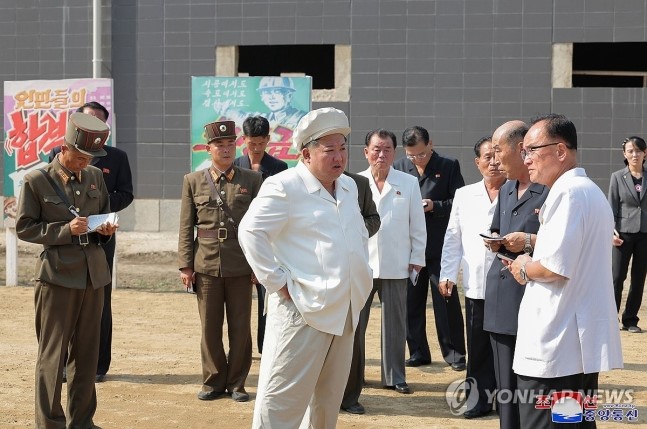
On the 26th, the Korean Central News Agency reported that North Korean leader Kim Jong-un inspected
local industrial plant construction sites on the 24th and 25th of last month. / Yonhap News Agency
The source noted that it's unusual for North Korea to pay in advance, as they typically receive goods first and pay later, either on credit or upon delivery. This urgent prepayment suggests a critical need for these medications, likely due to a rise in illnesses from weakened immunity following the COVID-19 pandemic. This health crisis seems to have caused a medicine shortage in pharmacies and markets, known as Jangmadang, across various regions, including Pyongyang.
Due to the urgent need, Ministry of Public Health officials were quickly dispatched to buy large quantities of medicine, while individual smugglers working with China focused on high-demand drugs. Reports also indicate that pharmaceutical brokers have emerged in Pyongyang and other major cities to supply medicines to hospital pharmacies and Jangmadang.
However, the inclusion of a significant number of drugs that were not on previous lists has sparked interest and speculation. A North Korean trader in Dandong who was involved in the transaction highlighted that this time, officials were especially focused on acquiring medications for cystitis, urinary incontinence, and gout. According to the trader, these drugs are not intended for the general population but are specifically meant for hospitals serving high-ranking officials.
The trader mentioned, "I heard that cystitis and gout medicines are used by the regime's top officials," and added that rumors among Chinese traders suggest Kim Jong-un, who has diabetes and other chronic conditions, is also struggling with cystitis and gout.
Last month, on the 29th, South Korea's National Intelligence Service (NIS) informed the National Assembly that "Kim Jong-un seems to be seeking out medications beyond his usual prescriptions," suggesting there might be certain health conditions that his current medicines cannot adequately address.
Reports also indicate that Kim Jong-un's weight is around 140kg, with a body mass index (BMI) in the mid-40s, significantly above the standard BMI of 25, categorizing him as extremely obese and at high risk for heart disease.
The NIS further stated, "Kim Jong-un began showing symptoms of high blood pressure and diabetes in his early 30s. If his health doesn't improve, he could develop cardiovascular diseases, which run in his family, so his condition is being closely monitored," adding that his stable weight of around 140kg is likely due to stress, smoking, and alcohol use.