

Kim Myongsung’s Inside North Korea
· Kim Jong-un Furious Over Poor Construction: "They Completely Ignored My Orders" ... Officials Face Stricter Discipline
· North Korea Reacts Strongly to Anti-North Leaflets: Punishes Residents Who Collected Them and Warns South Korea to 'Be Prepared’
· High-Ranking North Korean Diplomat’s Family Defects to South Korea from Cuba Last November, Ahead of South Korea-Cuba Diplomatic Relations

Kim Myong-sung
Since the 10th Plenary Meeting of the 8th Central Committee of the Workers' Party of Korea earlier this month, North Korea has tightened its reins on officials. Leader Kim Jong-un harshly criticized officials for poor work at construction sites and within provincial party committees and the cabinet. This move is seen as an effort to shift blame to officials amid ongoing economic struggles due to international sanctions.
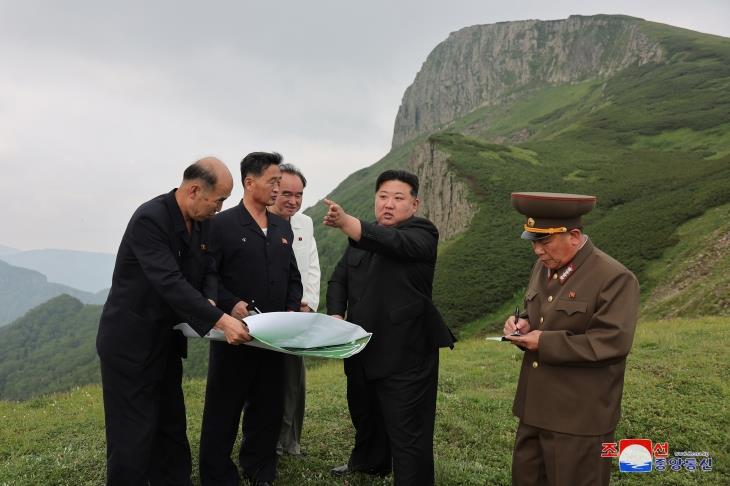
According to Rodong Sinmun, Kim Jong-un visited the construction site in Samjiyon City on July 11 and 12. He criticized officials for the substandard construction, calling it careless and outdated, and accused them of ignoring directives from the Workers' Party of Korea and the government.
Kim labeled Ri Son-chol, the Minister of State Construction Supervision, and a former vice minister as "unfit individuals lacking basic morals and qualifications as state officials." He ordered their dismissal and referred them to judicial authorities. Additionally, he called for the removal of the head of the construction-related political group in the Organization and Guidance Department of the WPK.
Samjiyon, a symbolic site in North Korea, holds significance for Kim Il-sung's anti-Japanese activities and Kim Jong-il's birthplace. Designated as a special tourist zone by Kim Jong-un in 2015, it underwent a three-phase modernization project aimed at becoming a model for local development. By the end of 2019, it was upgraded from a county to a city, and North Korea now showcases Samjiyon as a "model socialist mountain cultural city."
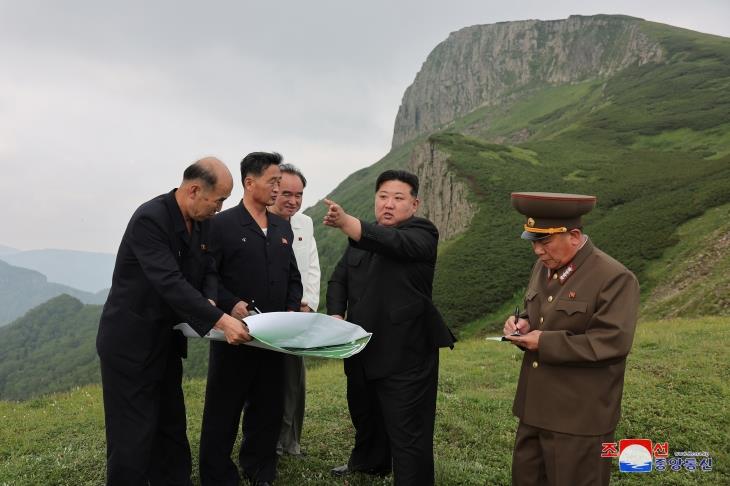
On July 11 and 12, Kim Jong-un provided on-site guidance for the construction project in Samjiyon City.
/ Korean Central News Agency
In November 2021, as the four-year construction project in Samjiyon neared completion, Kim Jong-un ordered additional lodging facilities, roads, and rail projects. Most of these projects have been finished, except for the renovation of Samjiyon Airport and some rail works.
However, due to dissatisfaction with the results, Kim Jong-un revisited the site and reprimanded those responsible for the construction.
Following the Plenary Meeting, North Korea has been actively enforcing stricter discipline among officials. Kim emphasized the need to improve the work attitudes of officials, identifying various issues that were hindering economic progress during the recent Plenary Meeting.
Rodong Sinmun highlighted that provincial party committees and the cabinet convened meetings to discuss the implementation of the Plenary Meeting’s outcomes and stressed the need to address officials’ negligence.
The public rebuke of officials and the critique of their work attitudes seem to be part of an effort by the North Korean leadership to shift the blame for economic difficulties to the working-level officials, especially when economic resources are scarce due to ongoing sanctions.
North Korea Reacts Strongly to Anti-North Leaflets: Punishes Residents Who Collected Them and Warns South Korea to 'Be Prepared’
North Korea is responding strongly to anti-North leaflets sent by defector groups by harshly punishing residents who picked them up and warning South Korea to "be prepared.“
On the 10th, TV Chosun reported, citing a South Korean government source, that North Korean authorities publicly executed about 30 middle school students for watching South Korean dramas found on USB drives hidden in leaflets.
Last month, teenagers around 17 years old received life imprisonment or death sentences for the same offense.
North Korea also reacted nervously to 'rice PET bottles' sent by defector groups. According to a government official, some residents were sentenced to labor for cooking and eating rice from these bottles.
North Korea has announced Kim Jong-un's directive to burn anti-North leaflets due to COVID-19 concerns, but severe food shortages complicate enforcement.
Despite harsh governance tactics, the younger generation, known as the 'Jangmadang generation,' is expected to continue defying these restrictions.
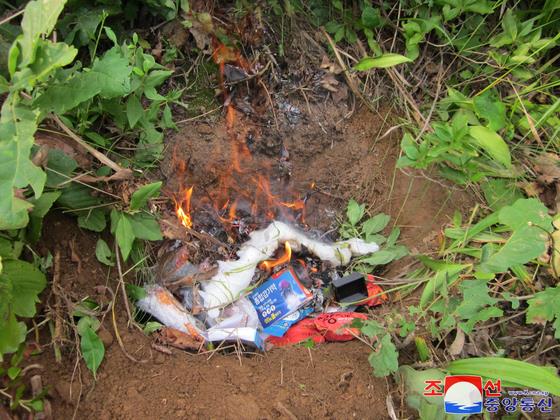
On the 14th, a statement by Kim Yo-jong, a WPK official, criticizing anti-North leaflets was reported,
along with the photo of the leaflets being burned. / Korean Central News Agency
On the 14th, Kim Yo-jong issued a statement warning of consequences if anti-North leaflets were found again in North Korea's border areas. On the 16th, she reiterated that "South Korea will have to pay for this" after more leaflets were discovered.
Previously, North Korean media had released photos of objects like comprehensive cold medicines, presumably sent with the leaflets, being incinerated.
This release of photos showing leaflets that landed in North Korea is the first amid the recent conflict over anti-North leaflets and waste balloons between the two Koreas.
Recently, North Korea has retaliated to anti-North leaflets sent by defector groups by sending waste balloons back to the South.
High-Ranking North Korean Diplomat’s Family Defects to South Korea from Cuba Last November, Ahead of South Korea-Cuba Diplomatic Relations
On the 16th, it was confirmed that a North Korean diplomat stationed in Cuba defected to South Korea in November last year, amid active communication preceding the establishment of diplomatic relations with Cuba in February this year.

North Korean Embassy in Cuba / Yonhap News Agency
According to a South Korean government source, North Korean diplomat Ri Il-kyu (52), who was stationed at the North Korean Embassy in Cuba, defected to South Korea with his wife and children in November last year.
Ri, a diplomat handling South Korea-related affairs in the North Korean Ministry of Foreign Affairs and having served twice in Cuba, reportedly decided to defect following conflicts with the Ministry’s headquarters over job evaluations.
Speculation suggests that the establishment of diplomatic relations between South Korea and Cuba may have influenced his decision to defect. Cuba, a traditional ally of North Korea, announced diplomatic ties with South Korea in February.
Until his defection, Ri was responsible for preventing the establishment of diplomatic relations between South Korea and Cuba.
This diplomat's defection is the first confirmed since July 2019, when two acting ambassadors, Jo Song-gil in Italy and Ryu Hyun-woo in Kuwait, also defected.
In recent years, as the COVID-19 pandemic subsided, North Korea has reshuffled its overseas representatives, resulting in a wave of defections among the elite stationed globally.
According to the Ministry of Unification, about ten 'elite' North Koreans defected last year, marking the highest number since 2017. Despite the overall number of defectors entering South Korea dropping to one-sixth of the 2017 figures due to stringent border controls, defections among those stationed abroad have persisted.
-
PREV [NK Focus]
-
NEXT [Analysis]