

Tensions Grow in North Korea-China Relations Amid Closer North Korea-Russia Ties

Cho Yui-haeng
Professor at Seoul Theological University
The growing closeness between North Korea and Russia is causing political tension in North Korea-China relations, now in their 75th year. This has become evident recently.
On July 11, North Korea and China marked the 63rd anniversary of their Treaty of Friendship, Cooperation, and Mutual Assistance. However, the rank of officials attending the events was notably lower than in previous years. In Pyongyang, Kim Seung-chan, chairman of the North Korea-China Friendship Association and president of Kim Il Sung University, represented North Korea, while Ambassador Wang Yajun and embassy staff attended on behalf of China.
Even though this year is not a major milestone, the lower rank of attendees was striking. Last year, high-ranking North Korean officials like Kang Yun-sok and Moon Sung-hyuk attended the event, highlighting the downgrade this year.
Similarly, China’s representation was also lower this year. Last year, Peng Qinghua, Vice Chairman of the National People's Congress, attended the Beijing event. This year, He Ping from the Chinese People's Political Consultative Conference represented China.
Adding to the tension, North Korea's Rodong Sinmun and China’s People's Daily did not publish any articles on the anniversary this year. While Rodong Sinmun did cover the event on the day, China's Xinhua News Agency did not report on the banquet.
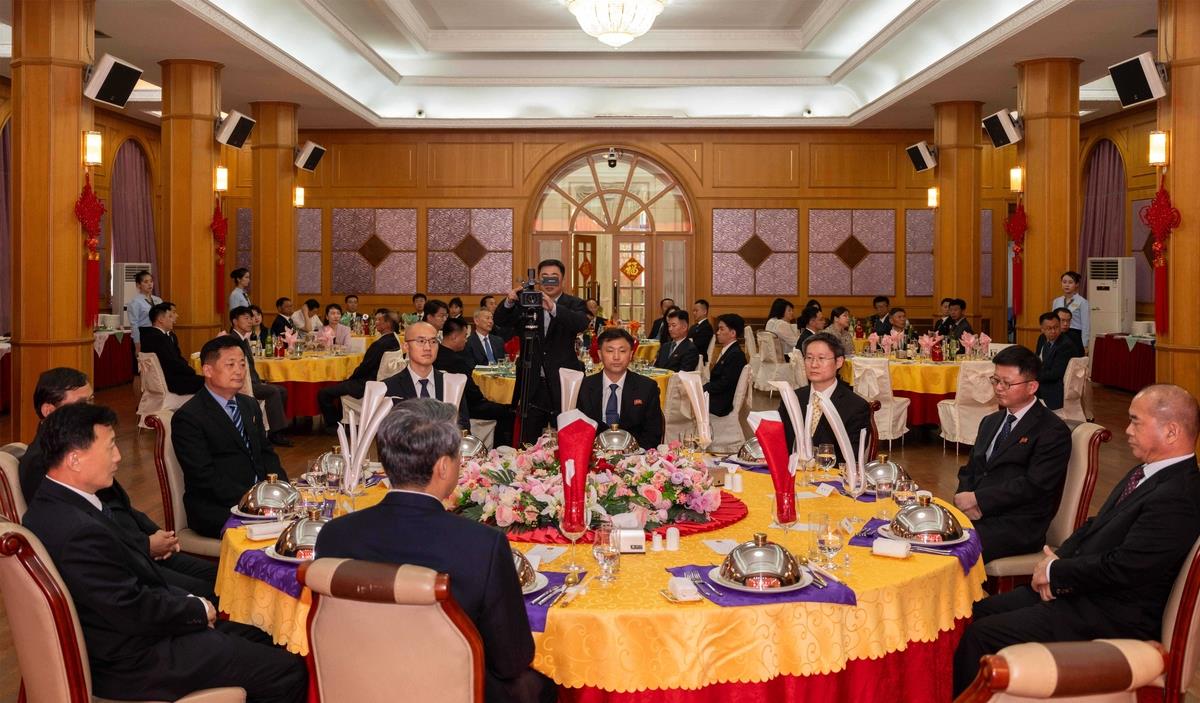
Commemorative event for the 63rd anniversary of the Sino-North Korean Treaty at the Chinese Embassy
in Pyongyang on July 11 / Embassy of China in North Korea website.
Reports indicate that China recently demanded the return of all North Korean workers stationed in the country. While North Korea plans a gradual repatriation, China insists on the immediate return of workers whose visas are expiring.
North Korea has circumvented UN sanctions by sending workers to China on student and tourist visas. Tens of thousands of North Korean workers are estimated to be in China through this method. With their visas expiring soon, China has decided not to extend them and will send the workers back to North Korea.
The international community believes North Korea earns hundreds of millions of dollars annually by taking up to 90% of the wages of its overseas workers. Therefore, if the workers are repatriated, it could significantly impact North Korea. Although the Chinese Foreign Ministry has denied the report, multiple signs of tension between the two countries have emerged this year.
In January, North Korea remained silent after the election of Taiwan's anti-China President Lai Ching-te and did not send condolences following a major earthquake in China. However, when an earthquake struck Japan, Kim Jong-un sent a formal condolence letter to Prime Minister Kishida Fumio, using an honorific term.
Chinese Ambassador to North Korea Wang Yajun did not attend a large anti-American rally in Pyongyang on the anniversary of the Korean War, unlike Russian Ambassador Alexander Ivanovich Matsegora. This absence was notable, given China's significant involvement in the Korean War.
China has also removed a commemorative plaque from the 2018 summit between Xi Jinping and Kim Jong-un in Dalian. Additionally, North Korea switched from using Chinese satellites to Russian ones for broadcasting Korean Central Television, indicating further strain in relations.
The smuggling of goods between North Korea and China, once thriving despite UN sanctions, has been curbed by intensified Chinese crackdowns. China's customs data shows that North Korean imports from China dropped by 8.8% in May compared to April, amounting to $150.38 million.
While Russia has resumed sending tourists to North Korea after the COVID-19 pandemic, China has yet to send any.
Despite declaring this year the 'Year of North Korea-China Friendship' for their 75th anniversary of diplomatic ties, tensions remain high. China’s recent actions seem to signal displeasure with North Korea’s growing closeness to Russia.
Since the latter half of last year, North Korea has grown closer to Russia, holding two summits and engaging in military exchanges amid Russia's invasion of Ukraine. Meanwhile, China has distanced itself from North Korea to maintain good relations with the U.S. and the West, prompting North Korea's dissatisfaction.
As the Ukraine war drags on and North Korea's ties with Russia strengthen, North Korea-China relations are likely to remain strained for the foreseeable future.