

North Korea to Send Workers to Russia?
The Reality of Forced Labor for North Korean Overseas Workers

Lee Seung-hyun
Research Fellow at SAND Institute
During their June summit, North Korea and Russia agreed to build a bridge over the Tuman River, hinting at more North Korean workers being sent abroad. These workers face harsh conditions and must surrender over 70% of their earnings, raising serious human rights concerns often termed 'slave labor.'
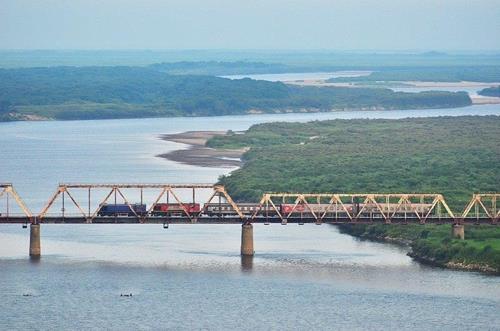
On June 19, Russian President Vladimir Putin visited North Korea and signed a 'Comprehensive Strategic Partnership Treaty' with North Korean leader Kim Jong-un. This treaty includes an agreement to build a road bridge at the Tuman River border. The Tuman River delineates the border between North Korea and Russia, where currently only the railway Friendship Bridge connects Rason and Primorsky Krai.
In 2015, North Korea and Russia planned to build a road bridge connecting Khasan in Primorsky Krai and Rajin in North Korea, but the project was canceled. However, nine years later in February, the Najin-Khasan road bridge project resumed, and this new agreement finalizes its specifics.
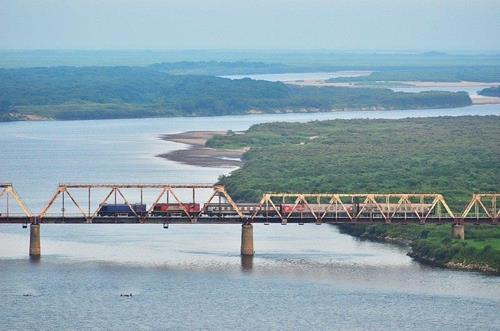
The 'Friendship Bridge,' a railway bridge over the Tuman River on the North Korea-Russia border
/ Wikipedia photo
The new automobile bridge over the Tuman River is expected to be built below the Friendship Bridge. According to Radio Free Asia (RFA) in February, the project will feature a bridge 10 meters wide and 830 meters long, located about 400 meters downstream from the railway bridge. This new road is likely to boost the exchange of people and goods more than the existing railway.
Given that more than 90% of North Korea's foreign trade occurs through China, the surge in North Korean overseas workers is expected to align more with Russia's labor needs and North Korea's foreign currency requirements than with any substantial increase in trade between the two nations.
Rather than deploying combat troops, North Korea is likely to send construction workers to the four regions of Donetsk, Luhansk, Kherson, and Zaporizhzhia Oblast in Ukraine, which Russia claimed as new territories in 2022. North Korean military engineers and construction soldiers might be dispatched in civilian attire instead of military uniforms. North Korea has been sending some construction soldiers to Russia since 2016 due to sanctions.
With international sanctions further isolating North Korea, sending workers abroad has become a vital source of foreign currency. By deploying active-duty soldiers instead of regular paid workers, North Korea can generate more foreign currency.
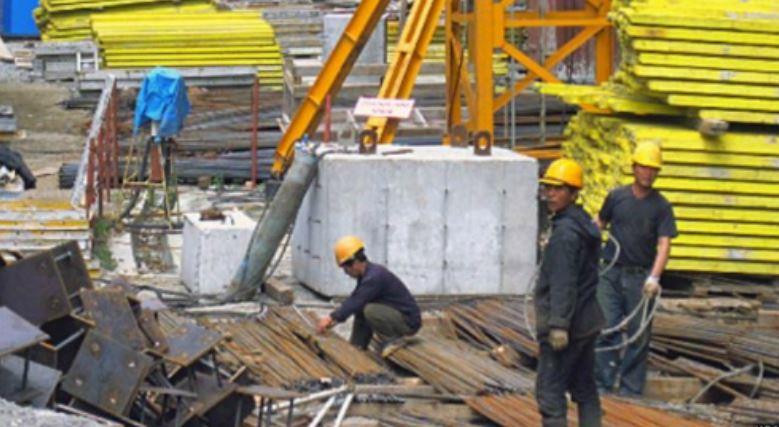
North Korean workers at a construction site in Vladivostok, Russia / Voice of America (VOA)
There have been several indications of North Korea's efforts to send workers to Russia. Last October, a job listing for North Korean workers appeared on a Russian government website before being removed. In December, intelligence agencies noted trends in North Korea's deployment of workers to Russia.
Following the recent summit, the likelihood of North Korean workers being dispatched to Russia has increased, bringing their human rights issues back into focus.
The '2024 Report on North Korean Human Rights,' recently released by the Ministry of Unification, includes testimonies from 649 defectors and sheds light on these issues. The report reveals that North Korean workers sent to Russia, the Middle East (UAE, Kuwait), Europe, Africa, and Mongolia face long hours, constant monitoring, and excessive tribute payments. They work long hours daily with nearly no holidays, and have to surrender over 70%, sometimes up to 90%, of their wages as "state planning fees" and other costs.
A North Korean defector testified that workers sent to Russia in 2019 worked from 8 a.m. to 12 p.m. for the morning shift and from 1 p.m. to 10 p.m. for the afternoon shift, noting that "if they did not meet their quotas, it was common to work until 5 a.m."
Workers in the Middle East reportedly had Fridays off for Islamic worship but worked 16-hour days from 5 a.m. to 10 p.m. on the other six days.
There have also been reports of collective actions by dissatisfied workers. In 2020, North Korean workers in Russia reportedly tried to avoid work by pretending to be ill due to dissatisfaction with long hours and unpaid wages.
A comprehensive investigation is needed to address the human rights abuses faced by North Korean workers dispatched abroad, who serve as a significant source of revenue for Kim Jong-un.