


Kim Ju-seong
Writer, North Korean defector
May 25 marks the 68th anniversary of the establishment of the General Association of Korean Residents in Japan (Chongryon) at the Asakusa Public Hall. At the founding conference, Korean-Japanese residents, mainly from North Korea, gathered and adopted slogans such as peace and unification of the homeland, advocacy of democratic and national rights of Korean residents in Japan, national education, and contributions to the friendship between North Korea and Japan and world peace. At the time of its establishment, Chongryon adopted a collective leadership system with six chairpersons, including Han Duck-soo. The organization started as an autonomous group with a strong pro-North Korean stance, consisting of leading figures from its predecessor, the Korean Residents Union.

When I was born, my grandfather, who hailed from South Gyeongsang Province in Korea, was already a key leader within the organization ‘Chongryon’ and had been active as a leader since the era of the Korean Residents Union. As I grew older, I came to recognize the organization as a beacon of hope, a sanctuary that took responsibility for and protected the lives of all 600,000 Korean Japanese residents (referred to as such at the time).
During that time, Chongryon had various institutions such as schools, universities, financial institutions, publishing companies, and cultural and artistic organizations that provided national education. The organization was able to assist many compatriots, and as a result, they developed close relationships based on mutual support and coexistence.
As a private self-governing organization, Chongryon was funded solely by donations from Korean-Japanese. I recall witnessing my grandfather going door-to-door to collect donations when I was young, and I still vividly remember the sight of fellow Koreans complaining that they couldn't afford to contribute. Growing up, I learned that Chongryon initiated its lobbying activities using the funds collected through donations and achieved significant success in fundraising in the entertainment industry. The funds collected were used to pay salaries of employees of affiliated institutions and, more importantly, were sent to North Korea, which was regarded as their homeland.
As a Korean-Japanese who attended a Chōsen gakkō, also known as "our school," from kindergarten, I am part of a generation that received consistent nationalist education. From a young age, we were taught to praise the North Korean system and idolize Kim Il-sung, which intensified our awareness of the division on the Korean Peninsula and fueled anti-South Korean, anti-American, and anti-Japanese sentiments. This indoctrination affected the 2nd and 3rd generations of Korean-Japanese who attended these schools. Through education, the perception of North Korea as a paradise and land of hope was reinforced to Korean-Japanese people who were living as foreigners in Japan and had never been there before. Chongryon strengthened its propaganda efforts for North Korea, which led to the Repatriation to North Korea program in 1959.
The Repatriation to North Korea program resulted in over 95,000 Korean-Japanese moving to North Korea. When I personally went to North Korea with my grandparents through this program in the mid-1970s at the age of 12, I finally realized the truth. Chongryon, which was once a self-governing body for Korean-Japanese people, became a pro-North Korean organization that distributed vast amounts of money to North Korea in the 1980s.
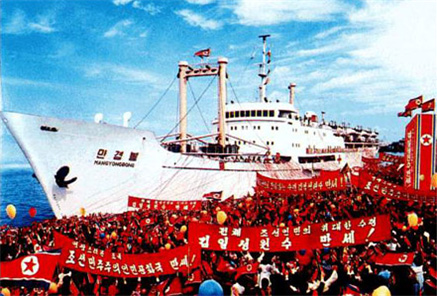
Even the core members of Chongryon willingly sent their children to North Korea, and those children were taken hostage by the North Korean regime, subjected to invisible pressures from North Korean authorities. Unable to leave the organization as their children lived in North Korea, they were put in a position where they could not express their grievances and had to cooperate. In addition, the underlying awareness that their children living in North Korea might face disadvantages if they left Chongryon also served as a mental constraint for them.
We need to reconsider the purpose of Chongryon and who it serves. While many people have left the organization over time, leaving only a small number still holding positions, it is still important to examine the impact and influence of Chongryon. I often ponder how long the forced logic that denies the reality of North Korea and claims that Korean-Japanese people are proud overseas citizens of North Korea will continue to persist.
I am now a citizen of South Korea who previously lived as a stateless person with a special permanent residency in Japan under the nationality of "Democratic People's Republic of Korea (DPRK)". I was later repatriated to North Korea and lived as a citizen there but then, as an adult, I defected from North Korea and became a citizen of South Korea. In a sense, I returned to South Korea, my grandfather's homeland, which is an undeniable reality of human history.
If Chongryon truly works for Korean-Japanese people, they should stop the idolization education of the Kim family at the Chōsen gakkō and take down their portraits from the sacred education sites. This is a tragic chapter in history, where Korean-Japanese people who believed in the propaganda of Chongryon and moved to North Korea are now grieving and yearning to return to their true homeland. We must take a moment to reflect on their fate, buried deep in our hearts, and recognize the pain and suffering they have endured.