

Halting North Korea’s Nuclear Program and Building a Peace Regime on the Korean Peninsula

Jong-cheol Park
Visiting Research Fellow
Institute for Unification Studies
1. President Trump’s Signals for Dialogue and Diplomatic Calculations
With President Trump recently sending a series of conciliatory messages to North Korea, attention is increasingly focused on the prospects for resuming U.S.-North Korea dialogue. On August 17 (local time), President Trump expressed openness to the possibility of dialogue with North Korea during a question-and-answer session with reporters at the White House. Just one day earlier, he announced that he had instructed the Department of Defense to significantly scale back U.S.-South Korea joint military exercises, citing concerns that they could send the wrong signal to North Korea.
On August 15, President Trump posted on social media a photograph of his June 2019 meeting with Chairman Kim Jong-un at Panmunjom. On August 17, he posted a digitally altered image highlighting his positive relationship with Chairman Kim, sending a series of conciliatory signals toward North Korea. These actions can be interpreted as deliberate gestures aimed at creating conditions for the resumption of U.S.-North Korea dialogue.
Behind these gestures toward North Korea may also lie a broader calculation aimed at achieving a diplomatic breakthrough. Given the limited diplomatic progress the Trump administration has made in the Russia-Ukraine war and in U.S.-Iran ceasefire negotiations, President Trump may view renewed engagement with North Korea as an opportunity to secure a tangible foreign-policy achievement. In particular, with the U.S. midterm elections approaching in November, there is a possibility that the administration will seek visible diplomatic results on issues related to the Korean Peninsula.
2. North Korea’s Advancing Nuclear Capabilities and Evolving Strategy
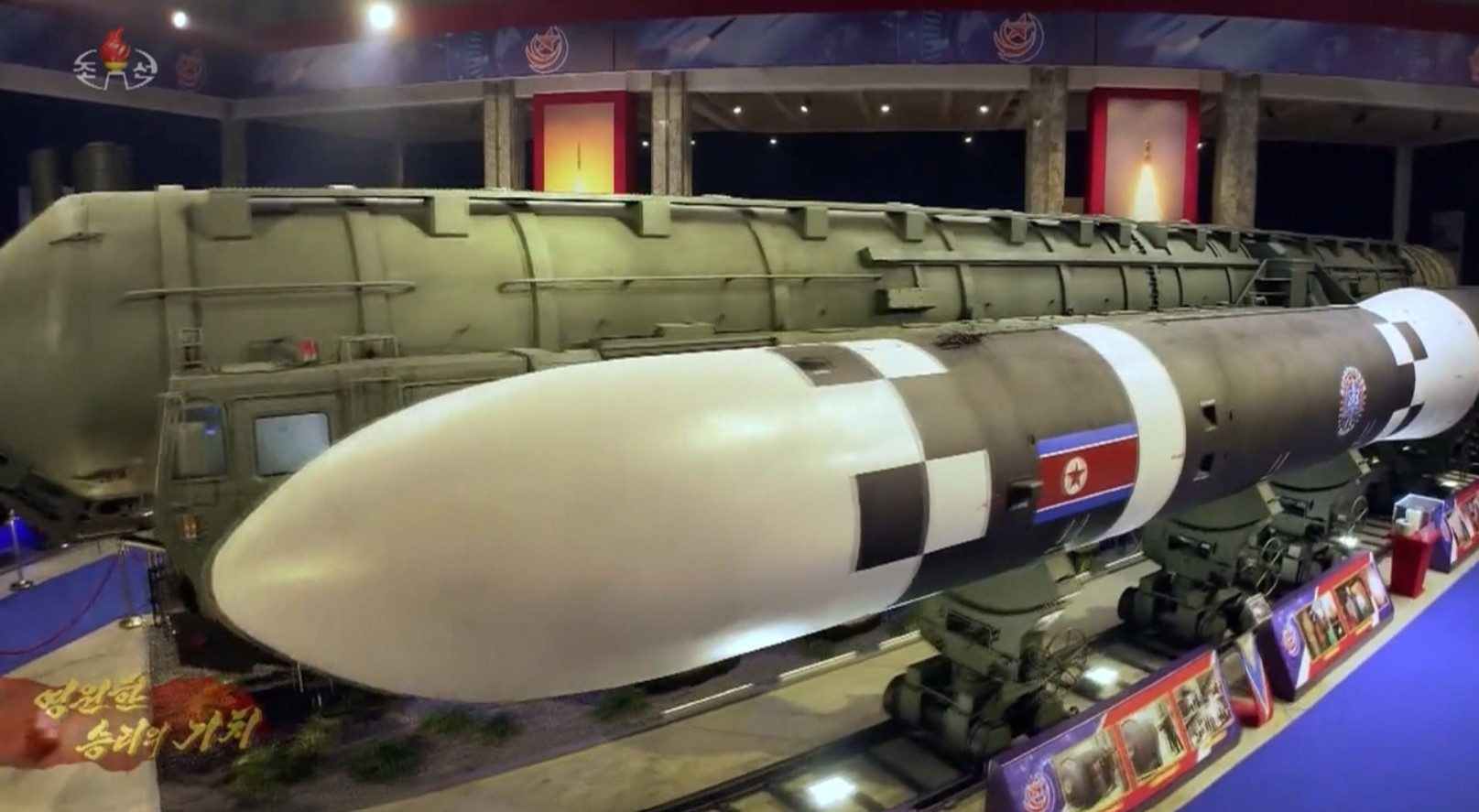
After more than three decades of development and negotiations, North Korea is not a nuclear-weapon state recognized under international law, but it is widely assessed to have developed a de facto nuclear weapons capability. For North Korea, nuclear weapons are no longer merely a bargaining instrument but a core component of its strategy for regime survival and national security. Building on its nuclear capabilities, North Korea seeks to reinforce its national identity, enhance its international standing, and secure strategic advantages on the Korean Peninsula.
North Korea’s strategy toward South Korea has also undergone a fundamental transformation. Pyongyang has institutionalized a “two hostile states” framework that defines South Korea not as a partner for dialogue and reunification but as a hostile state. This hostile posture has further severed inter-Korean relations and increased instability on the Korean Peninsula. As inter-Korean relations have deteriorated and crisis-management mechanisms have become increasingly ineffective, the risk remains that an accidental military incident could escalate into a broader confrontation.
At the same time, North Korea is strengthening its international position by deepening comprehensive military and economic cooperation with Russia while maintaining and expanding its ties with China. Stronger North Korea-Russia relations and continued engagement with China help mitigate Pyongyang’s concerns about international isolation while increasing its leverage in potential negotiations with the United States. Furthermore, North Korea has adopted an approach commonly described as “Engage the U.S., Isolate the South” (tongmi, bongnam), seeking security guarantees and sanctions relief through direct negotiations with Washington while keeping the door to inter-Korean dialogue largely closed.
3. Lessons and Outlook for North Korean Nuclear Negotiations
The U.S.-North Korea summits in Singapore in 2018 and Hanoi in February 2019 provide important lessons for assessing the prospects for future nuclear negotiations. In particular, the Hanoi summit ended without an agreement because the two sides failed to bridge fundamental differences over the scope, sequencing, and reciprocal measures associated with denuclearization. While the United States sought a comprehensive approach to denuclearization, North Korea favored a phased and partial process in which the dismantlement of selected nuclear facilities would be exchanged for sanctions relief.
Since the breakdown of the Hanoi summit, North Korea’s nuclear capabilities have advanced significantly. Its stockpile of nuclear warheads and fissile materials has grown, its missile capabilities have improved, and the legal and institutional foundations underpinning its nuclear forces have been further developed. As a result, any future negotiations over North Korea’s nuclear program will begin under conditions substantially more difficult than those that prevailed in 2018–2019.
North Korea now treats its possession of nuclear weapons as an established fact and rejects negotiations premised on immediate denuclearization. At the same time, it is demanding sanctions relief, an end to what it characterizes as U.S. military pressure and hostile policies, the suspension of ROK-U.S. joint military exercises, guarantees for regime security, and the normalization of U.S.-North Korea relations.
Consequently, even if U.S.-North Korea dialogue resumes, it will be difficult to pursue a comprehensive settlement aimed at immediate and complete denuclearization. A more realistic approach would be to first halt further advances in North Korea’s nuclear capabilities, reduce military tensions, and then pursue a gradual process to reduce the nuclear threat.
4. Phased Resolution of the North Korean Nuclear Issue and Transition to a Peace Regime
Given that North Korea has, in effect, become a nuclear-armed state and that the nuclear issue is intertwined with a range of complex factors—including security concerns, sanctions, regime guarantees, U.S.-North Korea relations, and inter-Korean relations—it will be difficult to resolve the issue in the short term. While maintaining complete denuclearization as the long-term objective, a more realistic strategy would be to first halt further advances in North Korea’s nuclear capabilities and then pursue a gradual reduction of the nuclear threat.
To this end, a phased roadmap could begin with a suspension of nuclear and missile testing, followed by restrictions on the production of fissile materials, a phased reduction of nuclear weapons and fissile materials, and ultimately complete denuclearization. At each stage, concrete reciprocal measures should be developed that link verifiable North Korean actions with corresponding steps by the United States and other parties, including sanctions relief, reductions in military tensions, security assurances, and the normalization of relations.
The key variable in resolving the North Korean nuclear issue is the state of U.S.-North Korea relations. Without meaningful progress in dialogue between Washington and Pyongyang, it will be difficult to achieve a breakthrough on the nuclear issue or advance a durable peace regime on the Korean Peninsula. U.S.-North Korea dialogue should serve as an entry point for broader peace-building efforts, while inter-Korean dialogue can help mediate, broaden, and institutionalize this process. South Korea should play the role of a “pace-setter” by helping create an environment conducive to U.S.-North Korea negotiations while simultaneously restoring inter-Korean dialogue and cooperation, thereby ensuring that improvements in U.S.-North Korea relations contribute to stability and peace across the Korean Peninsula.
Furthermore, efforts to address the North Korean nuclear issue and transition toward a peace regime should proceed in parallel. The two processes are closely interconnected. A virtuous cycle should be established in which progress on the nuclear issue generates momentum toward a peace regime, while progress toward a peace regime reduces North Korea’s security concerns and thereby creates more favorable conditions for addressing the nuclear issue.
5. South Korea’s Role
In this context, it is noteworthy that President Lee Jae-myung highlighted the need for effective measures to halt the advancement of North Korea’s nuclear capabilities and to advance the transition toward a peace regime in his August 15 commemorative address. This reflects the need for a pragmatic approach that, while maintaining the ultimate objective of complete denuclearization, first addresses the immediate and growing nuclear threat and links its reduction to the broader process of establishing a peace regime.
South Korea should use major diplomatic opportunities—including the United Nations General Assembly in September and the APEC Summit in China in November—to strengthen strategic communication and policy coordination with relevant countries. By building greater consensus among major powers, including the United States and China, Seoul should seek to create a diplomatic environment conducive to halting further advances in North Korea’s nuclear capabilities, facilitating the resumption of U.S.-North Korea dialogue, and advancing discussions on a peace regime on the Korean Peninsula.
Ultimately, South Korea’s national strategy should pursue two complementary objectives: substantially reducing the North Korean nuclear threat and institutionalizing peace on the Korean Peninsula. Because a complete resolution of the North Korean nuclear issue will likely require a prolonged process, the immediate priority should be to manage and contain the nuclear threat while establishing institutional mechanisms to reduce the risk of military conflict and accidental escalation. Through such an approach, South Korea can reduce geopolitical risks on the Korean Peninsula and build a more stable strategic environment conducive to sustainable peace, security, and national development.