

-
 [NK Focus]
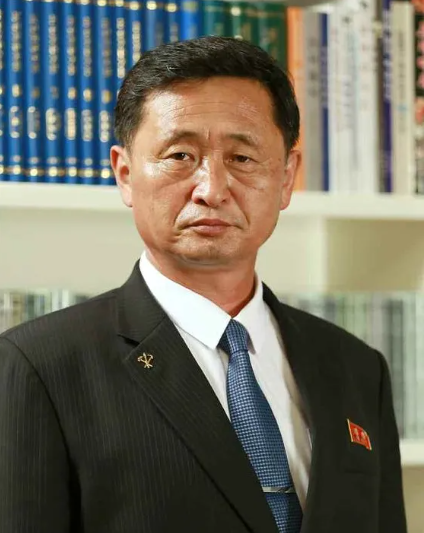
The Premier of North Korea, Kim Tok-hun, has become one of the most active individuals in the nation, with North Korean media broadcasting his frequent economic field inspections once a week or more. The weight of responsibility that he bears for the North Korean economy, which has collapsed due to the country's closed economic system, long-term sanctions resulting from nuclear and missile development, and the aftermath of the COVID-19 blockade, is clearly evident.Despite appearing to shoulder all the busy and arduous tasks, Kim Tok-hun is viewed externally as a nominal figure. While the North Korean government has given the cabinet significant power to address the economic crisis, resulting in an increase in the Premier's status, he is perceived to lack the necessary political, financial, and mobilization resources to make a meaningful impact.Born in Taean District, Nampho city in 1961, Kim Tok-hun was influenced by his father, who worked as a supervisor at a power plant, and received a recommendation to attend Kim Chaek University of Technology, where he graduated. After joining the Taean Heavy Machine Complex, he was quickly promoted to the position of company head within two years.During his tenure as Chairman of the Jagang Province People's Committee in 2011, Kim Tok-hun oversaw a number of construction projects and demonstrated his capabilities by completing several buildings, including a sports arena, using innovative bulldozer-based methods. In April 2014, he was appointed as the Deputy Premier of the cabinet by then-Premier Pak Pong-ju. In August 2020, he was further appointed as the Premier of the cabinet, marking a significant step in his political career.Kim Tok-hun is believed to have received support from his mentor, then-Premier Pak Pong-ju, who accompanied him on visits to local areas, which helped secure his position as Premier. With his background as a factory executive and experience overseeing economic policies for both the party and the cabinet, Kim possesses practical knowledge and is recognized for his hardworking nature. These factors likely contributed to his appointment to the position at a relatively young age in his 60s, according to analysts.Kim Tok-hun's status has risen since becoming Premier, as he is now the second-highest-ranking member of the Politburo Standing Committee after Kim Jong-un himself. In a show of loyalty, he wore a "black leather long coat," a symbol of Kim Jong-un's inner circle, during a public appearance in January of last year. In order to fulfill his weighty responsibility and role, Kim Tok-hun has spent considerable time in the field since his appointment, conducting on-site inspections at least once a week to examine the status of farming, apartment construction sites, and production processes. Even during the peak of the COVID-19 pandemic in North Korea last year, when Kim Jong-un's public activities decreased noticeably from May to July, Kim Tok-hun continued to inspect production sites throughout the country.However, Kim Tok-hun faces significant challenges in his role as Premier, tasked with resolving the economic crisis that North Korea faces. His appointment came at a time when the national economic development five-year strategy had failed, and he has taken on the significant responsibility of revitalizing the economy. However, it should be noted that the North Korean economy cannot be solved by a single Premier alone. North Korea has special economies, such as the Workers' Party palace economy and the military's "second economy," which operate independently of the cabinet, rendering the cabinet relatively powerless. Although Kim Jong-un oversees these special agencies under the direction of the cabinet, the prioritization of nuclear and missile development policies makes it challenging to grant the cabinet substantial economic authority. The Premier of the North Korean cabinet is merely a figurehead, as the cabinet's role is to carry out orders from the Workers' Party, and the Premier lacks political power or resources. Any failures are quickly attributed to the Premier, as Kim Jong-un is seen as infallible. Kim Tok-hun understands the risks and could be the first to face the consequences of any economic failure, especially with the recent promotion of a "fundamental change" to agricultural policy .
23.05.01 -
 News on North Korea by Kim Myong-sung
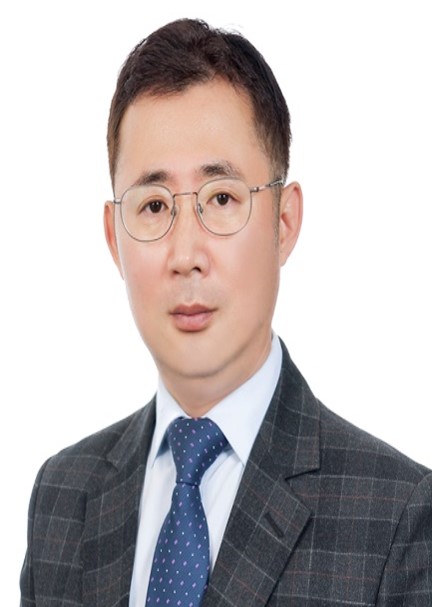
Kim Myungsung/SAND Secretary General◇ The Heart of North Korea is Ailing. On March 31, 2023, the South Korean government unveiled its first report on North Korean human rights issues published under the North Korean Human Rights Act, and interesting statistics stated in the report is drawing attention. In a survey conducted on 508 North Korean defectors to the South, the largest proportion, or 76% were found to have come from North Hamgyong province and Ryanggang province, followed by 11% from Pyongyang which is a relatively high ratio. Notably, it was the first time defectors from Pyongyang hovered around 10% of the total count. Approximately 36,000 defectors have fled to South Korea thus far, with most of them from provincial areas and only 2~3% from the capital. North Korea tightened its border blockade after the outbreak of the COVID-19 pandemic and consequently, the ratio of overseas workers to the total number of defectors marked a relative growth. The fact that North Korea preferably chooses to send overseas people of Pyongyang who are regarded to have more loyalty to the regime explains the increased percentage of Pyongyang in the statistics. These overseas workers from Pyongyang once exposed to the outside world, however, seem to have realized the paradox of the North Korean regime and decided to flee the state. North Korea calls Pyongyang the “Heart of the Revolution”, which illustrates the great significance rendered to the capital. Few of those who live in provincial areas have a chance to set foot in Pyongyang in their lifetime. A majority of North Korean defectors say they have never been to the capital. As such, people in Pyongyang regard themselves as privileged citizens to an extent that Pyongyang is referred to as a republic and the rest of the country as colonies. It is for this reason that North Koreans who had made it to South Korea from Pyongyang were placed under more stringent interrogations by South Korean anti-communist investigation agencies in the past. Internal North Korean sources also reveal the changing awareness of people in Pyongyang. North Korea reportedly rounded up thousands of criminals in the capital during a crackdown on the Korean Wave across the country last year. A video produced by the Ministry of State Security last December and entitled “Let’s intensify our strives to eradicate all types of anti-socialist and non-socialist activities from the capital” showed over 1,000 people had admitted their criminal acts in Seosong District alone. Crimes are prevalent also in other parts of the capital, ranging from watching or distributing South Korean soap operas to prostitution, murder, robbery, fraud, and embezzlement. Experts suggest what lies behind Kim Jong-un’s relentless drive towards nuclear and missiles is his anxieties over the changing awareness of people in Pyongyang, the heart of the regime, as well as an attempt to threaten South Korea, the US, and Japan. ◇ Kim Ju-ae is missing from media coverage after controversies over her luxury coat. Kim Ju-ae, the daughter of North Korean leader Kim Jong-un, who had accompanied her father to missile launches by the military since last November has recently been missing in public events, raising questions about the background. The last time she made a public appearance was at the tactical guided weapon launch and the “Hwasong-17” ICBM launch on March 10 and 16 respectively and she has since been absent from media coverage. Kim Ju-ae was also spotted at neither the underwater nuclear torpedo launch which was dubbed as the “symbol of absolute power” by North Korean state media on March 27 nor the unveiling of the tactical nuclear warhead “Hwasan-31” on March 28. Some suggest she may be staying away from the media for the time being until negative sentiments are eased over her KRW 2.4 million Dior coat worn to the ICBM launch on March 16, which triggered controversies. In a video unveiled by Chosun Joongang TV, Kim Ju-ae was spotted wearing a black coat at the ICBM launch, which happens to be one manufactured by French luxury fashion house Christian Dior. The hooded-down coat for kids she wore retails for $1900 (KRW 2.4 million) on Dior’s website. According to recent reports, North Korea is facing a serious food shortage with millions starving to death. Yet, the North Korean leadership is being criticized for their extravagant spending sprees as shown in the case of Kim Ju-ae's luxury coat. There is also nothing new about her parents' adoration for luxury goods, Km Jong-un and his wife Ri Sol-ju. The North Korean authorities condemn consuming imported goods as a sickness and demand people use domestic goods. Luxury goods, such as watches, clothes, and accessories, are subject to an export ban under the UN sanctions against North Korea. These controversies over Kim's luxury coat have seemingly brought about negative views on her public appearance even among North Koreans and Kim may make a comeback to media coverage once the dust dies down. ◇ Kim Jong-un keeps low profile before Kim Il-sung's birthday in April... but intensive provocation continues. North Korean leader Kim Jong-un has disappeared from media coverage since earlier April after frequent public appearances throughout March. Meanwhile, North Korea has set out to boom up festivity on the occasion of the 111th birth anniversary of North Korea's founder and first leader Kim Il-sung, which is the biggest national holiday in the state. A variety of celebrations will sweep across North Korea, including Kim Il-sung's photo exhibitions and the Spring People's Art Festival. In the meantime, North Korea said it tested an underwater nuclear attack drone, which is an unmanned underwater vehicle. The “Haeil-2” nuclear torpedo is the third of its kind unveiled by North Korea and its traveling distance was extended to 1000 km this time, capable of striking the south coast over the high seas or reaching as far as ports in Japan. Some even suggest the torpedo deployed from a surface ship underwater could secretly attack U.S. aircraft carriers stationed in Gwam or the Pacific. The Haeil-2 was launched on the following day of the tripartite anti-submarine drill among South Korea, the US, and Japan headed by a US nuclear-powered aircraft carrier, USS Nimitz at the front. Seemingly it was an attempt for North Korea to protest against the joint military drill. Some have speculated that North Korea might stage intensive military provocations such as a reconnaissance satellite launch in protest against the South Korea-US summit slated at the end of April. ◇ Kim Yo-jong condemns Ukrainian President Volodymyr Zelenskyy in a public statement. On April 1, Kim Yo-jong, vice department director of the Central Committee of the ruling Workers' Party made a public statement accusing Ukrainian President Volodymyr Zelenskyy. Kim said “Zelenskiyy's talk about the introduction of U.S. nuclear weapons and the independent development of nuclear weapons is a manifestation of his very dangerous political ambition to prolong his remaining days at any cost by gambling with the destiny of his country and people” in a statement carried by the North's Korean Central News Agency. Her accusation came after an appeal was uploaded on President Zelenskyy's website calling for deploying U.S. nuclear weapons in Ukraine or developing the country's nuclear weapons. “It is a product of the Zelenskiyy authorities' sinister political plot,” she said. Kim backed up her claim by saying that Ukrainian officials and President Zelensiyy have openly revealed their nuclear ambitions on several occasions. “If the Zelenskiyy authorities calculated that they can avoid the powerful fire of Russia only when they go under the U.S. nuclear umbrella, which had already been perforated, they are going to the wrong path,” she said. In another statement made earlier in January, Kim Yo-jong strongly condemned the US for providing tanks to Ukraine. Her Ukraine bashing seems to be intended as a gesture of taking sides with Russia at war with Ukraine. Previously, Russian President Vladimir Putin agreed to deploy tactical nuclear weapons in its ally, Belarus, and said nuclear weapons storage facilities would be completed by July 1, but Kim remained silent at that time. Her statement is also construed as a move to sponge on Russia in hopes of soliciting economic assistance. Two days before the statement was issued, the US said Russia, now short on ammunition, is planning to take military weapons from North Korea in exchange for food. Some have speculated that the phrase of "perforated U.S. nuclear umbrella" was meant to indirectly criticize South Korea for relying on the US' extended deterrence.
23.04.17 -
 [NK Focus]
Since April 7, North Korea has not responded to regular communication with the Inter-Korean Joint Liaison Office and the military communication line with South Korea. On the previous day, the Ministry of Unification attempted to send a notification to North Korea demanding the cessation of unauthorized use of South Korean assets in the Kaesong Industrial Region, but North Korea refused and unilaterally blocked the communication line the following day. Previously, North Korea had blocked the communication line between North and South Korea on June 9, 2020, citing the Balloon Propaganda dissemination by a group of North Korean defectors, and subsequently detonated the Kaesong Inter-Korean Joint Liaison Office on June 16. There is widespread speculation about whether North Korea will carry out any high-intensity provocations following the recent blocking of the inter-Korean communication line.North and South Korea have regular morning and afternoon calls scheduled through the joint liaison office channel, while the military authorities conduct morning calls at 9 a.m. and afternoon calls at 4 p.m. through their communication line. The reason for North Korea's lack of response to these calls is unknown, but there is speculation that it may be due to dissatisfaction with the previous day's attempt to issue a notice to stop the unauthorized use of South Korean goods in the Kaesong Industrial Complex. Additionally, there may be intentional refusal to respond due to backlash against recent events such as the South Korea-U.S. joint military exercise and the Reports on Human Rights Practices regarding North Korea. The government believes the lack of response from North Korea is likely a deliberate one-sided blocking of communication, rather than a mere communication error.Amidst concerns that North Korea's recent unilateral blocking of the inter-Korean communication line could lead to provocations similar to the detonation of the liaison office three years ago, North Korea has unveiled eight types of strategic weapons, including the nuclear torpedo "Haesil," KN-23, North Korea's version of ATACMS (KN-24), the 600mm super-large multiple launch rocket system (MLRS) (KN-25), Tactical Ballistic Missile (TBM), Close Range Ballistic Missile (CRBM) (Hwasal-1, Hwasal-2) which can be loaded like a bullet into warheads of various sizes and shapes. As North Korea has recently been conducting intensive simulated detonation tests of tactical nuclear warheads, some experts have raised the possibility of a "7th nuclear test" during this month's political schedule, including the Day of the Sun (Kim Il-sung's birthday), and cannot rule out high-intensity provocations against the United States, such as launching ICBMs at a normal angle (30-45 degrees).North Korean media has reported that Kim Jong-un attended the 6th expanded meeting of the 8th Central Military Commission of the Workers' Party of Korea (WPK) on April 10th. During the meeting, Kim emphasized the need to accelerate the strengthening of North Korea's war deterrence as a measure to more strictly control and manage the increasingly serious security situation on the Korean peninsula. North Korean media also released photos of Kim pointing towards the vicinity of Camp Humphreys Airdrome, a US military base in Pyeongtaek, and another photo showing a North Korean military cadre pointing near Gyeryongdae with a command baton.Kim Jong-un attended consecutive enlarged meetings of the Central Military Commission of the WPK in February and March to discuss the state of war readiness. This meeting, which is usually held every six months, was held three months in a row. Afterward, the long-range cruise missile "Hwasal" and the nuclear-armed unmanned underwater vehicle (UUV) “Haeil” and tactical nuclear warhead "Hwasan-31" were revealed in succession.Of note is that North Korea has publicly tested “Haeil”, its first-ever nuclear-capable UUV three times. After unveiling the Haeil on March 24th, North Korea has continued to introduce improved versions such as Haeil-1 and Haeil-2. In particular, North Korea announced that the range of "Haeil-2" is up to 1,000 km, which, if true, could penetrate and strike not only the southern coast of South Korea but also some United States Forces Japan naval bases in secret. The possibility of North Korea introducing an improved version of "Haeil-3" with enhanced performance has also been raised. North Korea has asserted that "Haeil" can be fitted with small tactical nuclear warheads like the "Hwasong-31," which has a diameter of just 50cm. This has led to various speculations about North Korea's intentions. There are concerns that North Korea's recent blocking of communication lines may lead to further provocations.
23.04.17 -
 [News on North Korea]
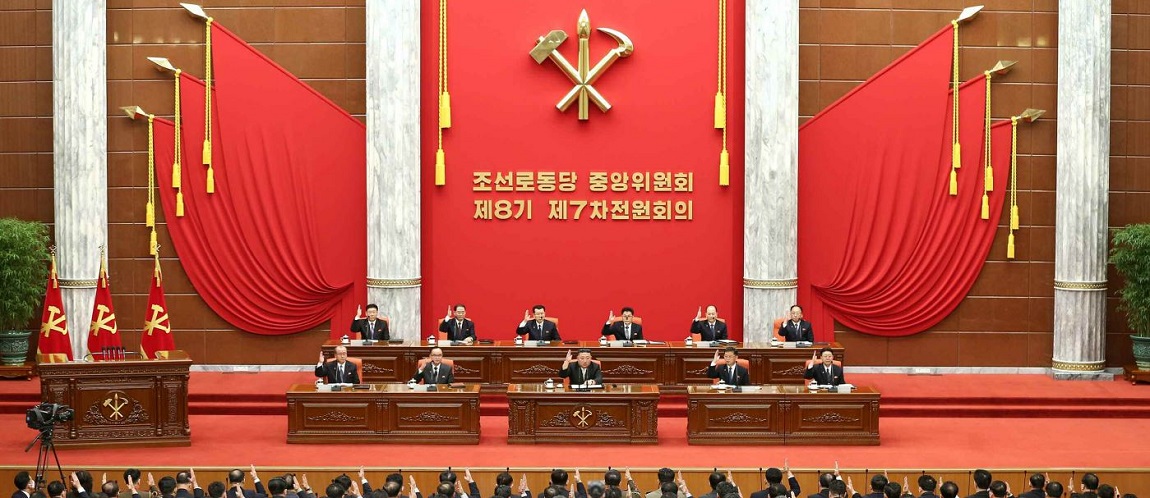
◇ Is Choe Ryong-hae missing from major events because of diabetes?Choe Ryong-hae, chairman of the Standing Committee of North Korea’s Supreme People’s Assembly and once the No. 2 man in the country’s power hierarchy, has frequently been absent from major public events, raising questions about his status. Most notably, Choe was absent from the extended session of the 8th plenary meeting of the Workers' Party, which took place from February 26 to March 1. Analysts suggest that Choe's status has changed, as he was once invoked after Kim Jong-un at major public events, but since the middle of last year, his name was called after the Party’s secretary for organization Jo Yong-won, who is often referred to as Kim Jong-un's shadow, and more recently, even after Premier Kim Tok-hun. Some have speculated that Choe is suffering from a relapse of his long-standing diabetes.◇ 30,000 households in the sacred land of revolution in Samjiyeon and Bocheon County where Kim Jong-un made a present of tile-roof houses suffer from lack of food Amid reports of severe food shortages across the country, over 30,000 households in Samjiyeon and Bocheon County in Ryanggang province, known as the holy land of the communist revolution in North Korea, appeared to be without food. These households need to be immediately assisted with food supply. "On February 14, the provincial WPK committee had an emergency meeting of extended leadership to support 30,000 households in these counties," a well-placed North Korean source said on February 5. At the meeting the provincial committee reportedly instructed each city, county, district, and local people's units to club together food to support the starving households. That fact that the number of households suffering from food shortage has reached 30,000 even in such localities as Samjiyeon and Bocheon, which have been given special treatments as holy sites for communist revolution in North Korea, demonstrates the severity of food shortage in North Korea. ◇ North Korea prepares for living with coronavirus as it is about to open the border with China near Tumen River in March North Korea is reportedly preparing to open the customhouse on its border with China in earnest from March to ease food and economic hardships. Following the opening of Sinuiju, according to border sources, the North Korean authorities have begun preparations to lift the border blockade on the Rason district in the Tumen River region, which borders the Chinese city of Hunchun. By the beginning of March, North Korea has already made a partial easing of the blockage by resuming train services between Sinuiju and Dandong and opening the border at the Rason district. While North Korea emphasizes it's the importance of COVID-19 prevention, some experts observe that it is opening the border along the Tumen River in an attempt to resume trade with Russia. In the aftermath of international sanctions, natural disasters, and a prolonged corona blockade, North Korea is facing the worst crisis in its history with economic difficulties on top of food shortage. Now Pyongyang has no other options but to open the border to overcome the crisis. ◇ Immediately after the WPK plenary meeting, the Ministry of Security issued a proclamation taking away from people even the means of living North Korea released a proclamation outlining changes to the country's legal code, following the sixth plenum of the 8th WPK party congress. On April 4, three days after the conclusion of the plenum meeting, the country issued a new proclamation titled ‘On crushing down non-socialism and anti-socialism,’ according to internal North Korean sources. The proclamation requires North Korean provinces, cities, and counties to "stipulate imposition of heavier punishments than before for those activities that violate the laws." It also states that in case a convicted criminal who has been to a training camp three times in the past commits an additional crime, the punishment will be increased retroactively to the extent of his or her previous punishment. It also requires that if one who is under a pretrial or probation commits a crime, he or she will be sent to a correctional institution regardless of the severity of the offense. In particular, it states that even the most basic means of making living such as working as a housekeeper or farmhand, carrying other’s luggage by oxcart, or giving rides on motorcycles in exchange for money will be heavily punished, thereby making the residents complain that the government is controlling their basic livelihoods. Kim Myungsung/SAND Secretary General
23.04.01 -
 [Congratulatory message]
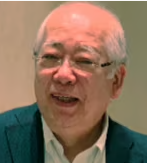
Hajime Izumi/Professor at Tokyo International UniversityCongratulations on the launch of the newsletter by SAND.It is very important to have a good perspective in research. The SAND Institute is a new think tank with researchers who have years of experience in North Korea and are equipped with universal theories in the international community. With their valuable experiences and insights, I believe they can compare North Korean cases and analyze issues from a long-term and historical perspective. I think they can also conduct through researches and develop viable solutions for North Korean denuclearization, the normalization of relations between the United States and North Korea, and North Korea's perception of South Korea's policy toward Pyongyang, as well as the Japanese abduction issue. I hope that this newsletter evolves into a medium that shares with the rest of the world its expertise and vision in observing the Korean Peninsula's issues from the perspective of continuity and change with the rest of the world and seeking directions for Korean unification. SAND, led by a North Korean-born scholar, will be able to actively create its own values and have more options when communicating with the rest of the world. I hope that the SAND newsletter will serve as a voice of reason in this time of uncertainty, suggesting a new path for the reunification of the Korean Peninsula and peace in Northeast Asia.
23.04.01 -
 [Congratulatory message]
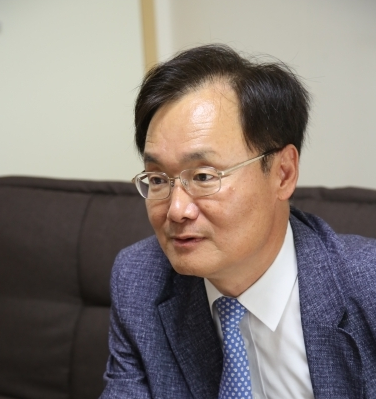
Yong-joon LeeFormer Ambassador for North Korean DenuclearizationThe Ministry of Foreign Affairs Republic of KoreaCongratulations on the launch of the Newsletter by SAND.The Sand Institute has been conducting active scholarly activities for the future of a unified Korea for the past five years, bringing together scholars from both North and South Korea. I hope that the publication of this newsletter will allow the institute's scholarly activities to reach beyond Korea. I wholeheartedly support SAND's new newsletter, which is published with the goal and mission of communicating with the rest of the world and spreading consensus on Korean unification. The international order is changing rapidly due to the conflicts between the United States and China. The international security environment has deteriorated significantly from before the war in Ukraine. In East Asia, North Korea is taking advantage of these changes in the international situation and attempting to change the political and military situation in the region by upgrading its nuclear and missile capabilities. The crisis in the Taiwan Strait and South China Sea is also escalating. Under these circumstances, it is extremely beneficial for regional peace that the SAND Institute, which has been bringing together scholars from both North and South Korea who are familiar with North Korea's strategic intentions and internal situation to diagnose the situation on the Korean Peninsula and explore the path to non-nuclear peace, shares their wisdom with the international community. I hope that Newsletter by SAND will develop into an authoritative publication that provides readers around the world with great insights into the situation on the Korean Peninsula and East Asia.
23.04.01 -
 [NK Focus]
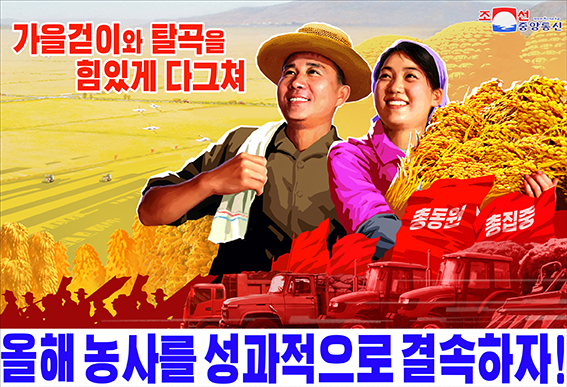
What made North Korea a starving nation? Obsession with nuclear tests while millions starveNorth Korea is facing a severe food shortage and millions of North Koreans are starving to death, raising concerns in South Korea and the international community. The food shortage is expected to get worse during this spring, but the North Korean authorities have been unable to do much about it, as expected. The news about the death by starvation in North Korea was disclosed during a National Security Council (NSC) meeting the presidential office called on February 18, shortly after North Korea test-fired Hwasong-15 intercontinental ballistic missile (ICBM). During the meeting, the presidential office criticized the North Korean regime for "ignoring the human rights and livelihood of its people while focusing only on a large-scale military parade and nuclear and missile development in the face of severe food shortages in the country." Around the same time, Rodong Sinmun and other North Korean state media ran a series of report on the desperate state of affairs in the country, insinuating that food shortages were serious. In a front-page story on February 14, Rodong Sinmun emphasized, "It is the spirit of independence and self-respect that should never be given up, even when you starve or freeze to death." Food shortage summarizes the reality of the North Korean economy under Kim Jong-un. So does the phrase the ‘three hardships,’ which refers to the shortage of grain, dollars (foreign currency), and oil (energy). Kim Il-sung, former North Korean president and the grandfather of Chairman Kim Jong-un, promised to “make North Koreans eat meat soup with rice, wear silk clothes, and live in a tiled house,” a promise that never materialized during the last 70 years that spanned three generations of rule by the Kim family. Tragedy struck in the mid-to-late 1990s, shortly after Kim Il-sung's death, when the food shortage caused by a massive flood reportedly left "two to three million North Koreans starving to death." (The South Korean and U.S. intelligence agencies estimate the number at 460,000) It was a tragic time North Koreans refer to as the period of “arduous march.” On April 15, 2012, in his first public speech made at Pyongyang's Kim Il Sung Square, Kim Jong-un said, “I will never again let my people tighten their belts but enjoy the riches and honors of socialism,” raising expectations among the North Korean elites and residents alike. But it turned out to be a blank check. UN agencies including the World Food Program (WFP) and humanitarian organizations operating in Pyongyang warn that 11 million people, or 40% of North Korea's 25 million residents, are still exposed to a perennial food shortage. Kim Jong-un himself acknowledged the difficulties his country faces at the eighth plenary meeting of the Workers' Party of Korea (WPK) held in Pyongyang on June 15 last year, admitting, "Due to the damages caused by typhoons last year, we fell short of our grain production goals and now the food situation for people is becoming tense." It seems virtually impossible for North Korea to achieve a breakthrough in grain production and solve its food shortage, according to a group of experts and government authorities. Poor production, outdated technologies, and chronically repeated food shortages are not the problems limited just to the agricultural sector. They reflect the total disaster across the entire North Korean economy. Without first resolving the underlying structural problems, it would be a pipe dream that the supreme leader's rhetoric and state media propaganda and incitement alone can create the cure.
23.04.01 -
 [President’s Remark]
Kyonghui Choi / SAND CEO The SAND Institute will communicate with the world through our newsletter. We will keep an eye on the turbulent developments in the international community and work with you in seeking wisdom for peace and reunification of the Korean peninsula. It will publish the Newsletter by SAND to communicate with the international community. Based in Seoul, we have made many researches and produced meaningful results in various areas, including North Korea, inter-Korean relations, and the changing order in Northeast Asia since our foundation. Up to date, a lot about the reality of North Korea under Kim Jong-un has been revealed to the international community through various studies and fact-checking by various North Korean watchersHowever, despite the efforts and achievements made by these experts, the validity of information on issues related to North Korea is still difficult to assured because its accuracy is often not verified. It is also true that North Korea's provocations with nuclear and missile tests are repeated, being hardly checked by anybody, while the international community has been able to offer only short-sighted responses without being able to find fundamental solutions to such issues as hereditary power succession, economic crisis and human rights abuse in North Korea. In response to such a call of the time, the newly published Newsletter by SAND will look into North Korea through the lens of universal human values and paradigm and share the results with the international community. We will present high-quality information on North Korea and a vision for Korean unification based on various analyses and diagnoses by experts from North and South Korea as well as the international community. We are, nevertheless, hesitant and scared because it is our first attempt to do so, but we will walk down the path believing that the meaningful and just international community will eventually join us in our journey to seek truth about North Korea. We ask for your kind support. Thank you.
23.04.01 -
 [Archive]
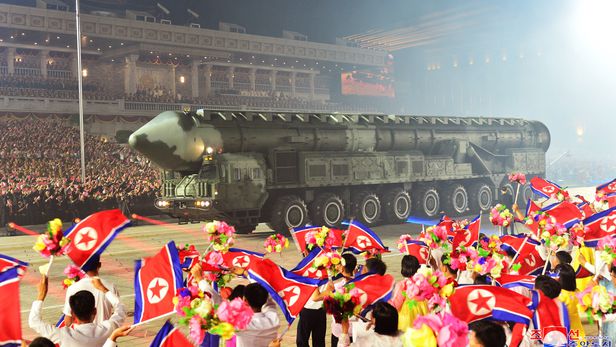
REACTIONARY IDEOLOGY AND CULTURE REJECTION ACT OF THE DEMOCRATIC PEOPLE’S REPUBLIC OF KOREA Amended and supplemented by Order No. 1028 of the Presidium of the Supreme People’s Assembly on August 19 of Juche year 111 (2022) CHAPTER I. BASICS OF THE REACTIONARY IDEOLOGY AND CULTURE REJECTION ACTArticle 1. Purpose of the Reactionary Ideology and Culture Rejection ActThe Reactionary Ideology and Culture Rejection Act of the Democratic People’s Republic of Korea contributes to the strengthening of our sense of ideology, revolution, and social class by launching a powerful battle to obstruct the inflow and distribution of reactionary ideology and culture and anti-socialist ideology and culture. Article 2. Definition Reactionary ideology and culture refers to a rotten ideology and culture of hostile forces including South Korean publications that paralyzes the people’s revolutionary sense of ideology and social class, and deteriorates and depraves our society, as well as all types of unsound and absurd ideology and culture that are not in our own style.Article 3. Basic Principle of Reactionary Ideology and Culture RejectionRejecting reactionary ideology and culture is an indispensable requirement to preserve the socialist ideology and firmly protect the socialist system from enemies’ schemes to ideologically and culturally penetrate into the DPRK with an aim of collapsing our system. The State firmly shall subdue and contain anti-socialist and non-socialist activities such as bringing in, watching or reading, and distributing reactionary propaganda materials by strictly establishing revolutionary systems and orders at every level in every sector. Article 4. Principle of Establishing Revolutionary Working Spirit and Revolutionary LifestyleEstablishing a revolutionary working spirit and revolutionary lifestyle is the fundamental way to obstruct the penetration of reactionary ideology and culture into the DPRK.Article 5. Principle of Reinforcing Ideological and Cultural EducationReinforcing Ideological and Cultural education for the people is the fundamental method to batter reactionary ideology and culture and anti-socialist ideology and culture. Under circumstances where enemies’ ideological and cultural infiltration schemes are becoming increasingly cunning and heinous, the State shall further strengthen ideological and cultural education for the people so that they are not imbued with reactionary ideology and culture. Article 6. Principle of Mass BattleLaunching a high-intensity all-out battle against reactionary ideology and culture is a critical policy requirement for the State. The State shall strongly protect our ideology, our spirit, and our culture by launching a powerful mass battle to wipe out all activities to bring in, consume, and distribute reactionary ideology and culture. Article 7. Principle of Punishment on Offenders of Reactionary Ideology and Culture Rejection OrderThe State shall enforce strict legal sanctions up to and including death penalty against any citizen bringing in, consuming, and distributing reactionary ideology and culture, depending on the severity, regardless of the reason and the offender’s social class. CHAPTER II. OBSTRUCTION OF INFLOW OF REACTIONARY IDEOLOGY AND CULTUREArticle 8. Basic Requirement for Obstruction of Inflow of Reactionary Ideology and CultureObstructing the inflow of reactionary ideology and culture is the first step in our battle to batter reactionary ideology and culture. Any organization, corporation, entity, and citizen shall completely block all potential routes and sources of reactionary ideology and culture, and strictly monitor even the smallest elements so as to preclude reactionary ideology and culture from penetrating our society.Article 9. Obstruction of Inflow through Borders Border inspection authorities including the customs office and border security organizations shall fundamentally block the penetration of reactionary ideology and culture by thoroughly inspecting all personnel and goods brought into the DPRK, and completely blocking all spaces through which reactionary ideology and culture may come into the DPRK from foreign countries or areas affected by enemies. Article 10. Obstruction of Inflow through Propaganda MaterialsAny relevant organization shall strictly supervise and control propaganda materials containing decadent, absurd and unsound contents to preclude them from being flowed into the DPRK. Article 11. Obstruction of Inflow through Organizations Dealing with External RelationsAny organization dealing with external relations and relevant entities shall assure that foreigners whom they invite, greet or meet do not bring in or distribute unsound propaganda materials.Article 12. Obstruction of Inflow through Electronic Waves and the Internet Central information industry guidance organizations and relevant entities shall obstruct the inflow of reactionary ideology and culture through electronic waves and the Internet by strengthening their supervision and control over televisions, fixed frequency settings of radios, and the use of electronic and communications devices that are connected to the Internet.Article 13. Obstruction of Inflow through Hostile MaterialsAny relevant act enforcement organization, organization, corporation and entity shall batter enemies’ ideological and cultural infiltration into the DRPK by establishing systematic monitoring and public reporting systems against hostile materials, and thoroughly supervising the systems. Article 14. Duties of CitizensAny citizen shall not bring in or receive and possess reactionary propaganda materials and electronic devices from their overseas business trips, personal travels, or foreigners and overseas Koreans whom they meet abroad.CHAPTER III. PROHIBITION of CONSUMPTION AND DISTRIBUTION OF REACTIONARY IDEOLOGY AND CULTURE Article 15. Basic Requirement for Prohibition of Consumption and Distribution of Reactionary Ideology and CultureThe Prohibition of the act of consuming and distributing reactionary ideology and culture is a important requirement to preserve our ideology and culture. Any organization, corporation, entity, and citizen shall not consume, distribute, or reproduce reactionary ideology and culture. Article 16. Prohibition of Consumption and Distribution through Computers and Memory DevicesAny organization, corporation, entity, and citizen shall not watch or read unsound propaganda materials, or distribute them to other people by using computers or memory devices.Article 17. Prohibition of Consumption and Distribution through Televisions and RadiosAny organization, corporation, entity, and citizen shall not watch reactionary propaganda materials or distribute them to other people by not fixing frequencies of televisions and radios or by altering fixed frequency settings. Article 18. Prohibition of Distribution through Printers and Copy MachinesAny organization, corporation, entity, and citizen shall strictly follow the order of using printers and copy machines, and shall not use the devices to print or copy reactionary propaganda materials.Article 19. Prohibition of Consumption and Distribution through Mobile PhonesAny organization, corporation, entity, and citizen shall not use mobile phones of foreign countries, or use mobile phones for consuming reactionary propaganda materials or distribute them to other people. Article 20. Prohibition of Consumption and Distribution of Hostile Materials and Obtained MaterialsIn case of obtaining hostile materials or other materials containing unsound contents, any organization, corporation, entity, and citizen shall not store, consume, use, instead of giving them to relevant authorities, or distribute them to other people. Article 21. Prohibition of Distribution through Service ActivitiesAny organization, corporation, entity, and citizen shall not sell products containing unsound contents such as South Korean writings, drawings, and brands, and shall not produce and provide decadent and absurd materials.Article 22. Prohibition of Consumption and Distribution through Confiscated GoodsAny act enforcement organization and its staff members shall strictly follow the management rule for confiscated goods, and shall not watch confiscated propaganda materials or distribute them to other people. Article 23. Prohibition of Consuming and Reproducing Adult Videos and Spreading SuperstitionAny citizen shall not consume, distribute, and reproduce sexually explicit movies and photographs, adult videos, and superstitious propaganda materials.Article 24. Prohibition of Speaking, Writing or Singing in South Korean StyleAny organization, corporation, entity, and citizen shall not speak, write or sing in South Korean style, and shall not exchange notification letters in South Korean language. Article 25. Prohibition of Illegal Consumption and Distribution of Propaganda MaterialsAny organization, corporation, entity, and citizen shall not consume or distribute propaganda materials of foreign countries, non-disclosed propaganda materials, and illegally produced propaganda materials, that are banned or unauthorized. Article 26. Home Discipline and ControlParents shall practice home discipline and tighten control on their children to ensure they do not consume or distribute unsound propaganda materials. CHAPTER IV. LEGAL RESPONSIBILITY FOR VIOLATING REACTIONARY IDEOLOGY AND CULTURE REJECTION ORDERArticle 27. Crime of Distributing South Korean Ideology and CultureAny person who watches, listens to, or stores South Korean movies, video recordings, compilations, books, songs, drawings, or photographs, or who brings in and distributes South Korean songs, drawings, photographs, or designs shall be sentenced to 5 to 10 years of reform through labor. If the severity of the crime is deemed high, the offender shall be sentenced to reform through labor for 10 years or more. Any person who brings in or distributes South Korean movies, video recordings, compilations, and books shall be sentenced to reform through labor for life. Article 28. Crime of Distributing Ideology and Culture of Hostile CountriesAny person who watches, listens to, or stores movies, video recordings, books, songs, drawings, or photographs of hostile countries, or who brings in and distributes songs, drawings, photographs, or designs of hostile countries shall be sentenced to reform through labor for up to 5 years. If the severity of the crime is deemed high, the offender shall be sentenced to 5 to 10 years of reform through labor.Any person who brings in or distributes movies, video recordings, compilations, and books of hostile countries shall be sentenced to reform through labor for 10 years or more. Any person who brings in or distributes a large amount of movies, video recordings, compilations, and books of hostile countries to a large number of people, or who supports or encourages other people to consume or read them in a group shall be sentenced to reform through labor for life or the death penalty. Article 29. Crime of Distributing Adult Videos and Sexually Explicit Materials and Spreading SuperstitionAny person who consumes or stores adult videos, sexually explicit or superstitious movies, video recordings, compilations, books, photographs, or drawings shall be sentenced to 5 to 10 years of reform through labor. If the severity of the crime is deemed high, the offender shall be sentenced to reform through labor for 10 years or more. Any person who produces, brings in or distributes adult videos, sexually explicit or superstitious movies, video recordings, compilations, books, photographs, or drawings shall be sentenced to reform through labor for life.Any person who produces, brings in or distributes a large amount of adult videos, sexually explicit or superstitious movies, video recordings, compilations, books, photographs, and drawings to a large number of people, or who supports or encourages other people to consume or read them in a group shall be sentenced to death. Article 30. Crime of Distributing Absurd Ideology and CultureAny person who watches, listens to, or stores movies, video recordings, compilations, books, songs, drawings, or photographs of foreign countries that go against socialist ideology and culture and our own lifestyle, or who illegally brings in and distributes songs, drawings, photographs, designs, or clothes of foreign countries shall be sentenced to short-term disciplinary labor. If the severity of the crime is deemed high, the offender shall be sentenced to up to 5 years of reform through labor.Any person who illegally brings in or distributes movies, video recordings, compilations, and books of foreign countries shall be sentenced to 5 to 10 years of reform through labor. Any person who brings in or distributes a large amount of movies, video recordings, compilations, and books of foreign countries to a large number of people, or who supports or encourages other people to consume or read them in a group shall be sentenced to reform through labor for 10 years or more. Article 31. Crime of Distributing Unsound CultureAny person who watches, listens to, or stores any video recordings, compilations, photographs, and publications that contain decadent and absurd contents produced by individuals shall be sentenced to short-term disciplinary labor.Any person who produces or distributes any video recordings, compilations, songs, photographs, and publications that contain decadent and absurd content shall be sentenced to reform through labor for up to three years. If the severity of the crime is deemed high, the offender shall be sentenced to three to 5 years of reform through labor. Article 32. Crime of Reproducing South Korean CultureAny person who speaks, writes, or sings in the South Korean style, or produces publications in South Korean font shall be sentenced to short-term disciplinary labor. If the severity of the crime is deemed high, the offender shall be sentenced to reform through labor up to two years. Article 33. Crime of Violating Order for Use of Electronic and Electrical DevicesAny person who violates the order for the use of electronic and electrical devices such as televisions, radios, and computers shall be sentenced to short-term disciplinary labor. Should the severity of the crime is deemed high, the offender shall be sentenced to reform through labor up to 5 years. Article 34. Crime of Not ReportingAny person who is aware of any activities to bring in, consume, and distribute culture of South Korea or hostile countries and adult videos, but is negligent in reporting them to the authorities shall be sentenced to disciplinary labor. Article 35. Re-Educational Labor Punishment on Citizens who Commit CrimesAny citizen who violates the following reactionary ideology and culture rejection order shall be sentenced to re-educational labor for three months or more. When distributing movies, video recordings, compilations, books, photographs, or drawings that are banned to be released, published, or read by the State 2. When illegally producing video recordings, compilations, or publications 3. When illegally installing operating system programs on mobile phones of other people4. When keeping mobile phones of foreign countriesArticle 36. Punishments of Unpaid Labor, Demotion, Dismissal, and Removal of Position on Workers who Commit CrimesIf reactionary ideology and culture penetrates into our society as a result of irresponsible inspection, supervision, and control including customs inspection, or crimes related to reactionary ideology and culture occur as a result of irresponsible act-abiding education for and lax control on employees and students, the accountable worker shall be punished with unpaid labor. If the severity of the crime is deemed high, the offender shall be punished with demotion, dismissal, or removal of their positions.Article 37. Fines on Citizens who Commit CrimesAny citizen who violates the following reactionary ideology and culture rejection orders will be fined accordingly.A fine of 10,000 to 50,000 KPW, when watching, reading or possessing movies, video recordings, compilations or books that are banned to be released, published, or read by the State2. A fine of 50,000 to 100,000 KPW, when violating the procedure for the registration and inspection of electronic, electrical, broadcast and communication devices while using devices and equipment such as televisions, radios, and computers or when using mobile phones without a censorship software that blocks unsound propaganda materials3. A fine of 100,000 to 200,000 KPW, when producing photographs, drawings or writings that offend our own lifestyle and traditions4. A fine of 100,000 to 200,000 KPW, when the Reactionary Ideology and Culture Rejection act is violated as a result of parents’ failure to educate and discipline their childrenArticle 38. Fines on Organizations, Corporations and Entities that Commit Crimes Any organization, company and entity that violates the following reactionary ideology and culture rejection order will be fined accordingly.A fine of 1 million to 1.5 million KPW, when bringing in electronic, electrical, broadcasting, communications and printing devices and equipments, publications, and corporation devices while violating relevant supervision guidelines including customs inspection2. A fine of 1 million to 1.5 million KPW, when creating a space where reactionary ideology culture could be brought in or distributed as a result of careless control on the Internet or computer networkArticle 39. Suspension or Termination of BusinessesIf the severity of crimes of Article 38 is deemed high, the offender shall be forced to suspend their businesses. If the severity of crimes of the Article 38 is deemed extremely high, the offender shall be forced to terminate their businesses. Article 40. Confiscation of Money and Goods Used for Criminal and Illicit Activities Any money or goods used for criminal or illicit activities that go against the reactionary ideology and culture rejection order or obtained through such activities shall be confiscated.Article 41. Relationship with Other ActsRemedies not regulated by this act, such as the principles, procedures and methods of application of penal or administrative punishment for violations of the reactionary ideology and culture rejection order shall be governed by applicable acts and regulations.
23.04.01
News Letter
We are leading the global communication via Newsletter.
We will deliver the latest information and proven facts on Korean Peninsula status including North Korea situation.